
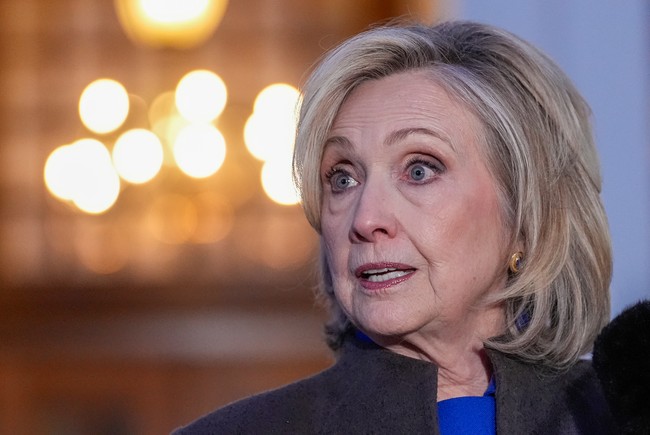
President Donald Trump gave a speech about election vulnerabilities and foreign interference that sparked sharp reactions from media and Democrats, with critics pointing fingers at the press for limited coverage and at Hillary Clinton for her longstanding criticisms of the 2016 result; this article walks through the speech, the media response, the Democratic backlash, Hillary’s comments, and reporting around alleged intelligence materials while keeping embedded media in place.
President Trump used a prime-time platform to talk about election security and foreign meddling, aiming to highlight system weaknesses and potential foreign efforts to influence American voting. The speech drew intense scrutiny, and the way major networks handled it became a central part of the story. Some outlets opted not to air the remarks live, a decision that fueled accusations of media bias. Conservatives viewed that choice as proof the press was picking sides rather than letting Americans hear directly from their president.
Several mainstream newsrooms reportedly decided not to carry the address live, and one network admitted its “executives” believed airing it could be “dangerous.” That rationale only deepened distrust among Republican-leaning audiences, who argued that journalism should present information, not suppress it. The debate turned on whether avoiding potential panic or misinformation justifies withholding a live speech from viewers who want to evaluate it themselves.
Unsurprisingly, Democrats reacted strongly and publicly criticized the content of the speech, framing it as fearmongering or election denialism. Among the loudest voices was Hillary Clinton, whose continued commentary about 2016 keeps drawing attention a decade after the election. Critics say her persistent grievances amount to projection when she attacks others for questioning election integrity. Her reactions were especially notable because she remains a polarizing figure in national politics.
Hillary’s online presence shows she often limits responses, closing replies on posts when controversy follows. That pattern reinforces perceptions among opponents that she expects to avoid pushback while she lectures others. To many Republicans, her past remarks about the 2016 result undercut her credibility on claims about election safety. The irony, for critics, is that her rhetoric contributed to an environment of doubt that she later condemns in others.
Throughout the debate, observers reminded readers of past moments when Clinton publicly questioned the 2016 outcome, including her own claim that the election was “stolen” from her. Those words are still cited by opponents who argue she helped ignite distrust in the system. For conservatives, this history matters because it shapes the narrative about who undermined confidence first. The back-and-forth now centers on whether current warnings about vulnerabilities are legitimate security concerns or politically motivated attacks.
There were also viral clips and documents that pushed the conversation into more specific territory, with some reporting on alleged intelligence items recovered from so-called burn bags. That angle shifted the story from general accusations to claims about tangible materials. Journalists who covered those details said they pointed to notes and memos suggesting preexisting narratives within parts of the intelligence community. Those disclosures raised alarms among those who believe selective leaks have shaped the post-2016 political landscape.
https://x.com/HillaryClinton/status/2078154715536240689
Catherine Herridge, a journalist cited during the aftermath, described materials found in one bag and said a note from an agency director to the FBI “had that intelligence about Hillary Clinton planning to paint Trump as a puppet of Russia.” That quote has been repeated by commentators who see it as evidence of premeditated messaging against the Trump campaign. Republicans seized on the quote as proof that parts of the system were primed to view the 2016 contest through a particular lens. For the GOP, the quote reinforces longstanding claims about unfair treatment and politicized intelligence.
Critics of Trump argue he sometimes exaggerates threats, but supporters insist raising the alarm about election infrastructure and foreign influence is both necessary and overdue. The battle lines are familiar: one side calls attention to vulnerabilities and evidence, while the other accuses those warnings of stoking fear. The real policy fight is over how to secure elections without fueling distrust in democratic outcomes.
Even as the partisan shouting continues, the underlying issues — secure voter rolls, foreign access to data, and transparent handling of intelligence — remain ripe for policy attention. Republicans, including the president’s backers, say the conversation should lead to concrete reforms rather than partisan grandstanding. For GOP voters, the priority is shoring up election defenses and ensuring Americans can trust outcomes without being drowned in conflicting narratives.
Hillary Clinton’s commentary and the media’s choices about coverage have become part of the story as much as the speech itself, shaping public perception and political strategy. That interplay between message, messenger, and media will determine whether the election integrity debate produces meaningful safeguards or continues as another headline. The debate will continue to revolve around credibility, evidence, and whose account Americans choose to believe.
Add comment