
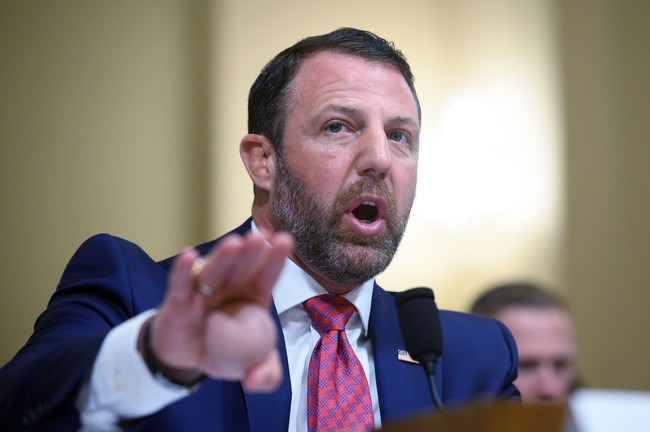
The Department of Homeland Security secretary, Markwayne Mullin, outlined concrete steps to tighten election security, called out intelligence failures, and said states must cooperate or face funding consequences to protect the integrity of ballots nationwide.
Homeland Security is pushing a clear agenda: identify vulnerabilities, secure voting machines, clean up rolls, and require state cooperation when federal funds are on the line. Secretary Mullin framed this as national security and insisted it should not be a partisan fight, arguing every legal vote must be protected. His remarks build on recent disclosures about foreign access to voter data and the administration’s decision to declassify information. The stakes are portrayed as immediate and fixable with coordinated action.
Mullin emphasized that investigation of voter rolls has already revealed alarming results in some places and that similar reviews are pending in most states. He warned that foreign adversaries have access to critical components and data that interact with American voting systems. The clear implication was that leaving systems exposed risks both individual votes and the broader legitimacy of elections. The administration is pressing states to participate in remediation efforts so those risks can be eliminated.
https://x.com/RapidResponse47/status/2078136512978305046
On the question of cooperation, Mullin left no room for optional compliance when federal grants are involved. He explained that security enhancements will be mandatory for states seeking reimbursements or funding related to federal elections. The message is simple: accept federal standards and accountability or forgo federal support. That conditional approach is intended to compel action in jurisdictions that have resisted transparency or data sharing.
One central charge from Mullin was that prior officials in the intelligence community and the previous administration withheld critical information from both the public and Congress. He portrayed that withholding as unacceptable and as something the current leadership will not tolerate. Bringing these issues into the open, he said, allows for policy responses and public accountability that were previously blocked by secrecy and inaction.
.@SecMullinDHS: “We know for sure that our foreign adversaries, not our allies… have parts that are vital pieces in our voting machines. We know that they can access what they consider the ‘key’ to the back of these machines. We know they can change voter registration, and your vote. We know it’s possible. There’s not a question. It’s not even up for debate… What we are saying is that every state should partner with us to work to secure this.”
The secretary also made clear that the Commerce Department will be involved in setting mandatory security standards tied to grants and reimbursements. That coordination aims to create a unified federal baseline for machine hardening, software auditing, and supply chain verification. States that accept federal funds will be required to implement those security measures and to allow audits that demonstrate compliance. The administration argues this is the fastest path to consistent nationwide protection.
“Working with [Commerce Secretary Howard] Lutnick, we are going to make our security enhancements mandatory. Meaning that, if these states want a grant, and they want to be reimbursed to run federal elections, they are going to have to implement security issues. [sic]…We’re saying that the machines have to be secured.”
Mullin singled out examples of foreign meddling beyond hypothetical risk, saying adversaries have already tried to compromise systems used by service members and other voters. He tied these incursions to a broader claim that intelligence officials failed to notify elected leaders and the public in a timely fashion. For those who insist on neutrality, the secretary framed the facts as evidence that transparency and decisive federal leadership are needed now.
.@SecMullinDHS: “We know that Iran hacked our state voter files and attempted to compromise our systems where military members use to vote… what’s frustrating again in this is that the Biden administration knew this and our Intel Community knew this… they withheld this information from the public, they withheld it from Congress. That should NEVER happen again, and because of @POTUS’ leadership, we’re not allowing that to happen.”
Beyond machine security, Mullin highlighted the need to clean and verify voter rolls so only eligible citizens are reflected and counted. He argued that unaddressed roll irregularities can both allow ineligible participation and cancel out valid votes, which damages public confidence. The administration’s plan ties roll verification work to funding and federal oversight so that states will prioritize accuracy and remove obvious errors. That approach is pitched as common-sense safeguards rather than partisan maneuvers.
Secretary Mullin repeatedly framed election security as an issue that should unite Americans of every political stripe because it protects the fundamental right to have a vote that counts. He urged states to partner with the federal government to secure systems and promised enforcement through conditional funding. For Republican leaders and concerned voters, the message is to back strong, verifiable steps that ensure elections are free, fair, and secure for all legal participants.


Add comment