

The Michigan primary produced a surprising Democratic nominee, William Lawrence, who recently acknowledged letting his Democratic Socialists of America membership lapse; this article walks through his CNN exchange about that decision, the political optics, his background with Sunrise Movement, and why the move is unlikely to sell in a Trump-leaning district.
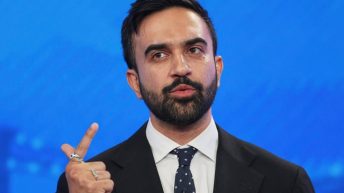
William Lawrence won the Democratic primary for Michigan’s 7th Congressional District after two more moderate Democrats split the center-left vote, allowing him to prevail. His victory was unexpected given the district’s recent support for President Donald Trump, and it set up a media moment that revealed a lot about how he plans to present himself. The most notable moment came on CNN when host Manu Raju asked him a direct question about the DSA. That brief exchange is worth unpacking because it showed both tone-deaf messaging and political vulnerability.
Raju asked, “So when did you leave the Democratic Socialists of America?” and Lawrence answered, “It was within the last month. I let my membership lapse.” The timing of that claim makes it sound like a last-minute attempt to massage public perception rather than a genuine ideological break. Saying a membership “lapsed” in the month after a primary is not the same as explaining a change of principles or demonstrating a shift to the political center.
Raju followed up, “So did you let that membership expire because of the general election?” and Lawrence replied, “No, it’s just because I wanted to make clear to my constituents that I’m here to represent them.” That answer raises obvious questions. If dropping active ties to an organization is meant to reassure voters about representation, then why wait until after the primary? Voters are smart enough to see the move for what it likely is: optics, not transformation.
When pressed about where he differs from the DSA, Lawrence said, “I don’t want to comment…I’m happy to comment on any particular policy, if you have interest,” and said he was focused on local issues. Avoiding a clear statement of policy differences is a risky tactic in a general election, especially running in a district that leaned toward Trump in 2024. Those who care about ideological purity on the left will see the avoidance as disingenuous, and moderates or conservatives will remain skeptical of any sudden rebranding.
The political math here is obvious: stripping formal ties to a progressive group won’t erase a long public record. Lawrence co-founded the Sunrise Movement, a national climate activist group associated with left-wing policies, which undermines any sudden narrative of moderation. You cannot casually discard a hard-left résumé and expect voters to accept that as evidence of centrism when policy positions and past activism remain on the record.
https://x.com/WesternLensman/status/2085335414341050542
The optics matter because the district is competitive in the opposite direction. Running in a district President Trump carried makes any attempt to appear more palatable to moderate voters especially crucial, but Lawrence’s recent “lapse” explanation sounds more like damage control than conviction. Voters in such districts want specifics and a track record that shows a clear commitment to addressing constituent concerns, not a gesture meant to avoid scrutiny.
There are also practical questions about campaign messaging. If Lawrence thinks letting a membership lapse will prevent questions like “Do you believe in abolishing prisons,” he is mistaken. Those kinds of policy attacks will come regardless, and a vague retreat from organizational ties does not inoculate a campaign against detailed scrutiny. Candidates need to articulate how their positions on criminal justice, energy, and local economic concerns differ from national progressive talking points if they hope to win over undecided voters.
Beyond strategy, there is a broader point about political honesty. Voters value straightforward answers even if they disagree with the candidate’s views. A clear explanation of what has changed, if anything, and why should be given directly rather than implying a technicality about membership status. Evasive answers leave space for opponents to define the narrative and for skeptical voters to assume the worst.
Ultimately, Lawrence’s brief interview illustrates how last-minute attempts to reshape a public image can backfire. The “lapse” line will likely be replayed as evidence of political maneuvering rather than principled evolution. In a district that did not vote for his party’s presidential nominee, that matters a great deal, and his campaign will need far more than a lapsed membership to convince swing voters that he represents their priorities.

Add comment