
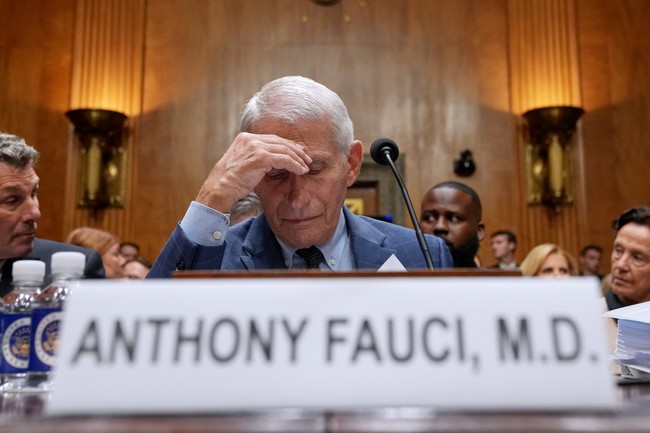
Republicans are turning up the heat after the Senate Homeland Security Permanent Subcommittee on Investigations obtained a copy of Anthony Fauci’s COVID-era iPhone and downloaded its contents, revealing tens of thousands of texts, hundreds of voicemails, and an odd pattern of stored contacts that has raised fresh questions about transparency during the pandemic years.
The controversy picked up steam after a July congressional hearing where Fauci largely refused to answer questions, a stance that led the Senate committee to hold him in contempt of Congress. That contempt vote now sits with the Department of Justice to decide whether criminal charges are warranted. The phone data arrived with the subcommittee chaired by Senator Ron Johnson and promptly became the focus of GOP scrutiny.
Investigators say the phone contains over 34,000 texts and 533 voicemails spanning roughly from 2014 up until a few days before Fauci left the National Institutes of Health in December of 2022. That volume of material could shed new light on who Fauci communicated with, when, and about what, and Republicans argue the public has a right to know how key pandemic decisions were discussed behind closed doors.
Senator Johnson discussed the discovery on television, noting the sheer amount of material and warning that the committee will handle the release thoughtfully. He emphasized the need to preserve evidence and to protect the integrity of ongoing interviews with people who may appear in the messages. The subcommittee says it will release items the public needs to see while keeping investigatory material secure.
What grabbed attention across the political spectrum was one odd detail reported by Johnson: Fauci’s phone apparently listed only three stored contacts. “I can’t and my staff can’t guarantee that everything was preserved. What is odd is most of those text messages are associated with a phone number. He only had three contacts, which is pretty odd,” Johnson said. That single quote highlights what Republicans see as a glaring anomaly needing explanation.
https://x.com/C__Herridge/status/2085856130052628885
For GOP critics, the tiny contact list looks less like an accident and more like a red flag. Over an eight-year span, during which Fauci was a central figure in the federal pandemic response, having only three stored contacts suggests either preemptive deletion of data or a practice of not saving people’s names—either of which raises questions about recordkeeping and intent.
Republicans point to this pattern as consistent with broader concerns about accountability during the pandemic, arguing that key communications may have been obscured from oversight. Investigators will be trying to determine whether messages were intentionally deleted, whether other records exist elsewhere, and whether the information on the device aligns with sworn testimony and public timelines.
The committee’s move to obtain and download the phone came after a lengthy process of subpoenas and document requests tied to the larger probe of pandemic-era policy decisions. GOP members say this is part of their duty to follow the facts wherever they lead, and they stress that methodical disclosure, rather than a dump of raw files, will better serve both investigators and the public.
Demands for transparency on pandemic records have been a repeated theme in Republican oversight efforts, and this phone cache gives them a fresh avenue. The volume of texts and voicemails alone makes clear there is a substantial paper trail; the strikingly small number of saved contacts adds a layer of mystery that Republicans say must be explained before the public accepts Fauci’s account of events.
There are practical steps investigators can take to test competing theories about missing or altered records, from forensic analysis to seeking archives from other communication channels. GOP lawmakers have indicated they will pursue those routes and coordinate with sympathetic colleagues to ensure any substantive revelations are shared in a way that protects witnesses but still informs the public.
What matters now is whether the data corroborates concerns many Republicans have voiced since the start of the probe: that key decisions and conversations during the pandemic were not always fully transparent and that officials may have shielded facts from oversight. The phone’s contents, properly analyzed and released on a controlled schedule, could either confirm those suspicions or provide evidence that explains the oddities.
Until investigators finish their work, Republicans say they will continue pressing for clarity and accountability. The question hanging over this entire exercise is simple: if someone played a central role in a national crisis, why would their personal device show only three saved contacts across years of intensive public service? That detail alone is driving the demand for answers.


Add comment