
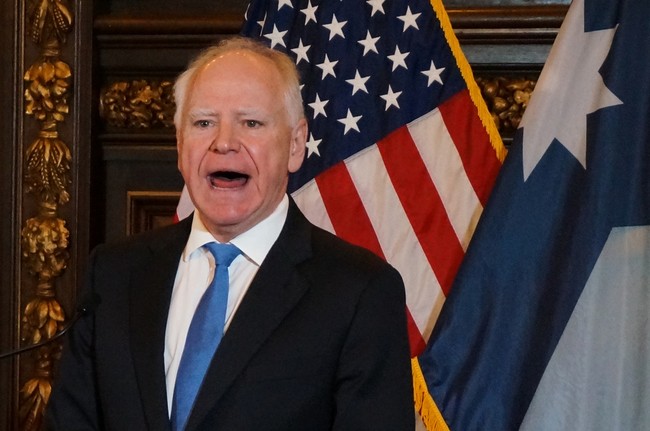
Tim Walz faced tough questioning in a House hearing over alleged social services fraud tied to Minnesota’s Somali community, with Rep. Pat Fallon pressing hard on assimilation, welfare statistics, and the political consequences for Democrats. The exchange exposed data points, sharp accusations, and a notable quip about Democratic vice presidential choices, all while Walz struggled to answer details about the numbers. Embedded clips from the hearing punctuated the session and highlighted whistleblower claims and the broader controversy. The episode has become a flashpoint for critics who say state leadership missed or ignored a major fraud problem.
The hearing opened with lawmakers framing the issue as more than isolated cases, describing a pattern of fraud in social service programs that allegedly persisted under Walz’s governorship. Republicans on the committee argued the problem dates back years and has now reached a scale that demands accountability. Witnesses and representatives pointed to rising whistleblower reports as evidence that the fraud was systemic rather than anecdotal.
When Rep. Pat Fallon took the floor, he zeroed in on the role of the state’s Somali community in those statistics and pushed Walz for direct answers. Fallon prefaced his questions by calling attention to the “70,000-strong Somali community” and asked whether their presence had strengthened Minnesota overall. That line of questioning moved from general discussion to a set of specific comparative figures meant to challenge the governor’s optimism.
Fallon asked, “You’d be of the opinion, fair to say, that the Somali community has successfully assimilated, and is making Minnestoa better?” and Walz replied, “Yeah, I believe they’re on that path,” which prompted Fallon to present what he called “hard data.” The data compared poverty rates, food stamp usage, educational attainment, Medicaid enrollment, and welfare participation between native-born Minnesotans and Somali residents. Those numbers formed the core of the committee’s argument that assimilation claims deserve closer scrutiny.
Among the figures Fallon cited were a 6 percent difference in poverty rates, a 7 percent difference on food stamp usage, a 5 percent gap in those without at least a high school diploma, and an 18 percent figure for families with one member on Medicaid followed by the parenthetical “[Note: the correct number for Somalis is 73 percent].” He also contrasted a 21 percent welfare participation rate for native-born Minnesotans with an 81 percent rate for Somalis. Those sharp contrasts were intended to show a striking divergence in public assistance dependency.
Walz at times appeared unfamiliar with the specifics Fallon offered, prompting the congressman to summarize the stakes bluntly. Fallon told the governor there were “only two explanations” for massive fraud occurring over seven years: either the governor was “in on it or you weren’t smart enough to see it.” That blunt framing was meant to push Walz beyond political talking points and into concrete detail about investigations and oversight.
The hearing also turned to whistleblowers, who Republicans say provided critical leads and documentation about fraudulent claims and alleged abuses of the social services system. Fallon highlighted an uptick in such reports and used them to argue the issue had been covered up or overlooked at the state level. Those whistleblower accounts formed the narrative backbone for committee requests for records and follow-up inquiries.
A politically charged moment came when Fallon drew a line between competence and political positioning, and delivered what many in the room saw as a stinging political observation. He suggested Democrats have a habit of selecting running mates who won’t outshine the top of the ticket and implied that choice reflects badly on the party’s bench. That jab tied the policy debate back into a broader criticism of Democratic leadership decisions in recent national elections.
Lawmakers continued to press on oversight questions, asking how such fraud could persist and what state systems failed to catch it. Republicans argued that the scale of alleged fraud points to institutional gaps in fraud detection, program administration, or both. The committee signaled it will pursue additional information to determine whether criminal referrals or policy fixes are warranted.
The exchange left Walz facing hard public scrutiny and underscored the role congressional oversight plays in state-level controversies. For critics, the hearing reinforced a narrative of mismanagement that has political as well as administrative consequences. Supporters of the governor will likely emphasize the need for careful review before drawing conclusions, but the hearing has clearly shifted the spotlight onto Minnesota’s handling of social services programs.
Editor’s Note: The mainstream media isn’t interested in the facts; they’re only interested in attacking the president. Help us continue to get to the bottom of the massive blue-state fraud epidemic by supporting our truth-seeking journalism today.

Add comment