
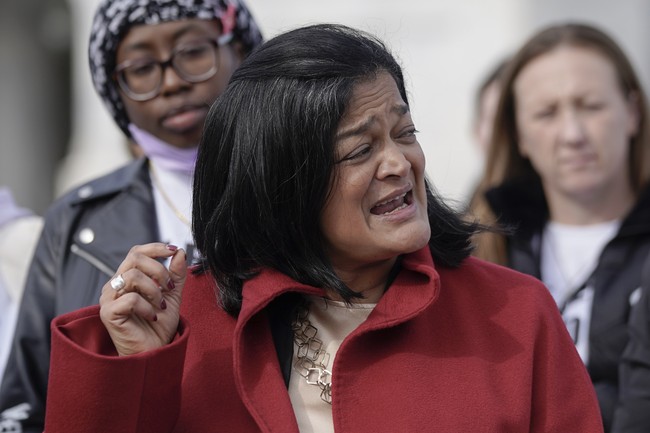
Rep. Pramila Jayapal is under fire after a video clip showed her saying she consulted with Mexican and other foreign officials about getting oil into Cuba, a move critics say undermines U.S. sanctions and helps a regime tied to adversaries like Russia and Iran. The comments have sparked charges of disloyalty from conservative commentators and calls to examine whether her actions conflict with U.S. law and policy. This article lays out what she said, the reactions it prompted, and why many see it as a serious breach of trust by an elected official.
In a Seattle briefing after a congressional trip to Cuba, Jayapal described conversations she had with diplomats about getting fuel into the island. She framed the sanctions as cruel and illegal and presented her discussions as an effort to relieve a humanitarian crisis. Those remarks were captured in a viral clip and quickly became a focal point for criticism.
Her exact words were quoted in the clip: “I was in conversations with the ambassadors from Mexico and some other places … trying to figure out how to get oil there.” Those lines have been repeated by opponents as evidence she was coordinating with foreign governments to subvert U.S. sanctions. The blunt admission is fueling questions about where congressional outreach ends and interference with presidential policy begins.
Critics argue that a member of Congress working to defeat a U.S. embargo crosses an ethical line when doing so in partnership with foreign officials. They point out that sanctions are a tool of national strategy aimed at pressuring regimes linked to hostile powers. To them, Jayapal’s conduct looks like an attempt to blunt that pressure from inside the U.S. system, handing leverage back to regimes hostile to American interests.
Reactions from conservative voices were swift and harsh. One commentator labeled the move “what a traitor does,” while others called for legal consequences and investigation. Turning Point USA’s spokesman was quoted bluntly: “Traitor. She should be prosecuted.” These sharp responses reflect a broader outrage among Republicans who view the episode as a flagrant betrayal.
Legal questions soon followed the political outrage. Several commentators pointed to the Logan Act in criticizing Jayapal, though others noted the law is rarely enforced and controversial in practice. Senator Mike Lee called her remarks “gross” and warned that a member of Congress actively working to undermine U.S. law against an adversary is problematic, even if prosecution is unlikely.
Observers also pointed out the practical limits of the Logan Act. As one former federal prosecutor noted, the statute has never produced a conviction and carries little real-world bite. Still, many argue that the lack of prosecutions does not erase the moral or political problem when an elected official appears to side with foreign governments over U.S. policy goals.
Jayapal defended her actions by asserting that meeting with ambassadors is routine for members of Congress, saying, “Breaking news: Members of Congress meet with ambassadors of other countries every day. That’s literally our right and responsibility.” Supporters say diplomacy and oversight often require such engagement, while critics say context matters and actively seeking ways to bypass sanctions is different from routine diplomacy.
Beyond legal technicalities, the episode raises plain questions about loyalty and judgment. Elected officials swear an oath to defend the Constitution and to advance U.S. interests, a duty that includes upholding laws designed to protect national security. Many conservatives see Jayapal’s statements as a violation of that duty, even if they do not rise to the level of criminal conduct.
Public trust in foreign policy depends on clear, consistent signals from Washington, and when lawmakers openly contradict those signals while coordinating with foreign actors, it undermines credibility. That loss of credibility matters to allies and it emboldens adversaries who watch for splits within the U.S. government. For critics, this episode is less about one trip and more about the precedent it sets.
At the same time, defenders argue that attention to humanitarian suffering in Cuba is legitimate and that lawmakers sometimes must push back on policies they see as causing harm. But the debate over intent, method, and consequence is now playing out in public, with conservatives framing Jayapal’s conduct as a betrayal and demanding accountability from colleagues and from legal authorities.
The controversy is unlikely to vanish quickly. It has tapped into broader partisan fault lines over foreign policy, congressional prerogatives, and how far members of Congress may go in challenging the executive branch. For now, Jayapal’s remarks remain a rallying point for critics who claim she aided adversaries by trying to undercut American sanctions.
Many on the right are watching to see whether House leaders or law enforcement will take any formal steps, while the public debate about the proper role of lawmakers in international affairs continues to heat up.

That’s Treason why isn’t she arrested and sitting in prison.
Our government top officials lost their balls and this is why democrats keep getting away with all there corruption. The cesspool swamp creatures keep getting away with everything corrupt.