
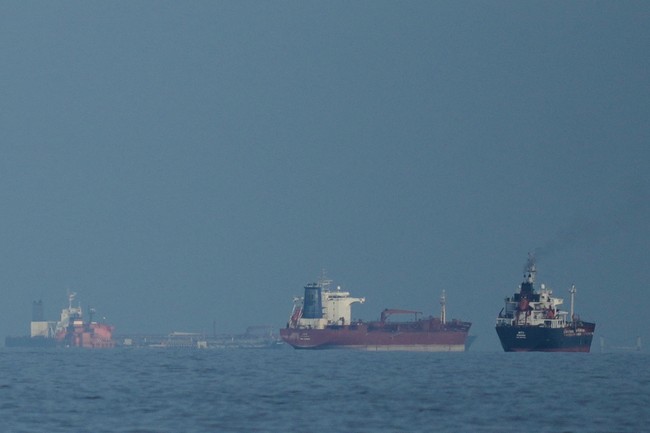
The Czech Republic has quietly stepped up, offering specialized surveillance capabilities to support efforts to secure the Strait of Hormuz, aligning closely with the Trump administration’s push to protect freedom of navigation and blunt Iranian pressure on a vital global oil route.
The troubles in the Strait of Hormuz are not limited to Iran or the countries immediately around the Gulf. Disruptions there ripple across global markets and affect economies in Europe and Asia, so even a landlocked NATO member has an interest in the outcome. Prague says it can contribute unique passive surveillance tools to help monitor shipping and deter threats without sending a navy it does not have. That move highlights a different kind of contribution that allies can make when hard naval power is not an option.
The Czech Republic is prepared to help protect freedom of navigation in the Strait of Hormuz and is aligning closely with the Trump administration on security, NATO and Israel, Czech Foreign Minister Petr Macinka told Fox News Digital during an exclusive interview at the United Nations in New York.
Prague already had begun discussions about contributing specialized capabilities to help secure the strategically vital waterway amid growing tensions with Iran, Macinka said while speaking at Security Council-related meetings at the U.N.
“We are ready to contribute to freedom of passage and the Hormuz trade,” Macinka said.
“We were among the first countries that were ready to contribute … We have no navy, as we are in the middle of Europe,” he explained, “But we have some unique passive surveillance capabilities.”
Those direct quotes underline Prague’s willingness to back operations that protect trade lanes without committing ships. The Czech Republic is landlocked and lacks a conventional navy, so its offer of surveillance tech points to creative alliance support. Passive systems can be force multipliers, giving regional forces and coalition partners better situational awareness. In practice, such capabilities would help spot drone activity, track small-boat harassment, and provide data for targeting and de-escalation decisions.
Economically, the stakes are clear: about one-fifth of global oil consumption flows through the Strait of Hormuz, and any sustained disruption would lift fuel prices worldwide. Even countries not directly dependent on tanker routes feel the pinch through higher energy costs and inflationary pressure. The Czech Republic has its own energy shifts in recent years, moving away from Russian oil deliveries in favor of pipeline supplies from new sources. Those adjustments show that landlocked states can still be vulnerable to maritime chokepoints in a globalized market.
Czech officials have framed Iran’s behavior as a broader international problem, citing multiple tools of pressure beyond naval harassment. “Their nuclear military program must be stopped,” Macinka said, calling Iran’s approach a global risk. He listed nuclear proliferation, drones and ballistic missiles, international terrorism, and threats to the Strait of Hormuz as the main vectors of concern. That assessment matches what multiple capitals see as an interconnected set of threats that require coordinated responses.
European responses so far have been uneven, with some capitals reluctant to escalate militarily and others constrained by political calculations and rules of engagement. Britain and France have offered limited naval support under conditional terms, and many European governments prefer diplomatic or economic levers. Against that cautious backdrop, Czech willingness to add surveillance capabilities is notable because it widens the menu of allied contributions without demanding ships or major logistics footprints.
Prague is not limiting its security posture to the Middle East. It has also been active in supporting Ukraine with arms and logistics, which demonstrates an appetite for helping partners defend sovereignty and resist aggression. That pattern of assistance suggests Prague sees a continuity between defending European neighbors and safeguarding global trade routes that underpin Western economies. The Czech approach leans on buy-in from NATO partners while expanding the coalition of contributors in practical ways.
Policy debates will persist about how best to deter Iran while avoiding escalation into wider conflict, and whether surveillance and intelligence sharing can be scaled rapidly enough to make a difference in a volatile theater. Still, contributions that improve maritime domain awareness are low-risk compared with deploying large strike forces and can change the calculus for adversaries who rely on ambiguity and surprise. For allies, offering what they can—technical systems, intelligence fusion, and logistics—demonstrates resolve without requiring identical capabilities from every partner.
What matters now is coordination: integrating passive surveillance feeds into command structures, ensuring legal and diplomatic frameworks are clear, and matching Czech offerings with platforms and rules that make them actionable. If allied inputs are properly tied to regional commanders and political directives, they can enhance deterrence and reduce the chance of miscalculation. Prague’s public alignment with U.S. aims sends a signal that the issue is not just regional but a collective security concern.

Add comment