
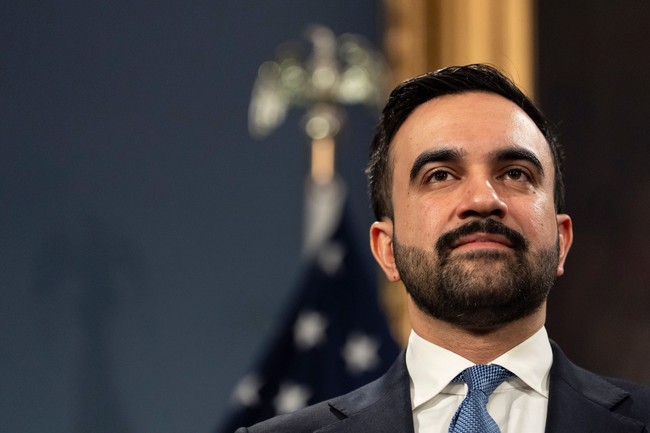
The New York mayor’s unexpected endorsement in the NY-13 Democratic primary has blown up into a fight inside the party, with a socialist insurgent challenging a long-entrenched incumbent and sparking sharp reactions about suitability, strategy, and the future direction of local Democrats.
Zohran Mamdani’s endorsement of Darializa Avila Chevalier over incumbent Adriano Espaillat has put a spotlight on intra-party divisions in northern Manhattan and the Bronx. The move pits a rising leftist brand against a veteran representative who has held the seat comfortably for years. What started as a local primary now reads like a debate about control and identity within the Democratic coalition. For many longtime residents and observers, the choice feels less about policy detail and more about whether radical fringes should steer mainstream politics.
Mayor Zohran Mamdani has launched a civil war in the Democratic Party with his controversial endorsement of a fellow socialist’s bid to oust incumbent Rep. Adriano Espaillat, insiders said Monday.
Mamdani’s decision to support fellow Democratic Socialists of America insurgent Darializa Avila Chevalier in the June 23 primary for the northern Manhattan/Bronx House 13th House District is part of a long-term effort by him and fellow socialists to take control of the Democratic Party, sources said.
The district itself is overwhelmingly Democratic and deeply blue, so the immediate real-world consequence is limited: whoever wins the primary is almost guaranteed the general election. That reality doesn’t stop the primary from becoming a proxy war, though. Local activists, donors, and elected officials are watching closely because endorsements like Mamdani’s can amplify a challenger’s profile and fund-raising, even if they don’t change the math overnight. The optics matter: a mayor throwing support behind a DSA-aligned insurgent sends signals about alliances and priorities.
Avila Chevalier has blasted cops, establishments Democrats and even once called the US “a f—king disgrace” in social media posts.
She called former President Joe Biden a “rapist” and “war criminal” when he ran for the Oval Office in 2020 and even slammed lefty hero, Sen. Bernie Sanders, for his “liberal Zionism” after he voted present on Israeli military funding.
“I forgot to get napkins so I just wiped my hand on the American flag behind me,” she posted online in 2019 along with a smiling face emoji.
That quoted language crystallizes why the endorsement landed as it did: Chevalier’s record of inflammatory comments and confrontational politics alarms many voters who prefer steadiness over spectacle. Critics argue that these kinds of public statements disqualify someone from serious legislative responsibility. Supporters, meanwhile, say raw rhetoric is part of a larger fight against establishment complacency. Either way, the debate has sharpened into moral and strategic critiques of what kind of Democrats should represent diverse, working neighborhoods.
Practically speaking, the field also includes fringe contenders whose long-shot bids won’t alter the baseline: Adriano Espaillat, Darializa Avila Chevalier, Oscar J. Romero Jr., and Theo Bruce Chino-Tavarez. Polling so far has suggested that Espaillat retains a comfortable lead, and the one publicly noted survey shows him ahead by a notable margin. That data, combined with name recognition and incumbent advantages, makes an upset unlikely. Still, in a crowded primary, even modest shifts in turnout or endorsements can produce surprises.
Mamdani’s intervention has ripple effects beyond the district lines. Other New York Democrats in tighter races are nervous about endorsements that tether them to a mayor whose judgments are controversial. Elected officials who rely on coalition discipline worry that a string of similar endorsements could weaken the party’s ability to compete in more vulnerable districts. To opponents, the mayor risks alienating pragmatic voters and energizing conservative critics who point to internal chaos as evidence of dysfunction.
Some on the right are already framing the situation as symptomatic of a broader leftward lurch inside the Democratic Party, one that makes room for radical rhetoric and policies that many voters find unappealing. That framing drives a political argument: if mainstream Democrats tolerate or enable fringe candidates, they hand an organizing narrative to opponents who will preach stability and practical governance. For those who favor limited government and civic order, the spectacle confirms concerns about electability and policy priorities.
It’s worth noting the symbolic stakes: endorsements from prominent local leaders still carry weight, and a mayor’s backing can be a multiplier when paired with activist networks and volunteer engines. Whether Mamdani’s pick changes the outcome in NY-13 or not, the episode highlights how local endorsements can magnify divisions and force uneasy conversations about who the Democratic Party should be. In the short term, voters will decide on June 23, and the broader debate about direction and discipline will keep playing out across New York politics.
Add comment