
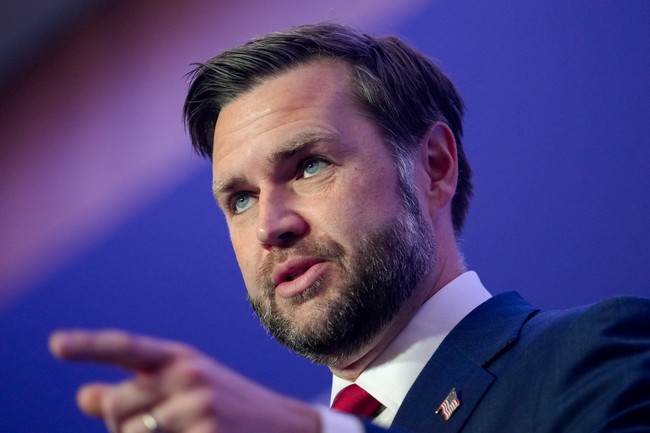
The piece examines a recent exchange between Vice President JD Vance and Michigan Democrat Senate nominee Abdul El-Sayed, focusing on El-Sayed’s remarks about Vance’s children and Vance’s forceful response. It tracks the unfolding media moments, reproduces the candidate’s controversial quotes, and places the confrontation in the broader context of 2026 politics and Republican messaging. The article critiques El-Sayed’s tone and tactics while highlighting Vance’s argument about rebuilding the middle class and American industry. Readers get the key quotes intact and a clear portrait of how this spat plays to voters ahead of the midterms.
Abdul El-Sayed, who recently won the Michigan Democratic Senate primary, has been piling on personal attacks instead of laying out policy, and his tone has raised eyebrows among many voters. From snarky jabs about JD Vance’s past book to a line of insults that crossed a clear line, El-Sayed’s remarks look like classic online outrage politics rather than serious campaigning. This trend plays into a familiar pattern where far-left candidates default to mockery and media moments instead of sober plans for working families.
Vance didn’t let the attacks slide. In a Saturday interview on Fox News, he called El-Sayed “crazy” and described the candidate’s behavior as out of step with what Michigan needs from a senator. Vance made the point that personal smears aimed at children are beneath the dignity of public discourse, and he contrasted El-Sayed’s nastiness with a focus on practical economic recovery. The vice president framed his rebuttal around rebuilding the middle class and restoring American manufacturing, which is a message that resonates in an industrial state like Michigan.
“Is that Peter Thiel’s boy with that Ohio charisma he’s got?” El-Sayed sneered. “That guy. I think we’ve had enough of him. The last thing that he said that made any sense was ‘Hillbilly Elegy’, after he said that Donald Trump had no business being president of anything. That was the last time he made sense, and then he decided to suck up to power.”
Those lines from El-Sayed read like a reheated social media takedown, full of swagger but light on substance. Mocking a politician’s past opinions is one thing; dragging his family into the mud is another. Vance’s response made it clear that there’s a boundary even in rough-and-tumble politics, and many voters will see El-Sayed’s comments as an unnecessary escalation aimed at grabbing headlines instead of offering solutions.
On a podcast back in April, El-Sayed went further and targeted the Vance children directly, and those words now form the central outrage of this episode. His tone suggested moral superiority while minimizing the human reality of parenting and family life, and that struck many as both cruel and counterproductive. Political operatives know that attacks on family members rarely land well with mainstream voters, especially in battleground states where turnout and persuasion matter most.
“I think the guy is crazy and would be a terrible senator for the people of Michigan.”
https://x.com/FoxNews/status/2086130035358924916
@VP JD Vance unloads on Michigan Senate candidate Abdul El-Sayed, accusing him of resorting to personal attacks instead of explaining how he’d improve life for voters.
“He’s also gone after my kids. He’s just kind of an odd guy,” Vance says, before contrasting El-Sayed’s economic approach with President Trump’s agenda.
Vance argues the path to prosperity is “rebuilding the middle class” and America’s industrial base, while crediting Trump’s policies with helping Michigan’s auto industry.
Here is the exact passage from El-Sayed’s earlier remarks that escalated the conflict, and it explains why Vance’s pushback gained so much traction. The candidate directly questioned how Vance could reconcile parenting with a politics he framed as exclusionary, and he used vivid language to drive the point home. Preserving the text of that exchange matters because it shows plainly why conservatives and many independents reacted with disgust.
Dr. Abdul Sayed, a Senate candidate tied for the lead in the Michigan Democratic primary, asked Vice President JD Vance how he reconciles having “brown kids who he thinks are less American than everyone else.”
“That’s wild—to look at your own kids and be like, you don’t actually belong as much in this country that I brought you into,” Sayed said. “It must break you every time you hug your own kids. I’m so sorry.”
“The thing about JD Vance—he has the charisma of a doorknob,” Sayed said. “Literally the aura of a toad. You’re not winning an election, my friend. I’m so sorry.”
“He’s got brown kids. At some point, he’s going to have to have a really awkward conversation with his kids, like—you made your career hating people who are different.”
Those words are raw and personal, and for a lot of voters they crossed from political critique into cruelty. Vance’s defenders argue that the candidate can handle tough policy scrutiny but that his kids are off-limits. The episode reinforces a broader Republican argument: Democrats flirting with radical rhetoric are out of touch with the average voter who wants practical results, not moral grandstanding.
Beyond the heat of the moment, the clash helps define the stakes of the 2026 midterms for many conservatives. Republicans see this as proof that Democrats are elevating fringe voices over electable, policy-minded candidates, and they’re using the story to drive turnout. If the goal is to win swing voters in states like Michigan, campaigning on kitchen-table issues and respect for family values still beats viral outrage every time.

I am a very liberal democrat. I think that El Sayed’sremarks are beyond disgusting.