
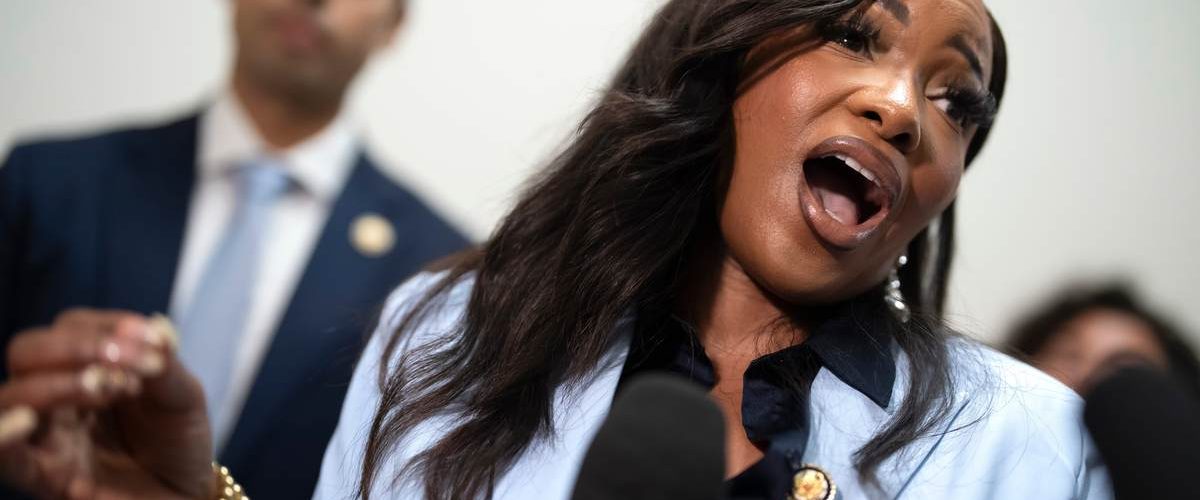
Rep. Jasmine Crockett’s post-primary stance has stirred controversy as she chose to prioritize down-ballot efforts over campaigning with her party’s Senate nominee, sparking backlash from fellow Democrats and political observers who expected unified support in a competitive Texas race.
Jasmine Crockett lost the Senate primary to James Talarico and has since faced questions about whether she will join him on the trail. In a television interview, she framed her role as focusing on other races that risk being overshadowed, emphasizing a broader look at the party’s needs rather than rallying behind a single campaign. Her answer cut against expectations and ignited criticism from the party’s base, who see united statewide efforts as essential in a tough political environment.
When pressed directly about campaigning with Talarico, Crockett said, “I will be campaigning down ballot,” a line that immediately grabbed attention and fueled outrage among some Democrats. That choice of words was interpreted by many as a deliberate step back from the high-profile Senate fight, and it raised questions about priorities and solidarity in a state where every vote matters. For Republicans watching, it looked like an opening to exploit disarray on the other side and drive a wedge between factions.
Crockett explained her decision by pointing to the sheer scale of Texas and the practical limits of time and travel when asked if she could do both. She suggested that concentrating on lesser-known candidates would help prevent them from being lost in the shuffle of one marquee race. Critics argue that such reasoning sounds more like an excuse than a strategy, and that the optics of declining to fully support a statewide nominee will not play well with voters who want unity from their leaders.
She also addressed the mood among black voters, saying she didn’t believe they were particularly excited about the choices on offer. Crockett described black voters as practical and suggested enthusiasm isn’t always necessary if policies meet people’s needs, a take that came off as blunt and unsatisfying to those demanding visible engagement. That candidness only intensified backlash from left-leaning activists who expect both passion and presence from their representatives.
The reaction from the left was swift and harsh, with social media clips and comment threads filling up with calls for her to step up and campaign for Talarico. Online critics accused her of throwing the statewide effort under the bus just as Republicans aim to capitalize on any Democratic disunity. From a Republican perspective, this sequence of events underscores how internal debate and public second-guessing can sap momentum and hand advantages to the opposition.
https://x.com/Acyn/status/2093179282612949427
Journalists and observers also noticed that Crockett named no specific down-ballot candidates she planned to promote, which raised doubts about whether her pledge was grounded in real coordination or merely rhetorical. That omission allowed skeptics to argue she offered a political dodge rather than a clear plan to boost the party’s overall chances. For conservatives watching, the absence of details confirmed long-held views that Democrats often underperform when their leaders prioritize symbolism over strategy.
Beyond the immediate controversy, the episode spotlights a deeper problem for Democrats in Texas: candidates perceived as extreme or inconsistent struggle to connect with broader electorates. Talarico has been working to reshape his image, but history of unusual positions and past statements leaves openings for opponents to question his electability. Republicans see this as a practical advantage in a state where voters lean toward candidates who project steadiness and common-sense policies.
What Crockett’s comments illuminate is a broader conversation about campaign discipline and the practical mechanics of getting out the vote in a sprawling state. Republicans argue that disciplined, coordinated statewide efforts, paired with clear messaging on policy, are the reliable path to victory. They view the public fracturing among Democrats as a sign that voters may favor candidates who stay focused on pocketbook issues and local concerns rather than intra-party disputes.
The political fallout will play into fall messaging on both sides, with Democrats scrambling to repair optics and Republicans sharpening attacks about competence and cohesion. For now, Crockett’s decision and the backlash it spawned serve as a reminder that politics in a big state demands both visible unity and tangible plans to mobilize voters across diverse communities. The next weeks will show whether her emphasis on down-ballot races translates into tangible gains or simply deepens divisions at a critical moment.

Add comment