
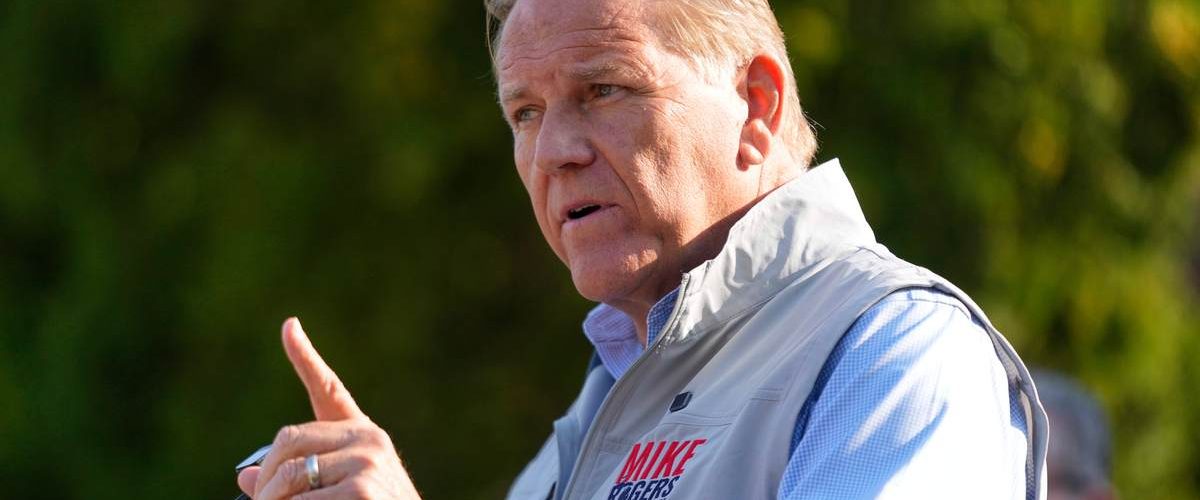
Mike Rogers has pushed back hard against Democrat Abdul El-Sayed, using his FBI background and steady ground game to highlight troubling associations and extreme positions. In a recent interview Rogers called out El-Sayed as a “conman,” pointed to endorsements and statements that raise real concerns for Michigan voters, and contrasted his own law-and-order credentials with El-Sayed’s online persona. This piece lays out the exchange, the evidence Rogers points to, and why that contrast matters in a closely contested Senate race.
We are a month into the general election campaign and Rogers has kept a practical, boots-on-the-ground approach while El-Sayed has leaned into performative social media posturing. Where El-Sayed plays the tough-guy online, Rogers is working to peel away disaffected voters by exposing inconsistencies and associations that matter to mainstream Michiganders. That strategy aims to blunt El-Sayed’s social media theater and convert skepticism into votes.
The turning point in recent coverage was Rogers’ interview with Sean Hannity, where he used language that landed. Rogers didn’t just sling labels; he leaned on his experience as a former FBI agent to explain why certain behavior and alliances set off alarm bells. That law-enforcement credibility gives his critique weight beyond partisan smearing, and it frames the contrast in terms voters understand: safety, judgment, and honesty.
Yeah, I think Hasan Piker is the alpha male in that relationship. This guy follows him around, can’t wait for his next hateful speech about America, and by the way, there’s so much stuff on this, Sean, go to StopAbdul.com. Don’t believe us; we’ve used his own words, laid it out for ya. Everybody can go [to the website]; you can see what a con man he is. He says one thing, and now he’s trying to say something else, exactly like a conman.
You know, I was an FBI agent; I went after drug dealers and human traffickers and swindlers, and I know a conman when I see one. Boy, he ranks right up there. And I think the Jesse Watters interview just completely showed that. He is just too extreme for our state.
That block of remarks resonated because it linked El-Sayed to personalities and rhetoric outside mainstream American norms, and Rogers repeatedly returned to tangible examples. The campaign has highlighted endorsements and public comments that, taken together, suggest a pattern that many voters will find troubling. Calling someone a conman matters less than proving why voters should distrust their statements, and Rogers structured his case to do exactly that.
Beyond rhetoric, the campaign has pointed to specific endorsements and associations that are difficult to dismiss as mere political noise. Rogers’ team has emphasized endorsements from figures who have cheered extremist violence or trafficked in divisive conspiracy talking points, arguing those ties reflect poor judgment or worse. For many voters, endorsements are a signal about who a candidate is comfortable with and who they answer to when pressure mounts.
El-Sayed’s comments about Israel and certain terrorist-related issues have been highlighted as further evidence that he is out of step with mainstream Michigan voters. Accusations of “genocide” and careful wording around terrorist incidents have been presented as examples of a pattern where empathy for some groups crosses into apologetics for violent actors. Rogers’ messaging insists that defending American allies and standing firm against terrorism are not partisan niceties but core responsibilities of a senator.
Rogers’ background as an FBI special agent adds credibility to his claims when he ties El-Sayed to individuals described as sympathizers of violent groups. That professional experience is the backbone of his pitch: he isn’t guessing about character, he’s assessing it based on encounters and investigations. For voters worried about national security, law enforcement, and clear-eyed leadership, that assessment is meant to cut through social media theater.
https://x.com/MikeRogersForMI/status/2093384243699229004
The campaign fight is also stylistic. Rogers projects steady competence and a focus on nuts-and-bolts issues, while El-Sayed trades in performative outrage and online posturing. In a purple state like Michigan, where swing voters decide outcomes, the campaign that appears more reliable under pressure tends to win. Rogers is betting that contrasting proven experience with edgy rhetoric will sway those undecided voters.
Michigan’s Senate contest is shaping up to be about judgment and allegiance as much as policy. Rogers is pressing the idea that a senator should stand unambiguously with American allies and against terrorism, while questioning whether El-Sayed’s record and associations meet that standard. With two months left before the election, that argument will be tested at the ballot box.
Watch:
Not only has Rogers used his own credentials to make the case, he has repeatedly reminded voters of the stakes when a candidate equivocates on extremist ties or rhetoric. In a race decided by margins that can be razor thin, framing matters, and Rogers is clearly trying to frame this contest around competence, security, and character. The outcome will turn on whether Michigan voters buy that frame or prefer El-Sayed’s alternative.

Add comment