
Checklist: Describe the curfew and its purpose; report how protesters and police responded; include official statements and quoted material exactly; explain the sequence of arrests and crowd-control tactics; note allegations about detention conditions while keeping a Republican perspective.
Newark imposed a nightly curfew around the Delaney Hall immigration detention center after days of protests, but the order failed to clear the crowd. Demonstrators stayed in place as police warnings were issued and a large law enforcement presence moved in, creating a tense standoff that escalated into arrests and forceful dispersal. The situation highlights the challenge of enforcing order when local leaders try to manage protests that target federal operations. This account focuses on the facts of the curfew, the response, and the public safety issues that followed.
The curfew applied to a half-mile radius around Delaney Hall and was set to run from 9 p.m. to 6 a.m. nightly until further notice. City officials announced closures and limits on pedestrian and vehicle access in the affected area. Troopers began issuing verbal warnings roughly thirty minutes before the curfew start time, signaling that enforcement would be immediate. The display of armored vehicles in the vicinity showed authorities were prepared for confrontation if the crowd did not disperse.
https://x.com/CityofNewarkNJ/status/2060938078118653985
“Due to the escalating situation at Delaney Hall and the increasing need for police intervention, immediate action is required to protect public safety. Multiple individuals have already been arrested and found in possession of weapons, underscoring the seriousness of the threat.
“To ensure the safety and well-being of all residents, a mandatory curfew for a half-mile area surrounding Delaney Hall is being implemented, effective immediately.
“Beginning at 12 a.m., Doremus Avenue will be closed to all pedestrian traffic. Vehicle access will be strictly limited to those with verified official business in the area. This curfew will remain in effect nightly from 9 p.m. to 6 a.m. until further notice.
“Individuals found in violation of this curfew will be subject to enforcement actions. A warning to leave the area will be issued initially. However, any continued non-compliance will result in removal from the area and the issuance of appropriate summonses and/or further legal action.”
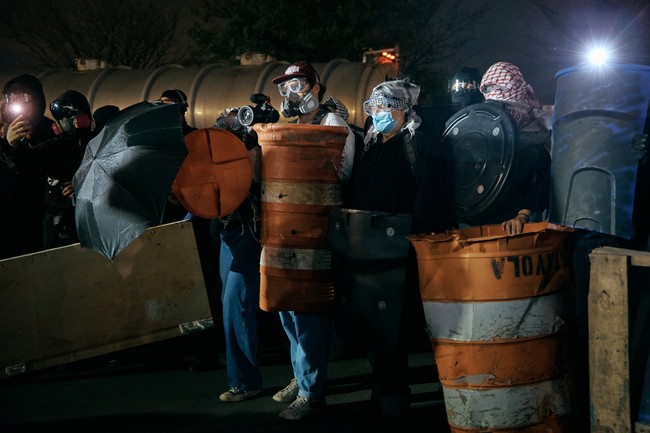
Despite those warnings, the crowd ignored the order and remained near the facility as the curfew began. By 9 p.m., demonstrators had not dispersed, and officers prepared to move in to enforce the restrictions. Around 10 p.m., large numbers of state and local law enforcement, many in riot gear, advanced into the protest zone. The advance included tactics designed to clear streets and detain individuals who refused to comply.
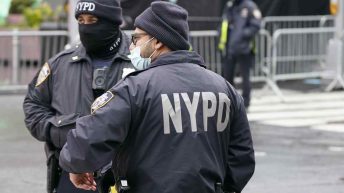
Police lines swept through the area, detaining multiple people and driving demonstrators away from the detention center. Reporters present were also forced back from the scene during the sweep. Video and eyewitness accounts showed law enforcement forming perimeters and using crowd-control measures to regain control of the area. The visible use of force underscores the law enforcement priority of restoring order around a federal facility.
Authorities reported that one activist was taken into custody during the operation and that arrests continued into the night. The Department of Homeland Security amplified footage showing protesters surrounded by officers on multiple sides, a technique commonly called kettling. That tactic generated criticism from advocates, but officials framed it as a necessary step to prevent further escalation and to protect both detainees and officers. The immediate aim was to reestablish controlled access to the detention center and protect public safety.
In the days leading up to the curfew, some demonstrations reportedly turned violent, with barricades attacked, projectiles thrown, and tires set on fire. Those actions strained relations between protesters and law enforcement and prompted state intervention. State officials had earlier tried to set up designated peaceful protest zones, but clashes persisted. The breakdown of those arrangements made a stricter perimeter and curfew appear, to authorities, as the only viable option to secure the area.
“These actions put both peaceful protestors and law enforcement in danger. We need to take this opportunity to lower the temperature.”
Allegations about conditions inside Delaney Hall motivated the protests, with advocates saying detainees launched a hunger strike and reported problems such as expired food and lack of medical care. Lawyers for some detainees echoed those claims in public statements, and some members of Congress who toured the facility expressed concern. Federal officials, including representatives of the prior administration, denied misconduct and said operations would continue as usual. Those conflicting accounts fed public anger and fueled the demonstrations.
The sequence of events revealed a clash between local management of unrest and federal custody operations, with protesters refusing to heed a legally imposed curfew and officers using aggressive measures to enforce it. Arrests were ongoing as the night progressed and the curfew remained active. For Republicans focused on law and order, the episode underscores the need for clear enforcement and the risks posed when protests cross into disorder. The situation in Newark remains a reminder of how quickly demonstrations at federal facilities can spiral into incidents requiring significant police intervention.

If the protestors are being paid by Soros or other Marxist/Communist elites or even if they are not being paid, every one of the protestors who are obstructing ICE or law enforcement needs to be arrested and fined like $10,000 and they soon would learn that being mercenary violent or disturbing-the-peace protestors will soon put themselves into bankruptcy.
It’s about time “Rule of Law” take Precedent and take down all of these Seditious Traitors and lock them up!
Uphold the US Constitution, and there are Federal Statutes regarding the Fomenting of Riots or Anarchy, so now is the time to apply them! Say Never Again; [“a wave of protests and rioting unlike any the United States had seen since “The Long Hot Summer of 1967.” Almost every major American city experienced multiple protests, some unlawful, and some extremely violent;” after the Long Rap Sheet Criminal George Floyd brought on his own demise!] Policemagcom.
Democrats want to defund the police now a democratic governor needs the police to help remove violent protesters!!! Instead of removing them arrest them charge them with felonies and lock them up !!!! There’s NOTHING peaceful about these antifa scumbags!!!!
Ron you said it as it is, spot-on!
NJ Governor Sherrill took an Oath to uphold the Constitution not to obstruct Federal Law, shielding criminals like rapist, murders and human drug trafficking over the citizens!! This is not a game playing over Democrat or Republican its about the Oath She took to protect the NJ people!! Sherrill #1 job duty! She should know that from being in the Service and the big deal she made campaigning that she flies a helicopter!! That’s was her reason of why she should win besides the usual democrat lies to get into office.
Stace some good points here and this, “This is not a game playing over Democrat or Republican;” for me sets the stage, how it’s become more about winning political points to gain the upper-hand or who and what party will lead the charge and have the advantage in manipulating the “Political Circus of America” rather than both sides just working their asses off “to do what is absolutely best for the Citizens of America!”
Why?
I think its because its become a “Power Trip and a very Corrupted Game in Government,” which has evolved into this monster with a mind of its own choosing and not what the U.S Constitution when it was established spelled out clearly what rules and laws of sound judgment or principles should rule the land of the People! In other words I think we have a convoluted and twisted sister or one hell of a mess on our hands now, with one group of power brokers over another attempting to gain more and more to absolute control; Yes, a sick and wicked game it is!