
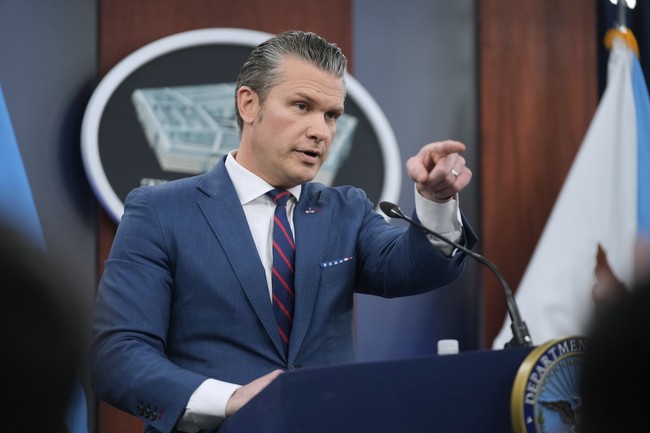
The Senate Appropriations hearing featuring Secretary of War Pete Hegseth turned into a blunt, no-nonsense call for priorities: rebuild the warrior ethos, hold leadership accountable for years of neglect, and stop partisan games that leave American service members underfunded while foreign aid sails through. Hegseth laid out the shortfalls left by the prior administration and warned that failing to fund readiness now is a strategic risk for future deterrence. His testimony spotlighted a stark contrast between how Washington spends on foreign conflicts and how it treats our own troops. The hearing boiled down to responsibility, deterrence, and the simple argument that Americans should come first.
Hegseth opened by describing the department’s effort to restore what he called the “warrior ethos” and to reverse years of drift. He said the neglect was “staggering,” questioning what had been done under previous leadership and making clear the Pentagon needed urgent, practical repairs. This wasn’t grandstanding; it was a portrait of operational risk and capability gaps that have real consequences for deterrence. The message was plain: neglect costs lives and strategic advantage.
He went further, framing the current budget impasse as more than politics — a vulnerability that adversaries will notice. Sen. Katie Britt (R-AL) backed that point, warning that dysfunction in the chamber signals weakness to rivals who watch our divisions closely. That’s why Hegseth said the inability to properly fund the department was “probably the single greatest threat America faces.” The focus on deterrence echoed throughout his answers: showing strength today keeps wars from starting tomorrow.
Hegseth hammered home a contrast many on the right have been pointing out for months: Congress found ways to fund Ukraine repeatedly, yet now stalls when asked to ensure the readiness of American troops. He noted that funding passed in multiple supplemental bills for foreign partners, while domestic defense needs sit unresolved. “I would argue providing for American men and women, as opposed to Ukrainian men and women, is a higher priority for the United States Senate,” Hegseth asserted. That blunt comparison landed exactly where it was intended — on priorities and political choices.
The secretary didn’t let partisan theatrics distract from the substance. When some Democrats tried to score optics with emotional clips and performative lines about leadership, Hegseth pushed back on the core issue: commitment to funding and readiness. He called out the politics he sees as blocking necessary action and refused to let rhetorical flourishes obscure real shortfalls. The hearing exposed a divide between public posturing and the hard work of resourcing the force.
“Why don’t you show some leadership and stand up for your fellow Democrats who won’t fund the troops, who stand and play partisan politics while you don’t give us the money?
https://x.com/RapidResponse47/status/2079670744837943702
“You want to stand up here and talk about the troops? You won’t show any political courage to actually fund our department because you have Trump Derangement Syndrome and can’t actually commit to anything meaningful.”
In answer to screaming accusations about leadership, Hegseth labeled the refusal to fund the department as “political cowardice of Democrats who won’t fund the troops.” His response was sharp and aimed at responsibility rather than rhetoric, calling for senators to choose readiness over political signal work. The exchange was heated, but the substance remained: if Congress does not supply the tools and funding, commanders cannot deliver deterrence. That reality undercuts hollow claims of concern if they are not backed by dollars and policy.
The testimony also touched on technological gaps like hypersonics and other advanced capabilities that require sustained investment and direction. Hegseth argued that solving those problems takes leadership focused on outcomes, not on scoring short-term points. Rebuilding capabilities means consistent funding, clear priorities, and leaders willing to make tough choices now so the United States is prepared later. The underlying theme was accountability for decisions that affect national security across administrations.
Beyond the heat of the hearing, Hegseth’s message was practical: fund the force, invest in deterrence, and stop letting partisan games erode readiness. He framed the stakes plainly — deterrence requires credible preparation, and preparation requires resources and leadership. Those who claim to care about troops must show it with budgetary priorities, not sound bites. The testimony was a direct challenge to anyone who would treat military readiness as a political bargaining chip rather than an obligation.



Add comment