
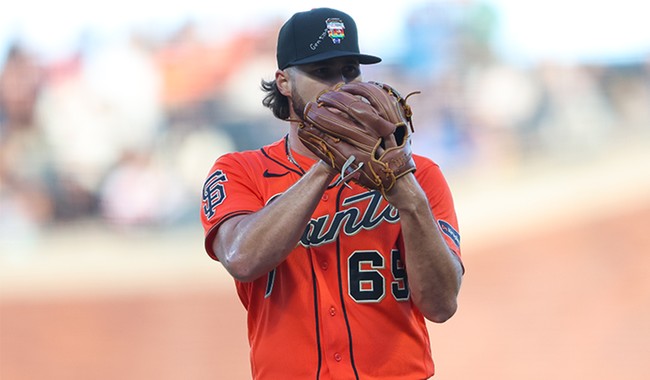
The San Francisco Giants saw attendance dip after a Pride Night controversy involving three Christian pitchers who wrote a Bible verse on their Pride-themed caps, and the dispute has become a fight over religious expression, organizational decisions, and who shoulders the blame for falling ticket sales.
The uproar began when pitchers Landon Roupp, JT Brubaker, and Ryan Walker wrote Genesis 9:12-16 on Pride-themed caps during a June game, while another player simply wore a standard Giants cap. That small, quiet act launched a PR firestorm tied to the team’s Pride Night event and set off warnings from religious liberty advocates and some elected officials. The backlash included public criticism directed at both the players and the Giants organization for how they handled the situation.
Attendance at home games for the San Francisco Giants is down since the fallout of three Christian players on the team demeaning the LGBTQ community at Pride Night began to explode.
Supporters of the players point out that the verse in question is clearly biblical and not a targeted insult. The Genesis passage the players wrote reads: “This is the sign of the covenant I am making between me and you and every living creature with you, a covenant for all generations to come: I have set my rainbow in the clouds, and it will be the sign of the covenant between me and the earth.” That quotation was placed next to the rainbow insignia on the caps, and defenders argue it was an expression of faith rather than an attack.
This is the sign of the covenant I am making between me and you and every living creature with you, a covenant for all generations to come: I have set my rainbow in the clouds, and it will be the sign of the covenant between me and the earth.
Those who view the players as victims say the league and franchise overreacted, creating a double standard in how various social expressions are treated at ballparks. The criticism points to past instances when other symbols and causes were allowed without sanction, arguing that Bible verses were singled out unfairly. That perceived inconsistency fed anger among fans who saw the move as religious discrimination, not misconduct.
Attendance figures became the next battleground. The final homestand before the All-Star Break showed an average reported attendance of 33,413 per game, and some analysts noted a dip of 5 to 7 percent compared with earlier periods. The team remained in the top ten for per-game attendance, but local sentiment and fan behavior suggested a broader trust problem with the organization’s leadership and public relations approach.
The final home stand before the All-Star Break saw an average reported attendance per game of 33,413 fans — the team hosted the Toronto Blue Jays for three games and the division-rival Colorado Rockies for four of them.
That attendance is down 5% to 7% since the Giants’ complete mishandling of the team’s Pride Night — meant to welcome the LGBTQ community to Oracle Park — went upside down with a demonstration by anti-gay players and a PR nightmare.
The Giants have refunded tickets for at least one gay fan, given the team’s demonstration against the LGBTQ community on Pride Night.
Republican voices and religious advocates publicly warned MLB commissioner Rob Manfred and the Giants about the potential legal and civil-rights ramifications of any punitive action. That pressure produced official scrutiny and calls for investigations into whether the league’s response crossed a line into discrimination. The controversy quickly exceeded the locker room and entered the realm of federal civil-rights concerns.
In a follow-up to this story, Harmeet Dhillon, the DOJ’s Assistant Attorney General for Civil Rights, has now entered the chat, informing Manfred and the MLB that they now face a civil rights probe, with the matter being referred to the Equal Employment Opportunity Commission (EEOC).
Many religious families and conservatives say they are choosing not to reward organizations that they believe treat faith expression as a problem. They argue that fans won’t spend money to be dismissed or lectured, and attendance changes reflect that consumer choice. This stance is framed less as a boycott and more as a reaction to perceived unfairness and messaging from team leadership.
Critics of the franchise’s handling insist the episode was a PR and policy failure, not simply a fan-driven decline in turnout. They say the league’s attempt to regulate the message cost trust among parts of its fan base, especially religiously motivated supporters. The issue now sits at the intersection of sports, free expression, and how teams navigate competing cultural demands during the season.
Amid the controversy, creative voices chimed in with cultural commentary, including the line from a favorite songwriter: “There’s no insult like the truth.” That phrase has been used by supporters to underscore their view that stating a religious belief should not be treated as a provocation. The larger debate continues as the season progresses and attendance figures are watched closely by both critics and defenders of the players and the franchise.
Add comment