
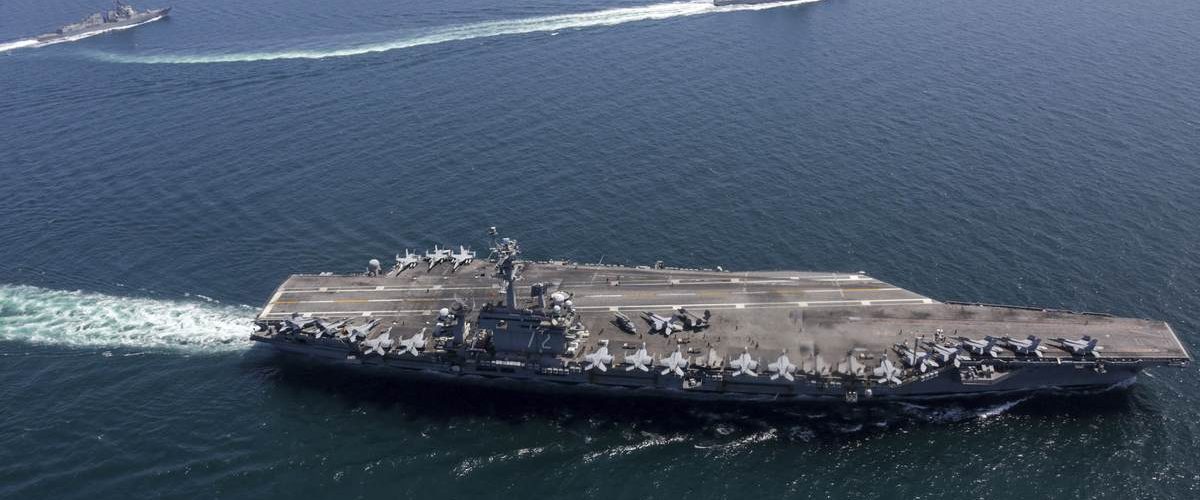
The U.S.S. Abraham Lincoln returned to port after a long deployment, drew attention for visible rust, and sparked a wave of online jabs that were quickly corrected by a Community Note explaining the simple reality: long deployments produce wear and tear, not decline.
The carrier pulled into Laem Chabang in Chonburi province after serving at sea for 286 days, and sailors finally had a chance for shore leave in nearby Pattaya. When people posted photos, the ship’s surface rust became the focus instead of the mission those crew members had been carrying out. Predictably, voices from adversary states and some domestic critics seized on the imagery to claim it showed weakness. That line of attack didn’t hold up against facts or common sense.
Photos of rust on a ship are not glamorous, but they are normal for a vessel that’s been operating nonstop for months. Saltwater, wind, and continuous operations do their work regardless of which navy you serve in, and routine maintenance cycles can’t be paused when a carrier is deployed on high-tempo missions. Anyone who has spent time afloat knows that cosmetic corrosion is a predictable result of long deployments, not evidence that a ship has been abandoned or rendered useless.
The social media reaction was loud and coordinated: accounts tied to Chinese, Iranian, and Russian outlets, plus critics at home, used the images to push a narrative of American decline. They posted, taunted, and tried to turn normal maintenance wear into a propaganda victory. That narrative fell flat when the Community Note stepped in and laid out the basic facts for anyone willing to read rather than repeat a talking point.
Some of the posts were clearly from accounts that enjoy provocation, and others were designed to stoke doubts among audiences that already lean skeptical of our military. The tactic is straightforward: show a weathered surface, claim systemic decline, and let repeats amplify the idea until it sticks. But it only works if people accept the photo as proof rather than a snapshot that needs context.
Fact-checking mattered here. The Community Note put the picture into context with an exact, clear statement that cut through the noise: it acknowledged the lengthy deployment and explained the expected wear. That kind of public correction is useful when state actors and ideological opponents are trying to weaponize a single image. It reminds readers that context changes everything.
The rust on the USS Abraham Lincoln is not a sign of “decline” or obsolescence, but the result of an unusually long deployment.
https://x.com/Eng_china5/status/2095036039136215258
The Community Note also specifically cited the 286-day deployment, making the timeline impossible to ignore. Service members who stay at sea for that long do hard work under difficult conditions, and the physical signs of that service are evidence of effort, not failure. If a carrier never showed rust, someone should wonder whether it had ever left the pier in the first place.
CNN and others treated the visual as if it were news on par with a policy failure, when any sailor could have told them what was happening. The network called the appearance “shocking” before conceding it could be expected, which only highlights the point: report context first, sensationalize later if at all. That’s how honest coverage should work, especially when public perception matters to national resolve.
For those cheering from Tehran, Moscow, or Beijing, the sight of a rusty hull isn’t a victory. Iran doesn’t have a navy that threatens our carriers, and hostile regimes have a vested interest in shaping narratives that make American strength look brittle. The truth is the opposite: a carrier that has been at sea, projecting power and enforcing operations, is a success story even if its paint shows it.
Our sailors put in long watches, executed complex missions and came home with a ship that bears the marks of real work. Public corrections that explain why the ship looks the way it does are a small but important defense against foreign and domestic information operations. When officials and platforms push back with facts, it helps ensure the conversation reflects reality instead of a smear campaign.
The images and the reaction to them were a reminder that perception operations continue to be a front in modern conflict. Still, rust on a carrier is not a strategic defeat; it’s a sign that the ship fulfilled its task. The men and women who stood watch deserve recognition for getting the job done and returning home in a craft that shows the honest results of hard service.



Add comment