
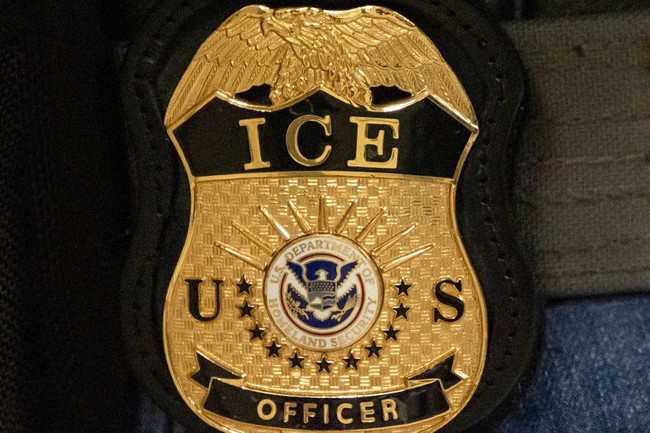
This article recounts the killing of a 71-year-old Air Force veteran on his front porch, summarizes what authorities say about the suspect’s immigration and criminal history, highlights a Ring camera recording, and reports ICE’s response and statements from Department of Homeland Security officials.
A decorated 71-year-old Air Force veteran was shot dead while hanging decorations on his front porch, and surveillance footage from his Ring doorbell reportedly captured the killing in full. The victim served for 20 years and earned multiple military awards during deployments and postings across the globe. The attack occurred in West Point, Utah, and authorities quickly identified a suspect in connection with the shooting. Local law enforcement later filed charges and custody was transferred across jurisdictions as investigators and federal officials weighed in.
Officials say the man charged in the slaying entered the country unlawfully in 2021 and had a criminal record that included domestic violence arrests in California. Immigration authorities assert detainers were lodged after those arrests but were not honored, a sequence they say allowed the suspect to remain free. That sequence of events has become central to criticism from those who argue current policies and local sanctuary practices let dangerous individuals slip through the cracks. The case has become an example cited by critics who call for stronger enforcement and clearer cooperation between local and federal officials.
Las Vegas Metropolitan Police initially charged the suspect with murder with a dangerous weapon and related offenses before custody moved to a Utah jail where ICE sought to place a detainer. “Following his release, he went on to commit this heinous murder,” said Assistant Secretary Lauren Bis in a statement. “This illegal alien should’ve never been allowed on our streets, and James Witten should still be alive today.” That exact statement from the Department of Homeland Security underscores the federal view that cooperation with ICE is necessary to prevent violent recidivism.
The footage that authorities describe begins with a maroon Honda pulling up across the street while the victim stood on his porch. A passenger is said to have exited the vehicle, walked up behind the veteran, and fired multiple rounds into his back before the shooter calmly returned to the car and sped away. Prosecutors say the shooting was deliberate and brazen, occurring in daylight in a residential neighborhood where neighbors would expect safety and civility. The chilling nature of the scene has intensified calls from enforcement advocates for accountability and policy changes.
Charges listed by law enforcement included murder, discharge of a firearm causing serious injury, and obstruction, among others, reflecting the severity of the alleged crime and the weapon involved. After initial arrests and procedures, custody moved to Davis County, Utah, where ICE officials again lodged a detainer to seek removal proceedings. Federal authorities say they are pressing state and local actors to commit to not releasing this individual so removal can proceed, making cooperation the focal point of their public appeal.
https://x.com/DHSgov/status/2079330935196061942
The veteran killed had a long record of service, with deployments that spanned Vietnam, Desert Storm, and Grenada, and postings in Germany, Sicily, and several U.S. bases. He earned distinctions including the Meritorious Service Medal, an Air Force Commendation Medal, and multiple Good Conduct Medals, according to public records tied to his military biography. Those honors and years of service are being highlighted by friends and community members who describe him as someone who served his country and expected to live out his retirement in peace. His death has struck a chord with military families and veterans’ advocates who see it as a failure of the system to protect ordinary Americans.
The sequence that critics describe—an unlawful entry, local release despite detainers, and eventual involvement in a violent crime—has been used by Republican voices and enforcement proponents to argue for sharper immigration controls and stricter adherence to detainer requests. They contend that honoring detainers and ensuring cooperation between agencies would prevent dangerous people from being returned to the public before due process on immigration matters can be completed. The case is now a rallying point for those who say public safety must come before permissive local policies that shield suspects from federal custody.
Community reaction has been one of sorrow and anger, with neighbors and veterans expressing disbelief that someone with a record of alleged violence could be on the street. Local memorials and statements from those who knew him emphasize both his military contributions and the senselessness of the way his life ended. Meanwhile, officials at multiple levels continue legal and administrative work to resolve custody and pursue prosecution, while federal immigration authorities press for removal authority to be respected. The facts laid out by investigators and federal statements have driven renewed debate over policy and responsibility in cases that intersect crime and immigration law.



That person should be held accountable!!
They should be in prison!!