
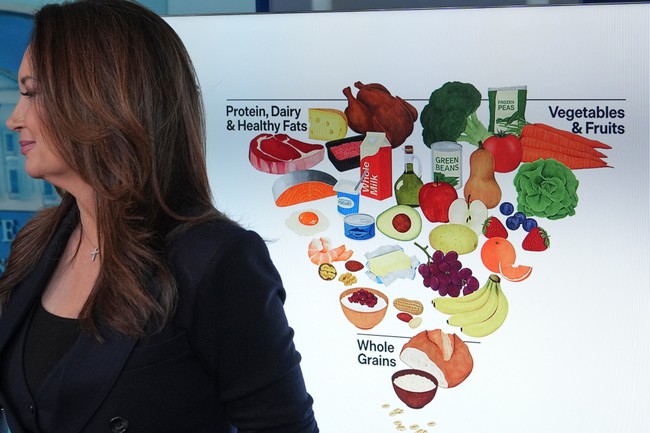
The Biden-era nutrition playbook has been replaced with a sharp Republican reset: the 2025–2030 Dietary Guidelines for Americans prioritize real, whole foods and put protein and healthy fats back at the center of meals. This new federal guidance was announced at a White House briefing where HHS and USDA leaders promised a coordinated shift away from ultra-processed food and toward nourishment that supports health, military readiness, and economic productivity. The move reclaims the food pyramid, flips its emphasis toward protein and whole fats, and ties federal feeding programs to these updated priorities. Below I walk through what was said, who spoke, and what this could mean for federal programs and everyday tables.
At the briefing, HHS Secretary Robert F. Kennedy Jr. and USDA Secretary Brooke Rollins presented the Guidelines as a national reset grounded in real food. They were joined by CMS administrator Dr. Mehmet Oz, FDA administrator Dr. Marty Makary, and National Nutrition Adviser Dr. Ben Carson, creating a rare moment of cross-agency unity on nutrition. The administration made clear the intent: federal policy should encourage nutrient-dense meals across schools, military dining, hospitals, and other federally supported programs. That’s a bold pivot that recognizes diet as a central lever for public health and national strength.
Officials framed the new guidance as a response to a health system overwhelmed by diet-driven chronic disease and rising costs. The Guidelines call for whole foods to be the backbone of health strategy, with a return to practical dietary advice that benefits families and supports American agriculture. Emphasis on farmers and ranchers as partners in this effort signals an alignment between nutrition policy and American food producers. The message is simple and direct: real food, not pharmaceuticals, should be the first line of prevention.
U.S. Department of Health and Human Services Secretary Robert F. Kennedy, Jr. and U.S. Department of Agriculture Secretary Brooke Rollins today released the Dietary Guidelines for Americans, 2025–2030, marking the most significant reset of federal nutrition policy in decades. The new Guidelines deliver a clear, common-sense message to the American people: eat real food.
The U.S. faces a national health emergency. Nearly 90% of health care spending goes toward treating chronic disease, much of it linked to diet and lifestyle. More than 70% of American adults are overweight or obese, and nearly 1 in 3 adolescents has prediabetes. Diet-driven chronic disease now disqualifies many young Americans from military service, threatening national readiness and limiting opportunity.
“These Guidelines return us to the basics,” Secretary Kennedy said. “American households must prioritize whole, nutrient-dense foods—protein, dairy, vegetables, fruits, healthy fats, and whole grains—and dramatically reduce highly processed foods. This is how we Make America Healthy Again.”
The Guidelines also reverse decades of mixed messaging about fats and protein, explicitly prioritizing protein at meals and full-fat dairy without added sugars. FDA administrator Dr. Marty Makary criticized the old pyramid’s focus on low fat and high refined carbs, calling out ultra-processed foods and added sugars as the real culprits. This matters because federal guidelines influence school lunches, WIC, VA care, military rations, and more. Changing those standards can change daily meals for millions and, over time, improve public health metrics that cost taxpayers dearly.
Eat real food. Nothing matters more for healthcare outcomes, economic productivity, military readiness and fiscal responsibility.
Officials emphasized flexibility in the Guidelines: tailored recommendations for infants, children, pregnant and lactating women, seniors, and people with chronic disease, while accommodating vegetarian and vegan choices. The guidance is built to be practical in cafeterias and commissaries, not just a set of abstract ideals. Secretary Rollins framed the policy as putting families and children first and realigning the food system to support U.S. farmers and ranchers. That linkage between producers and consumers is a hallmark of conservative policy on food and markets.
Makary went further in calling out longstanding misinformation about saturated fats and ultra-processed carbs, arguing the prior pyramid discouraged natural, healthy foods like eggs and steak. His point was blunt: we demonized the wrong things and ignored refined carbs and added sugars. The updated pyramid is described as inverted to emphasize protein and whole fats, aiming to replace calorie counting fads with nutrient-focused guidance. That kind of clarity is long overdue.
For decades, we’ve been fed a corrupt food pyramid that has had a myopic focus on demonizing natural healthy saturated fats: telling you not to eat eggs and steak. And ignoring a giant blind spot: refined, carbohydrates, added sugars, ultra-processed food.
CMS administrator Dr. Mehmet Oz reminded the audience that healthier people mean lower drug spending and more productive citizens. “The best way to reduce drug spending in America is to not need the drug in the first place,” he said, underscoring the economic case for prevention. Makary closed by naming insulin resistance and chronic inflammation as the root drivers behind broken healthcare outcomes and called food curative. Those are medical claims tied to nutrition that push policy beyond simple meal planning into long-term public health strategy.
We are going to finally address the root causes of our broken healthcare system: insulin resistance and general body inflammation advanced by the protein-poor, micronutrient-poor, ultra-processed refined carbohydrate diet kids are addicted to today.
Food can be curative. We’ve got to talk about the microbiome, and fiber, and healthy whole grains and the good soil that food comes from, and the healthy clean waters, and good farming techniques; so, that’s the focus of this Guidance.
This is an historic day in America.
The administration promised that federal feeding programs will be updated to reflect these priorities, affecting school meals, military rations, and care facilities that rely on federal guidelines. That’s a real-world lever to change diets at scale and support American agriculture at the same time. If implemented well, the shift could nudge a generation toward better health without sacrificing taste or choice. Time will tell, but this is a substantive policy shift grounded in conservative priorities: personal responsibility, support for farmers, and practical, science-based solutions.
Rollins closed by tying the Guidelines to President Trump’s leadership and a broader goal of rebuilding national health and readiness. Her message was clear: changing federal nutrition policy is part of strengthening families and the nation. The focus now moves to implementation across federal programs and on ensuring the guidelines actually make nutritious food available and affordable where people eat every day.



Add comment