
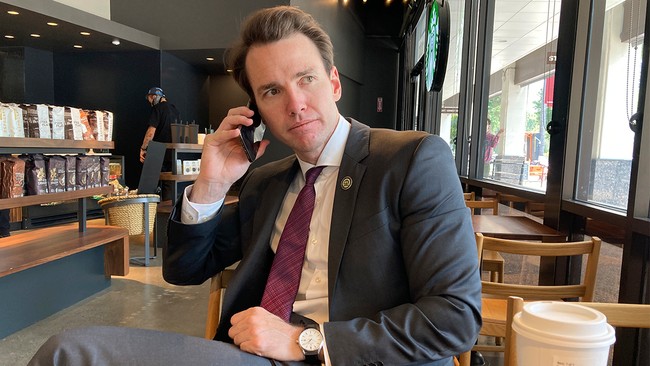
This piece examines Rep. Kevin Kiley’s uphill fight after California’s Proposition 50 reshaped his district, explains why he switched to No Party Preference, tracks his history of challenging Governor Gavin Newsom, highlights Kiley’s record on issues like high-speed rail and gas bans, and looks at early returns and the factors that could carry him into the November general election.
Rep. Kevin Kiley (CA-06) is running in a race that became personal after Governor Gavin Newsom pushed Prop 50, which redrew Kiley’s old district into new pieces. Newsom has targeted Kiley before and engineered lines that moved parts of the old 3rd into Districts 5 and 6. Kiley opted to run in the 6th, a bluer district that includes parts of Sacramento and nearby suburbs.
After voters approved Prop 50 last year, dividing Kevin Kiley’s current U.S. House district into several pieces, the incumbent congressman faced a tough decision. Where would he run for reelection?
After spending several months weighing the possibilities, the then-Republican representative announced in March he would run in the 6th Congressional District, eschewing a campaign against GOP Rep. Tom McClintock in the 5th Congressional District for an uphill battle in the much bluer 6th District.
Then, Kiley announced another surprise: he would serve the rest of his current term as an independent, though he clarified that he would still caucus with the GOP.
Kiley opted to run under a “no party preference” designation in the midterms, citing frustration with “hyper-partisanship” in Congress and blaming both parties for a “pointless redistricting war” that culminated in California’s Proposition 50, which split up his current 3rd Congressional District in a gerrymander favoring Democrats.
The new 6th District includes West Sacramento, Natomas and parts of northern Sacramento, along with sections of Roseville, Rocklin and Citrus Heights.
With high name recognition and no major Republican primary contender, Kiley is likely to advance to the general election in the 6th District. He will likely face one of four Democratic contenders, all of whom are familiar faces in northern California.
Kiley’s decision to register No Party Preference is a strategic move in a mixed district where many voters don’t strictly follow party labels. He made clear he will still caucus with the GOP, signaling continuity on key votes while appealing to independents and swing voters. That blend of independence and conservative identity plays to voters tired of rigid party politics in Sacramento and Washington.
https://x.com/KevinKileyCA/status/2061582567619645933
His record gives that message weight. Kiley sued Governor Newsom over lockdown orders and won in state court, a fight that bolstered his reputation among voters skeptical of government overreach. He also ran in the 2021 recall, keeping him visible in statewide debates and sharpening his profile as a fighter against policies he sees as unconstitutional or economically harmful.
On policy, Kiley has pushed for common-sense fiscal and infrastructure priorities that align with local concerns. He led efforts to withhold federal funding from Newsom’s high-speed rail project, calling it a boondoggle that squandered taxpayer dollars. He also opposed moves like a statewide ban on gas-powered cars by 2035, positioning himself as a defender of consumer choice and pragmatic energy policy.
Those stances matter in suburbs and exurbs where voters care about costs, commute times, and whether projects actually deliver value. Kiley’s name recognition and willingness to take on Sacramento elites make him a credible alternative to career Democrats who lean into ideological purity. In a district carved to favor Democrats, appealing to pragmatic independents is the clearest path to victory.
California is a blue state, but many residents reject polarized labels and want officials who get basic governance right. They want functioning streets, safe neighborhoods, reliable schools, and affordable housing, not lectures from coastal politicians. That sentiment creates an opening for a candidate who talks about delivering results over scoring ideological points.
Early vote tallies have been promising for Kiley, with reports showing him leading as ballots are counted and him likely to finish in the Top Two for November. Name recognition, incumbency advantages, and a split field of Democratic challengers can amplify those leads in a crowded primary. Advancing to the general election would put Kiley back on a traditional head-to-head stage where crossover voters often matter most.
Still, the road ahead is tough. The 6th District contains dense Democratic bases in parts of Sacramento that turn out in high numbers. Newsom’s influence and funding could still bolster a Democrat who can energize the party’s base in the months before November. Kiley will need steady fundraising, disciplined messaging, and continued outreach to independent voters to convert a primary lead into a general election win.
At stake is more than one seat. A Kiley victory would send a message that Californians can reject machine politics and reward representatives who emphasize constitutional limits, fiscal responsibility, and practical solutions. For voters frustrated with Sacramento’s direction, that message still resonates and could tip a close race in favor of a candidate willing to fight for them.
Add comment