
The Supreme Court has granted Alabama permission to use the congressional maps drawn in 2023 for upcoming elections, allowing the state to proceed with a plan that includes a single majority-minority district while overturning a lower court’s order that sought a second such district under the Voting Rights Act. The Court granted interim relief, finding the state likely to prevail on appeal, and a majority of justices sided with Alabama while three dissented. The decision referenced the Court’s recent guidance in Louisiana v. Callais and criticized last-minute changes to election rules imposed by a district court. Below is a clear account of the legal back-and-forth, key statements from justices and advocates, and what the ruling means for Alabama’s map schedule and upcoming special election.
Alabama Victorious As SCOTUS Decides They Can Use 2023 Maps, Eliminating One Majority-Minority District
The dispute started when a three-judge federal panel required Alabama to adopt a second district that would be majority-minority, finding the state’s 2023 map ran afoul of Section 2 of the Voting Rights Act. After the Supreme Court vacated that initial ruling and remanded the case, the panel again barred use of the 2023 map, citing the same VRA concerns without treating the Court’s recent rulings as controlling. The state responded rapidly with an emergency petition to the high court, asking for a stay to avoid what it called judicial overreach.
SCOTUS granted the stay in a per curiam order, with Chief Justice Roberts and Justices Thomas, Alito, Gorsuch, Kavanaugh, and Barrett joining. Justices Sotomayor, Kagan, and Jackson dissented. The Court said Alabama demonstrated it was entitled to interim relief, that the state would likely succeed on appeal, and that the district court had not respected the presumption of legislative good faith.
The Supreme Court emphasized that the lower court’s approach diverged from the recent decision in Louisiana v. Callais and that the equities and public interest favored Alabama. The high court warned against changing election rules on short notice, an admonition that undercut the district court’s effort to block the state’s plan and prevent a scheduled August 11 special election. That special election had been set to realign districts in light of the new legal landscape.
https://x.com/ShannonBream/status/2061984651929870844
The lower court’s injunction would have halted Alabama’s planned adjustments and forced the state to operate under the earlier map with two Black opportunity districts, but the Supreme Court found that undue judicial interference would have produced chaos. Plaintiffs had urged the justices to leave the district court’s injunction intact, arguing the 2023 plan discriminated against Black voters and that replacing a lawful plan at the last minute would reward repeated false statements. The plaintiffs maintained that keeping the 2024 map in place preserved two Black opportunity districts.
In a series of filings, the civil rights groups and voters asked the Supreme Court to uphold a lower court’s ruling preventing the state from implementing a map that a three-judge panel found to be intentionally discriminatory towards Black Alabamians.
The plaintiffs urged the justices to keep the current 2024 congressional map in place, which includes two Black opportunity districts.
“Entering a stay so that Alabama can at the last minute replace a lawful plan with an unlawful and unconstitutional one would create chaos and would reward Applicants for their repeated false statements to this Court,” the plaintiffs wrote in one filing.
The state quickly submitted its reply brief Monday, reiterating its support for using the struck-down 2023 map in light of the recent Supreme Court ruling in Louisiana v. Callais, which gutted much of the Voting Rights Act.
The Court ultimately rejected the plaintiffs’ plea and found that the district court’s action amounted to an effort to obstruct the August 11 election, which exceeded the court’s authority. The high court’s ruling focused on legal precedent, the presumption that legislatures act in good faith, and the practical harm a state faces when its laws are enjoined just before an election. That practical harm was a central element in allowing Alabama to move forward while the appeals proceed.
The Court also admonished lower courts about altering election rules close to voting, a point it put bluntly in its order. The decision reaffirmed the high court’s reluctance to permit last-minute judicial changes that disrupt election administration, stressing the public interest in stable electoral processes. The majority concluded Alabama made a strong showing of irreparable harm without immediate relief.
We have repeatedly cautioned that lower federal courts should not “alter the election rules on the eve of an election.”
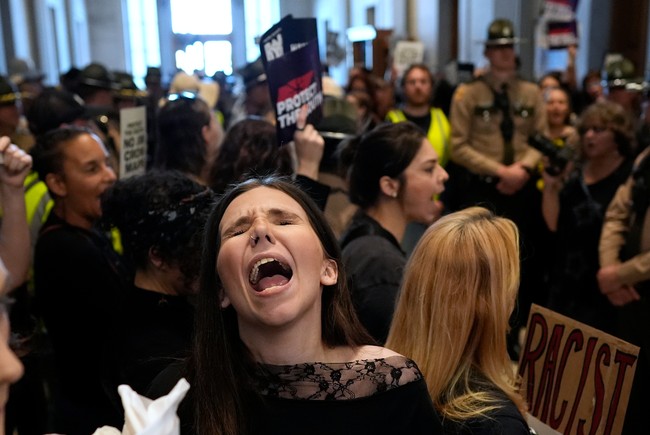
Justice Sotomayor filed a lengthy dissent, warning that vacating the district court’s injunction would produce voter confusion and chaotic effects on the ground. She described the Court’s intervention as doubling down on chaos and on racial discrimination by the state, arguing the majority’s move ignored the real turmoil that had already occurred. Her disagreement highlights the deep split among the justices over how to apply recent Voting Rights Act precedent.
Weeks ago, I warned that vacating the District Court’s injunction in these cases would “unleash chaos and . . . confuse voters.” Caster, 608 U. S., at ___ (dissenting opinion) (slip op., at 4). Nevertheless, the Court forged ahead. Now the Court is squarely faced with a record of the turmoil it has caused and the harm it has wrought. Yet just as Alabama doubled down on racial discrimination, the Court today doubles down on chaos.
With the stay in place, Alabama is now positioned to carry out its planned redistricting steps and to hold the August 11 special election intended to align districts with the Court’s guidance. The state says it will continue defending its maps on appeal and insists that its elected representatives, not unelected judges, should set electoral boundaries. The ruling places the matter back in the lower courts under the direction of the Supreme Court’s recent decisions.
Alabama’s attorney general issued a statement celebrating the decision as a vindication of state authority and the Court’s recent precedents, arguing that the ruling protects Alabama’s right to draw maps under its legitimate districting objectives. The state framed the stay as a win for self-governance and a check on federal judicial overreach, promising to press its appeals and defend the maps in court. That stance sets the stage for further litigation as the case moves forward while elections loom.


Add comment