
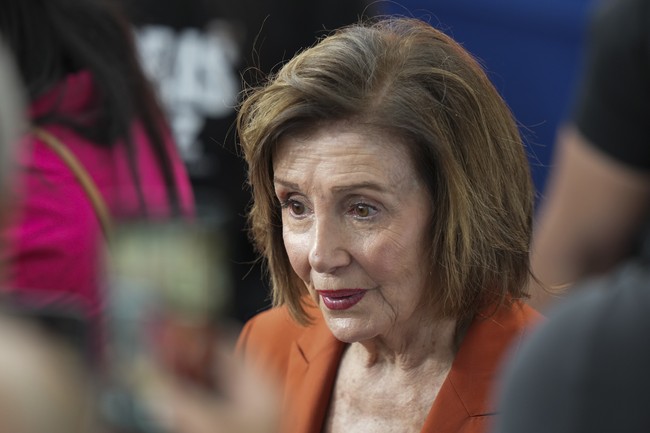
I’ll explain who is running for Nancy Pelosi’s old seat, what’s happening in the early vote count, how local politics and unions are shaping the race, why Scott Wiener’s lead matters, and what this could mean for the district’s direction and Republican messaging moving forward.
Nancy Pelosi represented California’s 11th District for 39 years before she announced in November 2025 that she would retire from the House. Her departure triggered a crowded Democratic scramble to replace her in a heavily blue San Francisco district. The main Democratic contenders are San Francisco Supervisor Connie Chan, State Senator Scott Wiener, and former Alexandria Ocasio-Cortez aide Saikat Chakrabarti. Each brings a different coalition, but the contest is shaping up as a clash between establishment backing and more activist wings of the party.
The one Republican on the ballot, David Ganezer, is essentially a symbolic entry given the district’s partisan lean. His chances of finishing in the Top 2 in a deep blue city are very slim. Still, Republicans will watch turnout patterns and vote splits closely because any persistent erosion of Democratic margins in liberal strongholds would be politically instructive heading into November. The race is really about which Democrat will inherit Pelosi’s mantle and how aggressively they will push San Francisco’s policies forward.
https://x.com/abc7newsbayarea/status/2061920840980017231
With roughly 40 percent of the vote counted at the time of reporting, Decision Desk HQ showed Scott Wiener leading with 43 percent to Connie Chan’s 28 percent. In California’s top-two system, a candidate needs an outright majority—50 percent plus one—to avoid a November runoff. If no one clears that threshold, the two highest vote-getters advance, which makes Wiener’s current advantage significant for setting the narrative through summer and fall.
Wiener’s rise in the state Senate made him a well-known figure in Bay Area politics; he has been a high-profile advocate for LGBTQ issues and has pushed a suite of progressive legislative priorities. Critics on the right characterize some of his legislative efforts as out of step with mainstream parental concerns, pointing to bills he supported that opponents say lowered protections or altered consent-related standards. Supporters argue his record is about expanding civil rights and modernizing laws; opponents see a record that signals a further shift left for the district if he wins.
Connie Chan carries the endorsement of Pelosi and the backing of labor unions and a significant segment of the Chinese-American community that lives in the district. Her appeal is grounded in local governance and continuity with many of Pelosi’s priorities. Chan presents herself as a steadying, consensus-building choice who will defend San Francisco’s progressive policy framework while emphasizing practical local issues like housing and transit. That coalition has proved powerful in San Francisco elections for decades.
Saikat Chakrabarti, who worked as a chief of staff for a national progressive figure, represents a more insurgent strain of Democratic politics. His candidacy injects ideological tension into the field by pushing a bold policy agenda tied to national progressive movements. That dynamic could split activist voters and, depending on turnout, either boost a plurality candidate like Wiener or make it easier for Chan to hold a reliable base. How those dynamics interact will determine whether the November matchup looks like a contest between two establishment Democrats or a choice with clearer ideological contrasts.
Beyond the personalities, this race illuminates the power of endorsements and local power brokers in a single-party city. Labor unions, community groups, and ethnic voting blocs still move the needle in municipal and congressional contests, and Pelosi’s blessing carries weight. At the same time, activists who command social media attention and national networks can tilt close races by energizing niche constituencies. That tug-of-war is playing out now as votes continue to come in.
From a Republican perspective, the takeaway is straightforward: even in districts that seem locked down for Democrats, internal fights and turnout swings matter. Keeping an eye on which faction of the Democratic coalition gains the upper hand helps inform messaging and resource allocation in swing areas. If the eventual winner shifts the district further left, that creates opportunities to highlight policy choices that could alienate moderate voters in future cycles.
Editor’s Note: The 2026 Midterms will determine the fate of President Trump’s America First agenda. Republicans must maintain control of both chambers of Congress.



Look at that Creature!