
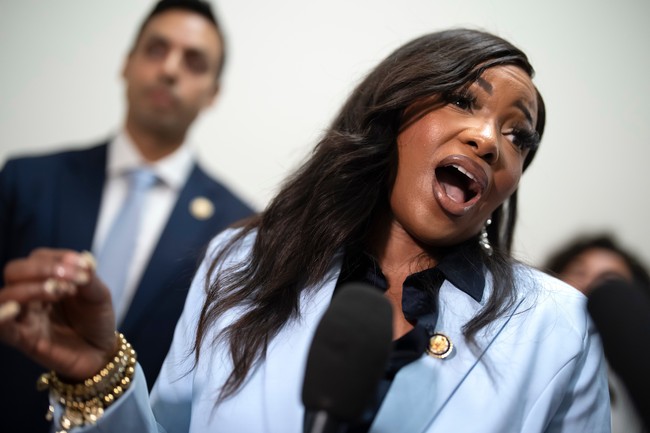
Quick take: Rep. Jasmine Crockett criticized James Talarico’s viability in Texas, arguing that money, not polls, tells the real story; she suggested neither national party is committing major Senate resources to the state, and said she’ll focus her ground work on races she thinks are winnable. That comment has drawn sharp pushback from the left, while conservatives see it as a candid assessment of Democrat overreach in Texas. The debate highlights tensions within the Democratic coalition and raises questions about how national committees choose where to invest ahead of the fall. Embedded materials from social platforms and polling visuals are preserved below in their original positions.
Jasmine Crockett’s tone came off blunt and strategic rather than coy, which is probably why the reaction was so loud. She acknowledged not trusting polls in Texas because they often overstate Democratic chances and then pointed to where money is being placed as the better indicator. From a Republican perspective, that kind of realism about resource allocation is refreshingly honest compared with the usual spin about inevitable blue waves.
Her central claim was simple: campaign cash signals intent and reality better than polling samples that have misfired here before. “I watch money,” she said when asked whether James Talarico could flip Texas this fall. By highlighting which national committees are or are not spending, she framed the contest as one where insiders’ choices matter more than headlines. That sort of hard-nosed fundraising analysis is what professional operatives on both sides actually use to judge races.
“I don’t know,” she said.
She doesn’t buy the polls, saying they’ve historically overstated Democrats’ prospects in Texas. “I watch money.”
“When I look at the money, if Republicans start spending money in Texas, then I’ll be convinced. But right now, national Republicans decided they wanted to dump money into North Carolina, as well as Georgia. That’s where they’re fighting, and national Democrats have not decided to dump money into Texas either.“I look at: where does the NRSC stand? Where does DSCC stand? Right now, neither one are investing, which tells me that their internals are saying the same thing. So it looks like status quo. I won’t get on the ground to really start to feel it until maybe end of September, October, as I start to dig into which races I’m going to help out in, the races that I really feel like we can win.”
That quotation landed like a splash of cold water for Democrats who had been floating optimistic takes about Talarico’s chances. Crockett’s point about the NRSC and DSCC not committing funds implies those organizations’ own data don’t rate Texas as a top pickup opportunity. Put bluntly, she suggested party professionals are more cautious than the pundit class wants to admit, and that’s politically painful for activists counting on a Texas surge.
Her remarks also had the awkward effect of distancing her from Talarico at a time when a public display of unity would be expected. She had endorsed him after the primary loss, but her comments signal that endorsement won’t automatically mean full-throated campaigning on his behalf. Saying she’ll focus on contests she thinks are winnable is an explicit calculation that local energy and long-term strategy matter more than reflexive solidarity.
Republican readers will spot the upside in all of this: if Democrats are not piling in, it makes defensive planning and targeted advertising more efficient for GOP incumbents. Crockett’s candor about where money is going confirms what many on the right have argued all along — national Democrats are pickier about where they invest, and their resources are limited. That pragmatic truth can blunt the narrative that Texas is suddenly trending blue.
https://x.com/sahilkapur/status/2085035182470402554
Critics on the left responded loudly, treating Crockett’s comments like a betrayal or a concession, but the reaction tells you more about partisan hope than political reality. Outrage often fills the vacuum left by sober strategic talk, and that pattern repeated itself here. Political operatives on both sides know there’s a gulf between optimistic media narratives and the hard math of fundraising and voter turnout.
There’s also the voter-level question her remarks touch on: whether Talarico can pull together the coalition needed to win statewide in a state that has historically tilted conservative. Local dynamics, past statements, and turnout patterns all shape that answer, and Crockett’s public caution underscores the uphill nature of the task. From a Republican standpoint, that underscores why candidates with controversial or radical past statements face tougher paths in statewide contests.
Where this debate matters most is tactical: national committees decide where to spend millions, and those choices shape advertising, organizing, and ground games. If neither side sees Texas as worthy of a major bet, the result is a status quo fight rather than a dramatic realignment. Crockett’s comments force Democrats to reckon with those choices publicly, which in turn helps opponents organize resources more efficiently.
Finally, the noise around this episode shows how fragile public unity can be in a polarized environment. A blunt assessment about money and electability became a flashpoint because it pierced a comforting narrative. For Republicans watching the fall build, that disruption is useful; it exposes strategic limits on the other side and clarifies where opportunities really lie.
Right now, some polls show Talarico competitive against the GOP nominee, but Crockett’s warning about polling overestimates remains relevant based on recent Texas history. Her insistence on judging by investment choices provides a different, more operational lens to assess the race. Observers on both sides should take note of where the cash flows, because that’s where the real fight will be decided.
Left-leaning commentators posted heated responses online after her remarks, but the substance of what she said still matters for campaign planning. Crockett being in St. Louis for another primary-night event rather than stumping locally added fuel to the controversy about priorities. That contrast of appearances versus strategic backing is what keeps this story alive.


Add comment