
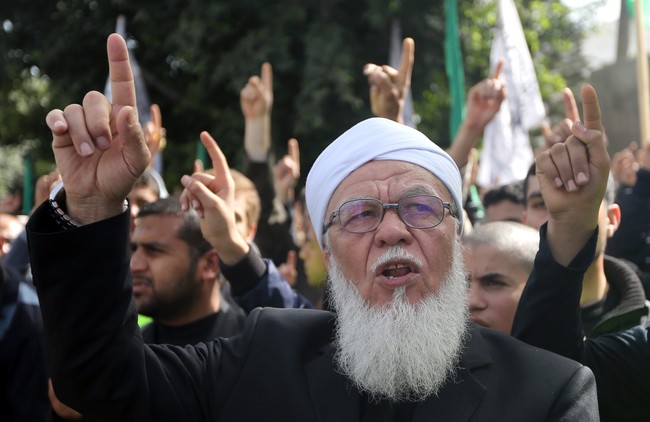
The Senate Judiciary subcommittee held a hearing titled “Hidden in Plain Sight: Confronting the Muslim Brotherhood Network,” chaired by Senator Ted Cruz, that turned into a flashpoint when every Democratic member declined to attend; the meeting aimed to examine the Muslim Brotherhood’s ties to terrorist groups and the national security implications of its presence in the United States.
The hearing was scheduled to tackle serious national security questions about an organization long accused of fostering extremist networks and influencing politics through religiously driven governance. Republicans framed the session as necessary oversight to protect Americans from groups that, according to some officials, encourage and enable jihadist terrorism. Democrats, however, publicly announced a boycott, arguing the inquiry would be used to stigmatize Muslims broadly.
Media reports flagged the Democrats’ coordinated decision early in the day, and Senator Cruz and other Republicans quickly criticized the absence as irresponsible. Cruz used his opening remarks to call out the empty seats and to highlight victims of violence tied to Hamas, a branch often connected to the broader Muslim Brotherhood movement. He described the boycott as “an embarrassment and a disservice” to Americans who suffered from terror attacks.
Republicans emphasized that the Muslim Brotherhood has a global record of promoting governance rooted in Islamic law and that certain branches have been designated terrorist organizations by some nations and agencies. They pointed to past Treasury Department actions and longstanding concern about Brotherhood-linked groups operating inside the United States. The committee’s stated goal was to map influence, funding, and networks to determine whether further steps are needed to protect the homeland.
Democrats countered that the hearing risked turning into a political spectacle and could unfairly tar all Muslim Americans as suspects. Their joint statement—circulating through reporters—asserted they would not “indulge this political creepshow” and accused Republicans of attempting to scapegoat a religion rather than focusing on specific bad actors. That stance, though, drew immediate pushback from Republicans who said avoiding the conversation left questions unanswered.
Video and reporting inside the Capitol captured scene-setting moments as staff and senators prepared for testimony while empty chairs on the minority side collected attention. Senator Cruz and allies underscored the symbolic weight of those empty seats, insisting that hearings on terrorism deserve full participation regardless of political theater. They argued that neglecting oversight because of anticipated partisan sparring abdicates a duty to constituents.
The hearing included testimony and summaries claiming the Brotherhood and its affiliates “encourage, facilitate, and provide resources for conducting jihadist terrorism across the world” and asserted they are “committed to overthrowing the United States and the governments of our allies.” Those harsh lines framed the urgency Republicans expressed about designations and sanctions. Cruz reiterated he has pursued such designations throughout his Senate tenure.
After the Democrats’ absence was confirmed, Cruz amplified his criticism and played clips of reporters attempting to locate missing committee members. He stressed that public servants are paid to show up and answer tough questions, not to avoid scrutiny because of political optics. That public admonition fed broader conservative commentary about accountability and national security priorities.
Cruz reminded listeners that this was not a theoretical exercise by citing specific examples of violence tied to Hamas and other groups that U.S. officials and allies have long viewed as extremist. He framed the boycott as a failure to stand with victims and as proof, to his view, that some Democrats are out of step with ordinary Americans’ security concerns. Republicans used the moment to press for more aggressive tracking of foreign influence and ideological networks.
The list of absent Democrats circulated widely, and Republicans said the coordinated no-show suggested politics outweighed public safety for those members. Conservatives argued that the timing—soon after several high-profile primary contests—made the boycott look strategically calculated to avoid backlash from progressive voters. That interpretation fed commentary linking party strategy to the rising influence of the party’s left flank.
https://x.com/SenTedCruz/status/2085088289841688971
Republican leaders and allied commentators also pointed to broader political consequences, arguing that failing to confront transnational extremist influence could imperil communities and foreign policy interests. They claimed the hearing was one step in a larger effort to determine whether additional sanctions, designations, or legislative measures are needed to disrupt networks tied to violent extremism. For them, oversight is a guardrail, not a partisan dagger.
The episode left a clear impression on the right that Democrats’ decision to skip the hearing spoke louder than any statement: national security inquiries can’t be avoided for fear of controversy. Conservatives vowed to keep pursuing designation and sanction efforts and to continue highlighting what they describe as the national security stakes of Islamist extremist networks. The debate over oversight versus perceived targeting is likely to persist as lawmakers weigh responses to transnational threats.
Add comment