
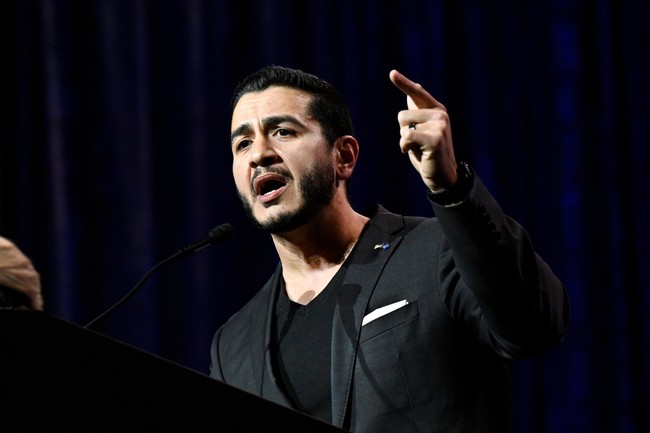
Michigan Democrat Abdul El-Sayed is facing renewed scrutiny after past remarks and interviews show he supported “defund the police” language, even as he now says he never called for removing police funding outright; the controversy highlights how online records and past media appearances can undercut a candidate’s current statements and reshape a campaign narrative.
The internet keeps receipts, and candidates know it. Deleted tweets and old interviews rarely disappear from public view, and when a Senate contender insists one thing today, people will dig up what he actually said years ago.
That is exactly what has happened to Abdul El-Sayed in the Michigan Senate race. He has tried to distance himself from the slogan “defund the police,” claiming he never urged eliminating police funding and suggesting some of his old posts were taken out of context.
Michigan Democratic Senate front-runner Abdul El-Sayed has faced criticism for previous comments he made about defunding the police. In recent interviews, El-Sayed has insisted he “never, never called for defunding” the police. Last week in an interview with CNN’s Kasie Hunt, he said he deleted old tweets supporting the movement because they were taken “out of context,” calling them “clickbait in DC.”
But interviews from 2020 show El-Sayed repeatedly endorsed defunding the police, according to a CNN KFile review of his media appearances. “We do need to defund the police,” El-Sayed said in a 2020 radio interview while specifically discussing how the slogan could undermine criminal justice reform efforts.
Those are not casual slip-ups. When a candidate uses precise phrasing on multiple occasions, it matters. Voters expect clarity from someone asking for high office, and saying one thing now while quotes and clips show something else creates a credibility problem.
El-Sayed and his allies argue he meant shifting some resources from policing to social services, schools, and community programs, not eliminating police entirely. That subtlety matters politically, but it also invites skepticism because the slogan itself carried a distinct, polarizing meaning during the national debates of 2020.
“I believe that we do need to defund the police in so far as defunding the police is disinvesting in the means of incarcerating someone or killing them on the streets,” he added. “And in investing more in the means of educating and empowering, engaging communities with the means of being able to take on systemic poverty, that we’ve allowed systematic racism to allow to fester in too many communities.”
El-Sayed added it meant investing less money in police.
“What if we were to invest in social services? What if we were to invest in public schools? What if we were to invest in public libraries? What would the world look like there? And I think that has to be the way we go. And that means both investing more in these services, and it also means investing less in police,” he said.
Those quoted remarks come across as explicit endorsement of retooling public safety budgets. For voters who prioritize law and order, the distinction between trimming budgets and defunding can be academic if public safety is perceived to be at risk.
Political opponents smell opportunity. In a competitive statewide race, comments like these are campaign fuel. Opponents can frame El-Sayed’s past words as evidence that he would support policies that weaken police departments, and that message plays well in suburban and rural parts of Michigan that value strong policing.
Campaigns live in the moment, but they are haunted by the past. A candidate who once embraced charged rhetoric has to explain why those words no longer reflect his position, and that explanation must persuade skeptical voters and independent observers alike.
Beyond the rhetoric, the episode shows a broader lesson about digital cleanup. Deleting tweets or calling old posts “clickbait” does not erase the record if interviews, podcasts, and radio appearances captured the same positions in the public sphere.
For Republican strategists and voters worried about public safety, the moment offers a clear line to draw: insist on accountability, demand straightforward answers about policy, and point to specific statements when evaluating a candidate’s posture on law enforcement.
Campaign narratives shift fast, but old remarks tend to stick. Whether El-Sayed can persuade the electorate that his current position is different from his past ones will be a central question as the race progresses.


Add comment