
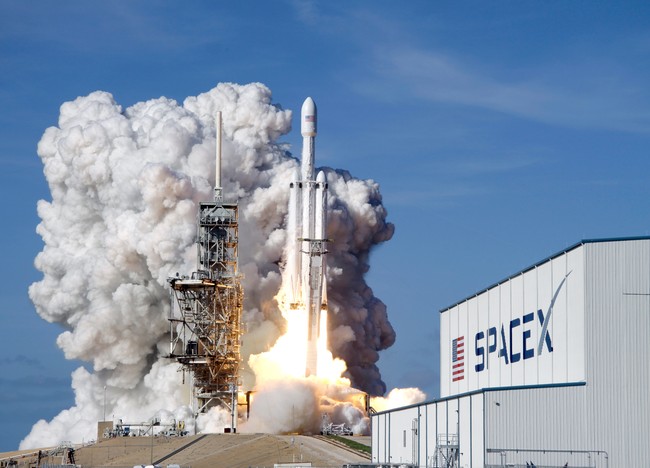
SpaceX landed in the Nasdaq-100 just 25 days after its June 12 public debut, meaning millions of retirement accounts that track that index could soon hold a piece of the company Elon Musk built into a trillion-dollar story.
SpaceX opened trading at $150 per share on its first day and closed recently around $160.42, and Nasdaq confirmed the company would join the Nasdaq-100 on July 7. That move forces passive funds tied to the index to buy SpaceX shares so their holdings mirror the benchmark.
For many workers, exposure will arrive via mutual funds and ETFs inside 401(k)s and other retirement plans, not through direct stock picks. Those savers didn’t call the trade; fund managers tracking the index will add the shares automatically to replicate performance.
Critics on the left reacted loudly when Musk became the first trillionaire, with calls for a wealth tax and other punitive measures. Despite the political noise, market mechanics don’t care about rhetoric; eligibility rules were adjusted this year so a newly listed company could qualify after 15 trading days.
That adjustment is exactly why SpaceX moved fast into the index and why some observers are sweating the speed of the decision. JPMorgan estimated about $4.3 billion in passive inflows could follow the inclusion, and the scale of funds tracking the Nasdaq-100 means even a small index weight translates into real demand.
SpaceX sold less than 5 percent of its shares in the June offering, and employee lockups keep much of the float off the market, so index adjustments account for float when calculating weight. The company will enter the index under a 1 percent weight because Nasdaq adjusts for available shares, which limits the immediate impact on any single retirement account.
Still, roughly $800 billion sits in funds that track the Nasdaq-100, so the aggregate buying pressure matters even if individual accounts see a modest single-stock exposure. The point is simple: index inclusion moves capital, and passive investors will get exposure whether or not they like Musk or his companies.
“You are picking strategies, not stocks. If that strategy includes SpaceX, it might still be appropriate, even if you don’t like individual stocks in that strategy.”
SpaceX also has a real business behind the headline valuation, which makes the political attacks look thin when set against contracts and market position. The company dominates commercial launch services, operates Starlink, holds significant NASA and Defense Department work, and plays a role in the infrastructure supporting artificial intelligence initiatives.
That operational reality explains why investors were willing to put a valuation on SpaceX so quickly after the IPO. This wasn’t a vanity lottery ticket; institutional buyers studied the company’s revenue streams and technological moat before deciding to own shares in indexed funds.
Some market strategists warned the stock looks overvalued and suggested the fast-tracking reflected demand more than settled fundamentals. “Clearly, there’s a lot of demand, that’s why they fast-tracked the integration into the index. A lot of people will be happy with it. Some fund managers less so, the skeptics amongst them, us included. We think the stock is overvalued.”
S&P Global opted for a slower approach and said it would wait at least 12 months before considering SpaceX for its major indexes, highlighting that not every index provider moved in lockstep. That divergence shows index methodology matters and that different benchmarks will carry different exposures for savers depending on which funds they hold.
“Clearly, there’s a lot of demand, that’s why they fast-tracked the integration into the index. A lot of people will be happy with it. Some fund managers less so, the skeptics amongst them, us included. We think the stock is overvalued.”
Passive ownership does not eliminate investor choice; savers still select strategies and can opt for funds with different index objectives or active management. But many choose broad, low-cost index funds for long-term retirement goals, and those vehicles now include SpaceX as part of the Nasdaq-100 basket.
If SpaceX stumbles, newly public stocks often correct sharply and punish overconfidence, so downside risk exists and will affect index returns. Yet the speed with which funds prepared to buy between June 12 and July 7 shows how quickly market mechanics can translate a listing into capital flows.
Politicians can call for taxes or regulatory changes, and critics can file proposals aimed at curbing wealth concentration, but none of those moves changes the immediate reality facing retirement savers. When index rules allow inclusion, funds tracking those indexes will rebalance, and millions of passive investors will see their portfolios reflect that change.
For those who like the idea of owning innovative companies that lead sectors, SpaceX’s presence in widely held funds will feel normal. For those who prefer to avoid specific stocks for political or personal reasons, it underscores the importance of choosing fund strategies consciously rather than assuming indexes mirror personal views.



Add comment