
The White House Correspondents’ Dinner shooting sparked predictable partisan responses, and a Wisconsin Democratic gubernatorial frontrunner’s social posts drew sharp criticism for language some readers saw as justifying political violence; this article examines those reactions, the specific posts involved, and the online backlash that included tagging national security figures.
Saturday night’s violent attempt near the White House Correspondents’ Association Dinner reignited fierce debate over political rhetoric and responsibility. Coverage emphasized that the assailant appeared to have targeted President Trump and other administration figures, and many observers pointed to years of heated language as part of the context. In the hours after the incident, critics argued that some Democrats minimized or mischaracterized the role of provocative rhetoric in stoking violence. The discussion quickly shifted from facts of the attempt to who was morally responsible for escalating tone and threat.
Among the voices drawing fire was Francesca Hong, the Democratic frontrunner in Wisconsin’s governor race, who posted a thread on X the afternoon after the attack. In the earlier parts of her thread she condemned violence and urged peaceful resolution of political disputes. That initial call for calm was widely welcomed by people across the political spectrum who wanted de-escalation and a sober response to the attack.
The tone changed later in Hong’s sequence of posts when she argued the federal government’s immigration enforcement represented a form of “political violence” in communities. She cited examples such as actions by federal agents and broader policy impacts, then connected those criticisms to systemic issues like access to health care and economic inequality. Where some readers saw critique, others interpreted the language as equating enforcement with state-sponsored brutality, and that interpretation produced strong pushback.
“We see it in a healthcare system that lets people die because they can’t afford care,” Hong proclaimed, a line that was repeated verbatim across reaction threads and screenshots. Later she wrote, “We fix this by building a state and a country where people come before profit, where neighbors come before corporations, and where no child is hungry, caged, or afraid in the place they call home.” Those phrases were intended to outline policy priorities, but the timing and phrasing made them combustible in the wake of a violent attack.
Some commentators read the sequence as an unfortunate framing that blurred the line between condemning violence and contextualizing it. A local outlet criticized Hong for what it characterized as an attempt to rationalize assassination attempts by comparing them to deportations, and it pointed out how similar rhetoric has been used in other extreme incidents. That outlet’s assessment linked Hong’s words to a broader pattern of leftist rhetoric they believe has previously enabled violence.
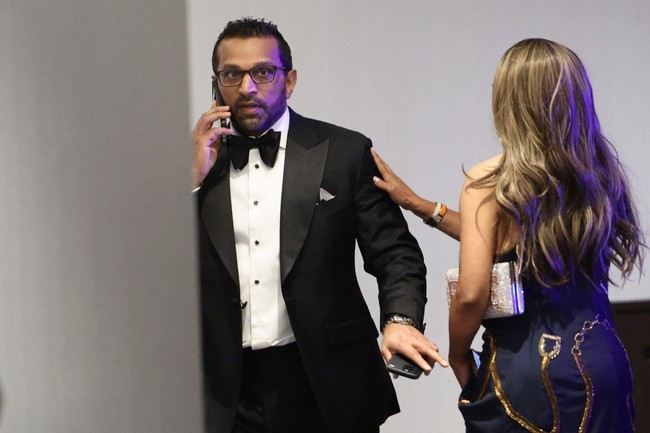
The online reaction included screenshots, heated threads, and calls for accountability, and at least one responder took the unusual step of tagging FBI Director Kash Patel in their reply to Hong’s posts. The tagging was intended to alert federal law enforcement to what that commenter viewed as dangerous rhetorical escalation. Other users labeled Hong’s posts harshly, using colorful language and comparisons meant to underscore their alarm.
Despite complaints, defenders of Hong argued her comments were intended to highlight policy harms rather than endorse violence, insisting she explicitly condemned any attempt to harm public officials. They noted that pointing out systemic problems—health care access, corporate influence, and immigration enforcement—does not equate to condoning criminal acts. Still, the rapid spread of screenshots and selective quoting meant the controversy snowballed quickly into a national story.
One amplified reaction framed Hong’s thread as part of a pattern in which left-leaning rhetoric allegedly normalizes extreme acts. That response referenced other recent violent incidents and argued that inflammatory language from public figures contributes to a dangerous environment. Critics used those connections to demand clearer disavowals of violence and firmer responsibility from political leaders when tensions are high.
A block of commentary appearing in response captured the intensity of the backlash: the piece accused the frontrunner of “attempting to justify assassination attempts against Trump by comparing it to ICE deportations while also parroting the exact same rhetoric leftists used to justify the execution of the United Healthcare CEO.” That passage also warned that such language “only further inflames an already tense political climate” and cited multiple high-profile attacks as consequences.
In which the Democrat frontrunner for Governor, Francesca Hong, is attempting to justify assassination attempts against Trump by comparing it to ICE deportations while also parroting the exact same rhetoric leftists used to justify the execution of the United Healthcare CEO.
This kind of language only further inflames an already tense political climate—and it is exactly why we have seen multiple assassination attempts against Trump as well as the tragic murder of Charlie Kirk.
Others on social platforms applied blunt labels to Hong’s thread. Some critics described the posts with single-word condemnations and attached media figures and security officials to underscore their alarm. The online atmosphere around the discussion showed how a short sequence of social posts can become the center of national outrage within minutes.
At least one reply included a direct tag of a high-level federal official; that post exemplified how enraged users sought immediate institutional attention. Whether that approach produced any formal response is unclear, but it did demonstrate the speed and intensity with which modern political controversies escalate. The broader debate about rhetoric, responsibility, and public safety is likely to carry on as the legal and political fallout from the WHCD incident continues to unfold.
Editor’s Note: Democrats are fanning the flames and raising the rhetoric by comparing ICE to the Gestapo, fascists, and secret police.


Add comment