
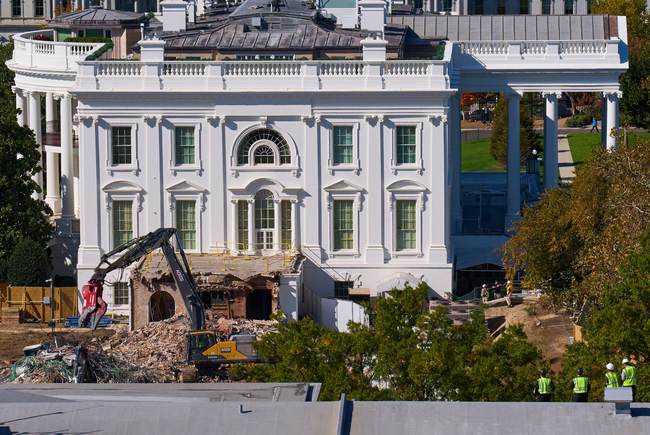
The Department of Justice demanded that the National Trust for Historic Preservation drop its lawsuit blocking construction of a White House ballroom after a gunman tried to breach the Washington Hilton during the White House Correspondents’ Dinner, arguing the legal fight now threatens presidential safety and that keeping the suit alive could endanger lives.
Less than a day after the attack near the Washington Hilton, the DOJ sent a stark letter to outside counsel for the National Trust urging voluntary dismissal of the case challenging the president’s planned White House ballroom. The suit objects to demolition and above-ground construction tied to a 90,000-square-foot ballroom project estimated at $400 million and funded by private donors. The government framed the request around an immediate national security concern prompted by the incident at the Hilton.
The DOJ letter, dated April 26 and signed by Brett Shumate, invoked the shooting directly. “Last night, there was another attempt on President Trump’s life,” Shumate wrote, reminding readers that the Hilton has hosted large presidential gatherings for decades and is the only D.C. ballroom large enough for some official events. The administration argues that forcing the President to leave the secure perimeter of the White House for such gatherings creates unnecessary risk.
Saturday night’s attack was reported as the third known assassination attempt on President Trump, involving a 31-year-old who arrived at the Washington Hilton armed and who was stopped at a security checkpoint after an exchange of gunfire. One Secret Service agent was struck but protected by a vest and expected to recover, while the suspect was hospitalized and taken into custody. The incident prompted evacuations of President Trump, Melania Trump, Vice President JD Vance, and several Cabinet members, all without injury.
In response to the attack, the DOJ argued that a completed White House ballroom would remove the need for the President to attend large events outside the secure grounds. “When the White House ballroom is complete, President Trump and his successors will no longer need to venture beyond the safety of the White House perimeter to attend large gatherings at the Washington Hilton ballroom,” Shumate wrote. “Put simply, your lawsuit puts the lives of the President, his family, and his staff at grave risk.”
Acting Attorney General Todd Blanche echoed that message publicly, calling the lawsuit “the passing aesthetic gripe of a single person” and saying that such a gripe “cannot possibly justify delaying the construction of a secure facility for the President to do his job.” Blanche set a firm deadline: dismiss the case voluntarily by 9:00 a.m. Monday, or the DOJ would move to dissolve the injunction and seek dismissal itself. The administration also filed an appeal after a district judge ordered construction to stop on constitutional grounds.
Judge Richard Leon initially declined preliminary injunctive relief twice, but then halted work on March 31, ruling that no statute authorizes the President to build the above-ground ballroom without explicit congressional approval. The administration appealed, and the D.C. Circuit scheduled oral arguments while keeping an administrative stay in place that allowed limited construction to proceed. The new security incident has been used by the administration to bolster its case for immediate authorization and construction.
President Trump publicly underscored the administration’s national security argument in a Truth Social post, writing that what happened was “exactly the reason that our great Military, Secret Service, Law Enforcement and, for different reasons, every President for the last 150 years, have been DEMANDING that a large, safe, and secure Ballroom be built ON THE GROUNDS OF THE WHITE HOUSE.” He also praised the Secret Service, saying they “acted quickly and bravely.”
The National Trust has repeatedly argued it does not oppose the separate underground bunker planned for the site and that its legal challenge targets the above-ground construction that proceeded without the statutorily required public reviews. The Trust contends the administration bypassed procedures including reviews by the National Capital Planning Commission and reviews Congress should see under the National Environmental Policy Act. That legal point, Judge Leon said, persuaded him the administration lacked authority absent congressional authorization.
Congressional reaction came quickly. Senator Lindsey Graham signaled he will introduce standalone legislation to authorize and fund the ballroom, and Senator Tim Sheehy indicated he will seek unanimous consent for a measure in the Senate. If Congress acts to explicitly authorize the project, the central statutory question that prompted the injunction would be removed from the courts and placed squarely with lawmakers.
Whether the shooting will shift the legal calculus for the courts or for the National Trust is uncertain, but the DOJ pressed its case hard and fast in the wake of the incident. The Monday deadline set by the administration will force a decision: let the courts and politics decide next steps, or drop the lawsuit and allow construction to move forward with immediate security justifications in hand.



Add comment