
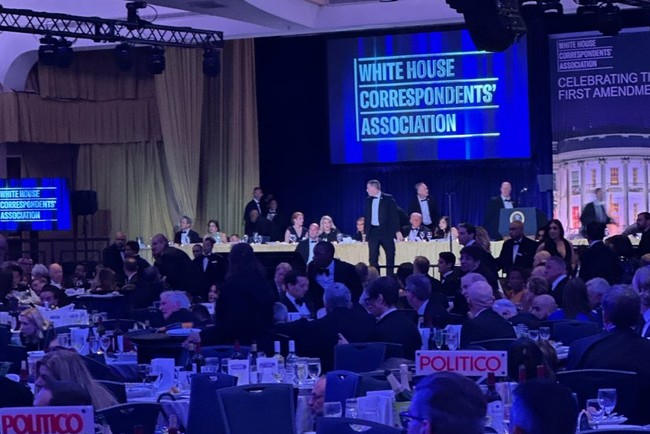
The piece examines why Vice President JD Vance was moved out of the White House Correspondents’ Dinner room before President Donald Trump, how reporters on the scene described the sequence, and what those actions reveal about priorities and leadership during an emergency.
The chaotic response after the shooting at the White House Correspondents’ Dinner has drawn intense scrutiny, especially over who was evacuated first and why. Witness accounts and on-the-ground reporting offer a clearer picture of how the Secret Service and presidential aides reacted. The sequence of movements raises questions about protocol, instinct, and the split-second choices agents made. Understanding that timeline matters for assessing both security decisions and public messaging.
A correspondent on the scene provided a detailed account explaining the different evacuation routes and why they were used. He emphasized proximity and composition of each table as the main reasons for how people were extracted. That detail explains why Vance left sooner than the president without implying any breach of priority or protection standards. The description centers on logistics rather than any political calculation.
I was right there. I saw everything.
The reason JD Vance left earlier through a different door from Trump’s is that he was alone.
On the other side of the table were the president, the first lady, and the press secretary, who was very pregnant. The Secret Service immediately created a security perimeter to get them out. Trump, who doesn’t let himself get carried away easily, demanded explanations. He wanted to know what was happening, ordered that the first lady’s evacuation be prioritized, asked that the journalists be removed, and decided to leave on his own two feet but making sure to get the press secretary out first. He didn’t want to duck down. He fell briefly after a shove from the agents and left the room on foot.
That witness account makes three things clear: agents responded quickly, seating and proximity dictated movement, and the president was engaged in the decisions even as agents were carrying out evacuations. The detail about the press secretary being pregnant explains why she and the first lady were prioritized for removal. These factors help explain what might otherwise look like an odd sequencing of exits.
Observers have pointed to President Trump’s composure during the event as notable, calling attention to how he handled himself in the moments after the shots. Several reports described him as insisting on information and prioritizing the safety of others before his own. That behavior fits into a narrative many conservatives emphasize: a leader who remains steady under pressure. It also reshapes how the immediate aftermath is viewed when contrasted with more alarmed reactions from others present.
Trump said that immediately, Melania Trump recognized the sound as a ‘bad noise,’ adding that ‘it was a rather traumatic experience for her.’
‘Melania was very cognizant,’ he continued.
The President also shared his wife’s fear for his safety given the multiple assassination attempts against him.
‘The first lady was doing a terrific job. She loves the country. She recognizes it better than any. But she told me numerous times, she said “you are in a dangerous job.”‘
The president’s comments about Melania’s reaction underline the personal toll these incidents take on families. Her immediate recognition of the sound and the way she processed the event were presented as clear, emotional responses. Those moments put a human face on the security conversation and emphasize the stakes for those closest to national leaders. Political debate aside, the personal dimension is hard to ignore.
After the event the White House held a briefing where officials sought to calm nerves and insist the program would continue in future iterations despite the attack. Reports say the president reached out afterward even to journalists who have been critical of him, checking on their well-being. That outreach was framed as an attempt to show resilience and unity in the face of violence. For many conservatives, those actions read as leadership under pressure rather than political theater.
Security experts and lawmakers will keep parsing audio, footage, and eyewitness statements to refine the timeline and assess procedures. The immediate lessons revolve around seating layouts, exit routes, and how agents prioritize vulnerable individuals in a crowded room. Those practical takeaways will shape after-action reviews and possible updates to protocols for high-profile events. Officials will need to balance operational secrecy with public demand for transparency about what happened.
Add comment