
I’ll walk through why a few photos from the White House Correspondents’ Dinner attack grabbed the public’s attention, how they compare to history’s unforgettable images, what those pictures convey about the event and the people involved, and why they matter in the political moment we face.
The July 2024 assassination attempt on then-candidate Donald Trump produced an image that hit like a punch: Secret Service lifting him, blood on his face, his fist raised and him shouting, “Fight! Fight! Fight!” That single frame arrived almost instantly and carried a rawness that words and statements could not match.
Iconic photographs have a way of condensing chaos into a clear narrative, and America remembers a handful of them for a reason. Images like The Falling Man, Napalm Girl, Tank Man, Raising the Flag on Iwo Jima, and the V-J Day kiss all told huge stories in one shot and shifted how people saw events as they unfolded.
Given that history, it is reasonable to ask whether the Trump photograph will join that company. Some will resist that idea for partisan reasons, but the worth of an image is not determined by editors’ biases; it is measured by the way it reveals truth in an instant and shapes public memory.
The assassination attempt itself underscores an ugly reality: political violence is rising, and it often comes wrapped in extremist rhetoric and moral blindness. The White House Correspondents’ Dinner attack was a vivid reminder that rhetoric has consequences and that dangerous ideas can lead to violent acts against our leaders and institutions.
Within hours, moving photographs appeared that captured different angles of the same night and the same crisis. Each image tells a different part of the story: the shock, the rush to secure key figures, and the grim relief that no lives were lost. Visuals cut through spin and prepared statements; they show what actually happened.
One of the first images made public was shared by White House Deputy Chief of Staff Dan Scavino and was marked as taken at 10:15pm ET, shortly after the shooting. It showed the president being helped to his feet, blood visible, and the unmistakable defiance of a raised fist. For supporters, it was a portrait of resilience; for others, it was an unsettling confirmation of how close the country came to tragedy.
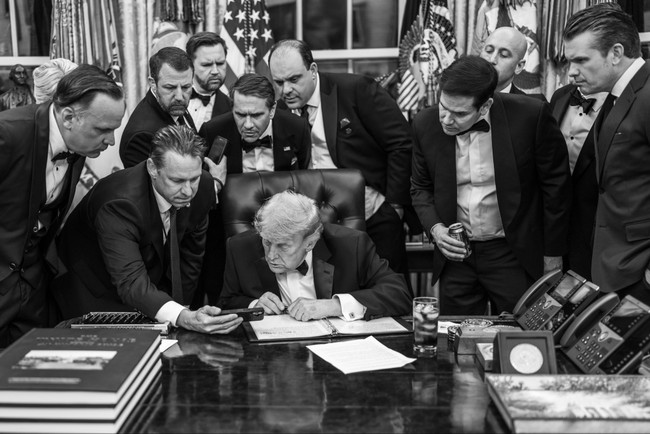
Another photograph from Deputy Chief of Staff James Blair offered a reverse angle that required no caption. It shows the president surrounded by aides and security, consulting with his team as officials processed what had happened. That image conveys leadership under pressure and the choreography of those responsible for keeping leaders safe.
The third picture, circulated soon after, carried a sense of finality: containment. It suggests that the immediate threat had been neutralized and that law enforcement was in control. There is a certain satisfaction in seeing the scene secured, knowing the attacker will face consequences and the justice system will take its course.
People react differently to photos depending on their politics, but images like these move beyond partisanship because they document facts: a violent act occurred, officials responded, and key figures were endangered. Those facts demand sober reflection about how the national conversation and heated rhetoric contribute to a climate where violence can erupt.
A colleague summed up one image succinctly when he called it, “A literal faceplant.” That blunt description captures the human element in a way long essays cannot: the attacker brought low, the aftermath stark and immediate. The phrase lands because the photo does not allow for euphemism or spin.
The lasting power of any of these photographs will be decided over time, not by an evening’s headlines. Some images become symbols because they resonate across contexts, capture decisive moments, and remain useful to the public memory when historians look back. Others fade as the news cycle moves on.
For now, the images from that night are doing the job photographs are meant to do: they are fixing a moment in collective memory and forcing a national conversation about safety, rhetoric, and responsibility. How we act after seeing them will determine whether the visual record becomes a prompt for change or just another headline we scroll past.
Add comment