
I look back at two vivid travel memories: riding along with a Royal Canadian Mounted Police corporal in the Yukon and spending 24 hours aboard a single American Airlines 767 to see how a major carrier runs a day of flights. Both pieces of reporting taught me about the rhythm of places and professions most readers never see up close, and both offered small, human moments amid larger operational details.
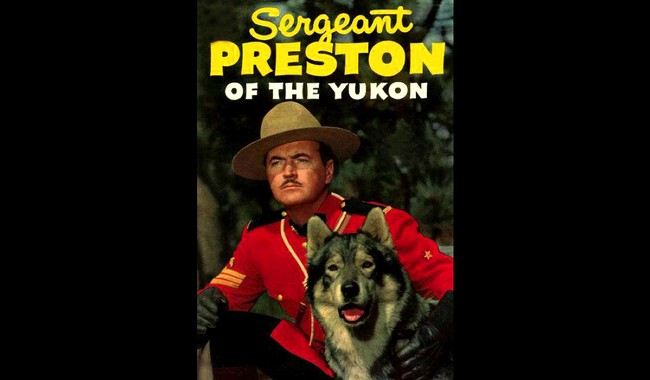
As a kid I loved the radio series “Sergeant Preston of the Yukon,” where you could hear the wild winds, the Mountie’s dog King, and the sled team shouting “On King. On you huskies!” Years later, as a correspondent, I finally made it to the Yukon to see a real Mountie at work and learn how the fiction compared to the reality. The landscape is enormous and cold, and the Mountie’s job stretched from budget estimates to courtroom appearances to breaking up fights and checking on isolated neighbors.
I spent time with Cpl. Reid Tait, a 29-year-old member of the RCMP who covered roughly 5,000 square miles of territory. His force was a hybrid of federal, state, and local roles—part F.B.I., part highway patrol, part park ranger—so he handled everything from grisly accidents in subzero weather to counseling troubled youth. He told me, “The only thing I never do around here,” he said, “is give out a parking ticket.”
One night I slept on the couch in the Tait trailer and rose with him for another patrol on a snowmobile, proof that the RCMP had long ago traded dogsleds for modern machines—the dogs were gone from service in 1969. We towed a supply sled and stopped at two remote homes miles apart to deliver mail and supplies, sip tea, and quietly remind folk of new firearm rules. Out here, the corporal explained, community policing meant being visible and present: “In the cities,” the corporal said, “no one wants to see a policeman, but out here they’re insulted if you don’t stop.”
We visited a trapper’s cabin where moose steaks were shared and chores were done before a hand of cards and long conversations under a sky dense with stars. After an hour of chatting, the corporal pushed buttons on his radio to check in—relays and ringing sounds linked him to a relay station, then to his family so he could say goodnight. The day started to the sounds of children’s television and ended 15 hours later in a moonlit mountain pass, both work and solitude stitched together in a way most people never experience.
Another time, curiosity took me aboard a single plane for a full operational day: 24 hours and 10 minutes with American Airlines to watch the choreography of an airliner and its people. United passed on the idea, but American and my editor greenlit it, so I rode in cargo holds, kitchens, at gates, and in the cockpit while Flight No. 308 logged a grueling schedule. Deregulation had freed carriers to play with routes and schedules, and that day No. 308 was a tool in the airline’s game of minimizing ground time and squeezing value from every hour aloft.
We departed San Francisco after midnight to make red-eye revenue and position the 767 for a full day. The plane routed to Dallas, Boston, San Diego, Los Angeles, and back again, and I was the sole passenger for every leg. Computers and crew decisions combined: a system suggested using 95 percent of available thrust for a San Francisco takeoff and advised a higher cruise altitude for better speed and fuel savings, decisions that saved minutes and hundreds of pounds of fuel across the day.
Capt. Allen Amsbaugh and his crew felt the tug of economics in small choices like runway selection and throttle management, and American even shared fuel savings with pilots as incentive. Flight 98 rolled over Fresno at 565 miles per hour, running slightly early, and the mother computer in Tulsa had already posted arrival times at upcoming stops. The mix of human judgment and machine calculation turned routine choices into measurable savings and a tight dance of timing.
The plane’s numbers that day capture the scale: No. 308 flew 8,079 miles, consumed 151,000 pounds of fuel, and carried 718 passengers across multiple legs, with a passenger load around 59 percent. Operating costs for the day came to about $46,028, or roughly $52.36 per flying minute, and the craft spent 14 hours and 39 minutes in the air. Those figures show how marginal decisions—climbing an extra 8,000 feet to avoid headwinds, trimming taxi time—translate into dollars and schedule resilience.
Small anecdotes undercut the grand logistics: the Mountie’s dog was named Smokey, not King, and didn’t always obey, while a Smucker executive once introduced himself simply as “Tim” after an in-flight syrup packet made an awkward mess. Those human moments—cards by a trapper’s stove, a family radio check-in, an airline attendant prompted by a computer to warmly greet a frequent flyer by name—are what make these operational worlds feel personal and familiar.


Add comment