
I’ll show how Iran’s recent actions and denials expose a major contradiction, connect those actions to U.S. concerns and Operation Epic Fury, highlight regional reactions that undermine Tehran, and point to the broader strategic implications for American policy.
Iran keeps taking steps that look clever to its leaders but end up backfiring in ways they didn’t expect. Attacking neighbors in the Gulf, hoping to pressure Washington and others, has instead pushed those countries toward viewing Tehran as a direct, existential threat. That shift reshapes alliances and validates concerns from American leaders who warned about Iran’s growing reach.
The recent firing of two intermediate-range ballistic missiles toward the U.S./U.K. base on Diego Garcia sharpened the focus on the threat. Critics who once shrugged at Tehran’s rhetoric now see concrete actions that match earlier warnings from Washington. That development has reinforced support for decisive responses like Operation Epic Fury in the eyes of many U.S. policymakers.
President Donald Trump’s warning during his State of the Union captured the stakes plainly: “They’ve already developed missiles that can threaten Europe and our bases overseas, and they’re working to build missiles that will soon reach the United States of America,” Trump said during his State of the Union speech in Feb. That direct language reflected a national security posture that treats missile development as an intolerable escalation.
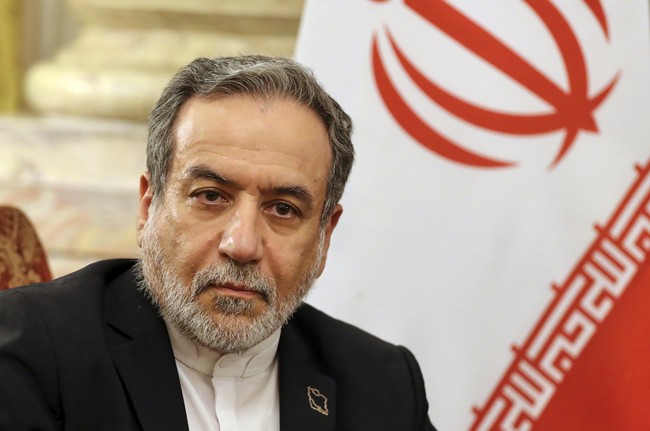
Iran’s foreign minister pushed back hard in public comments, but his denial created more problems than it solved. Abbas Araghchi insisted the country had self-imposed limits and was not pursuing long-range strike systems, calling contrary claims “misinformation.” His words were meant to calm the region, but they landed next to undeniable actions that contradicted him.
We have capability to produce missiles, but we have intentionally limited ourselves to below two thousand kilometers of range because we don’t want to be felt as a threat by anyone else in the world. Uh, we have not started any program to increase the range of our missiles more than what it is right now. So there is no evidence, there is no intelligence, nothing to to indicate that Iran is going to long-range missiles; let alone let alone those missiles that can reach the United States.
Ahem. The mismatch between Tehran’s words and its behavior is hard to ignore. Independent analysis and observable test activity suggest Iran’s missile program has advanced beyond the self-imposed range limits Araghchi describes. Those capabilities matter because they change strategic calculations for Europe, the Gulf, and the U.S.
Experts and analysts are now parsing imagery, test data, and procurement trails to estimate how far Iran has progressed on propulsion, guidance, and warhead delivery integration. That work helps explain why regional governments no longer treat Iran as a manageable nuisance but as a direct security challenge. When neighbors start believing they are targets, their policy choices move quickly from hedging to alignment with stronger deterrence policies.
Tehran’s attempt to cast its attacks as narrowly aimed at U.S. military infrastructure while ignoring the civilian damage only adds to regional alarm. Attacks that strike oil facilities and commercial targets make it obvious that the line between military and economic targets is blurred in practice. Those strikes have pushed Gulf partners away from neutral stances and into practical cooperation with the U.S.
“The attitude in Riyadh has shifted towards supporting the US war as a way to punish Iran for strikes,” a western official in the Gulf told MEE.
Saudi cooperation has already shifted in tangible ways that matter strategically. Openings for U.S. basing and logistics in the region undercut Tehran’s calculations that it can attack without consequences. When neighbors enable American operations, Iran’s claims about limited aims lose credibility on the ground.
Beyond diplomatic shifts, the military reality is stark: a state that tests and fields intermediate-range systems forces rivals and partners to react. Those reactions include multinational coordination on surveillance, air defense deployments, and targeting priorities that raise the costs for Tehran’s adventurism. The result is a tighter coalition posture that constrains Iran’s options and increases the chances of decisive countermeasures.
Iran now faces a strategic dilemma of its own making. Its effort to project strength by striking regional targets and denying long-range intent has produced alignment among states it hoped to deter. Instead of isolating the U.S., Tehran has pushed allies closer to Washington and deepened their willingness to support stronger action. That reality vindicates warnings that dismissed Tehran’s denials as convenient but unreliable.
The facts on the ground — missile launches, attacks on civilian infrastructure, and shifting Gulf responses — all point toward a region that expects the U.S. to lead in defense of shared interests. Iran’s public denials and private programs no longer mask the consequences of its decisions, and those consequences are reshaping regional security in ways Tehran likely did not intend.



Add comment