
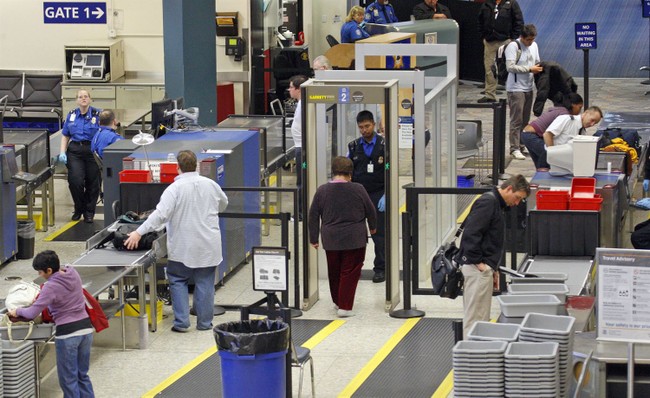
The Senate has voted to make lawmakers use the same TSA checkpoints as everyone else, removing a long-standing perk that let members speed through or skip airport security. This move passed by unanimous consent and came amid long TSA lines caused by staffing shortfalls during a prolonged Department of Homeland Security funding lapse. The idea is simple: if Congress creates the conditions that produce headaches for travelers, members ought to feel those headaches, too. The legislation now heads to the House where conservatives will push for the same common-sense accountability.
Lawmakers have for years enjoyed expedited or bypassed screening at airports, a perk many voters saw as out of touch with everyday experience. That privilege looked worse as TSA lines ballooned during the DHS funding gap and agents missed work because of unpaid furloughs. Conservatives argue members of Congress are employees of the public, not anointed elite, and perks like this undercut trust. Making them wait is framed as a small, visible correction to a culture of insulation from consequences.
On the Senate floor, the proposal drew attention not just for its substance, but for the optics of unanimous approval. If both parties can agree lawmakers should stand in the same line as everyone else, the public sees something rare: lawmakers acting on a complaint many travelers made themselves. That matters politically, because it connects lawmakers to real-world frustrations with government mismanagement. Republican voices stressed the point that accountability builds credibility at a time when voters are skeptical of elites.
The Senate approved by unanimous consent Thursday a proposal to end the special treatment members of Congress get at airports that allows them to speed through or skip the Transportation Security Administration’s (TSA) screening checkpoints.
Sen. John Cornyn (R-Texas) proposed the legislation on the Senate floor Thursday night to force Democratic colleagues to have to wait in the same long security lines as the rest of the flying public during the Department of Homeland Security shutdown, which has now stretched for 35 days.
TSA lines have been painfully long in many airports, with some travelers reporting waits of hours. The staffing crunch was driven in part by unpaid TSA agents who either did not report for work or were distracted by pay issues during the DHS funding impasse. That created delays, missed flights, and real economic and personal costs for ordinary American travelers. Conservatives have used that pressure to argue for both proper funding and personal accountability for those who caused or failed to prevent the crisis.
Security screening lines have been especially long at Houston’s Hobby Airport, where people have had to wait three to four hours to get through TSA lines.
Wait times have increased dramatically at airports around the country in large part because more TSA agents are missing work during the shutdown as they’re not getting paid.
“Staffing constraints have not only led to longer wait times around the country but also significant delays, disruptions and missed flights,” Cornyn said on the floor, blaming Democrats for the Homeland Security shutdown.
“The only reason I can fathom, other than being completely out of touch, that our Democrat colleagues would do this is not all members of Congress are being forced to experience the same mess of their own making,” Cornyn said.
The Republican case is straightforward: when elected officials feel the policy consequences they voted for or allowed to happen, they are more likely to act responsibly. Making members wait in TSA lines is a low-cost reform that signals a willingness to close the gap between lawmakers and constituents. It also shifts blame into public view when government dysfunction harms travelers, especially during an embarrassing federal lapse. For many voters, seeing lawmakers stand shoulder to shoulder with them in a security line is a meaningful gesture of fairness.
Critics might call it theater, but optics matter in politics, and the optics here reinforce a message of shared responsibility. If Capitol Hill wants voters to trust it with messy, important decisions, the Hill should stop insulating itself from the fallout. Holding members to the same inconveniences proves a point without adding new bureaucracy or cost. Republicans emphasize that accountability can be both symbolic and practical.
Beyond symbolism, the vote highlights the deeper issue: Congress must adequately fund and manage core agencies so essential services like airport security function smoothly. Long lines are a symptom of failed governance that requires legislative fixes, not just performative penalties. Conservatives want the House to complete the process and pass the measure quickly so accountability becomes law. Passing it would be a modest but clear step toward restoring everyday fairness.
There is also an element of civic education in this move: when elected officials meet voters in everyday places like airport lines, they cannot hide from public sentiment. These interactions can change how lawmakers prioritize problems and review policy consequences. If members of Congress experience the same inconveniences as constituents, they may act with more urgency to prevent similar breakdowns. That kind of direct feedback is healthy for representative government.
The bill now moves to the House of Representatives where Republicans expect to push for a clean, unanimous vote. If the House does its part, the perk will end and members will face the same airport security lines as everyone who pays taxes and votes. That outcome fits a conservative preference for accountability, transparency, and limited special treatment for the powerful. The country will watch whether Capitol Hill follows through and lets lawmakers stand in line with the public.


Add comment