
The Senate returned on a Saturday to keep debating the SAVE America Act, a package of election and social policies that would tighten voter registration rules, require ID to cast a ballot, and address topics from youth sports eligibility to other federal processes. The conversation has highlighted sharp partisan divides, repeated calls for “common sense” election measures from Republicans, and procedural votes that expose how legislative mechanics can delay or reshape priorities. Below I lay out what happened on the floor, how Republican leaders framed the bill, which points drew the most heat, and why the fight is likely to continue into next week.
<pThe Senate session on Saturday centered on several headline items inside the SAVE America Act, with Republicans pressing for proof-of-citizenship registration and voter ID requirements. The debate drew a predictable split, with GOP senators arguing these are straightforward safeguards and Democrats resisting what they call restrictive changes. The exchange included floor remarks, procedural maneuvers, and pointed rhetorical attacks that made the day’s politics easy to read for anyone paying attention.
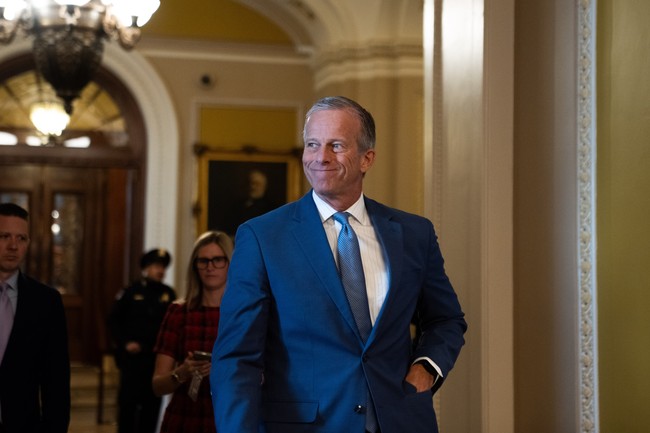
Mr. President, I said at the beginning of this debate that I was going to be using the term common sense a lot, and that’s because the SAVE American Act unites a bunch of common-sense policies. The kind of things that are just intuitively obvious, at least, they should be. And should be getting 80-90 votes, or more, here in the Senate. I’ve talked at length this week about common-sense election policies, like showing a photo ID at the polls. And demonstrating that you’re an American citizen, in other words, eligible to vote, when you register.
Senate Majority Leader John Thune framed these proposals as basic, everyday requirements, pointing out that identification is needed for nearly every aspect of modern life. The argument was pitched as nonpartisan common sense and presented as something that ought to win broad support across the chamber. That framing set the tone for Republicans who repeatedly returned to the theme of election integrity as a simple, unavoidable standard.
Another strand of the debate shifted from elections to protecting youth athletics, where Republican senators raised concerns about biological men competing in women’s sports. Thune and others said the bill contains provisions to address that issue, making it part of a broader package intended to appeal to voters who want clear rules on both ballots and athletic competitions. Those sections prompted sharp exchanges and forced Democrats to explain or defend their positions on gender and competition policy.
Today I want to talk about another couple of common-sense policies in this bill. In this case, not about protecting our elections, but about protecting our youth. Mr. President, in recent years, we have seen men, biological men, who identify as women, take up spaces in athletics meant for actual women and girls. And this is happening along a range of sports.
During the afternoon, there was a procedural vote tied to an obscure motion about referring a TSA-related matter to the Committee on Rules and Administration, which illustrated how Senate process can affect everyday workers. That vote showed how a seemingly technical step can delay substantive outcomes, including budget or payroll issues connected to federal employees. The procedural turn became a moment for both parties to score talking points about priorities and competence.
Senator Jon Husted was noted during debate and is recorded as having an embedded appearance on the floor, which is preserved here: . The session also included additional embedded coverage and clips from the chamber for viewers who want to watch the full exchange: .
Republicans repeatedly argued the SAVE America Act addresses problems voters care about — secure registration, ID at the polls, and fairness in youth sports — while casting Democratic opposition as out of step with common-sense expectations. Democrats, for their part, countered that some measures would impose barriers and disproportionately affect certain groups. Those dueling narratives defined the day’s floor rhetoric.
Beyond substance, the Saturday debate underscored how timing and process shape outcomes. Lawmakers used procedural tools to advance or stall pieces of the bill, while floor speeches doubled as direct appeals to the public. The mix of policy detail and political theater made the session as much about messaging as legislation.
The fight over the SAVE America Act is not likely to wrap up quickly; senators signaled more rounds are coming, and the bill’s fate will depend on both floor math and the willingness of moderates to side with either party. Until then, expect more targeted amendments, votes on technical referrals, and public messaging aimed at voters back home. The chamber’s work this weekend made plain that the legislative process can be slow, strategic, and loudly partisan.
Editor’s Note: The Democrats are doing everything in their power to undermine the integrity of our elections.


Add comment