
This piece explains why California’s primary counting stretches far beyond a single day, how universal mail voting and slow verification processes create long delays, and why those delays have repeatedly altered early outcomes in ways that benefit one party.
In California, “Election Day” has become a stretch of weeks, not hours, because ballots were mailed beginning May 4 to more than 23 million eligible voters. That shift turned a single decisive evening into a drawn-out process where ballots arrive and are counted over many days. Voters can cast ballots early or rely on mail, and the state’s rules let counting continue long after polls close.
The result is that what looks like a winner on election night can flip later, sometimes days or weeks after initial tallies are posted. There are real examples where candidates who celebrated victory were later overtaken when late-arriving ballots were processed and verified. Those late swings have often favored Democrats, which fuels suspicions about the system’s fairness from a Republican viewpoint.
One notable example came in 2018 when Republican Young Kim led in the preliminary count in what was then the 39th Congressional District and even attended freshman orientation in Washington. Weeks later, the count was revised and that apparent victory disappeared. Those reversals aren’t isolated quirks; they’re a foreseeable outcome of how California runs its elections.
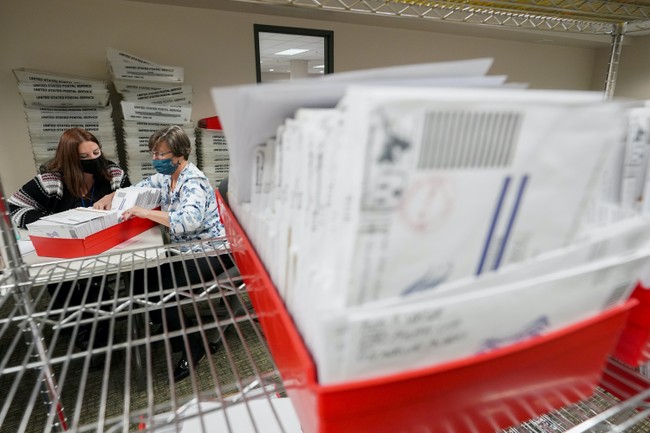
State lawmakers designed the system to expand access, but the trade-offs are obvious: universal vote-by-mail, extended early voting, and long deadlines for receiving ballots create a protracted counting window. The mechanics require signature verification, handling millions of mail ballots, and audits, and those steps take time. By law counties can take up to 30 days to complete the official canvass and post-election checks.
https://x.com/america/status/2061836773601280479
By state law, the process of voting and tabulating ballots stretches far beyond the traditional single day of in-person polling. With universal mail-in ballots sent out to every registered voter up to 29 days before Election Day, and early in-person voting available at designated voting centers starting as early as the weekend before the election, voting in the Golden State is effectively a multi-week affair.
Vote-by-mail ballots can be postmarked by Election Day but received and counted up to seven days later, which means totals remain in flux for at least a week. That policy intentionally extends the window to include late-arriving mail ballots, but it also guarantees uncertainty and keeps races unsettled. This setup invites both frustration and skepticism, especially when outcomes alter after the public thinks a result has been settled.
Vote-by-mail ballots can be postmarked by Election Day but received and counted up to seven days later.
Officials defend the approach by pointing out that signature checks and required audits aim to ensure accuracy, not speed. They will note that the integrity of the count matters more than rapid reporting, and the process is designed to catch errors before certification. From a Republican perspective, however, the predictable consequence is drawn-out uncertainty that often benefits the party in power.
California’s vote count often stretches beyond Election Day because officials must verify signatures, process millions of vote-by-mail ballots, and conduct required audits before certifying results.
State law gives county election officials up to 30 days after an election to complete the official canvass, count every valid ballot, and perform post-election checks to ensure accuracy.
That raises a larger question: what happens if California ever decides a close national contest? Right now the state rarely affects the presidential outcome, but if it did, the nation could be stuck in a prolonged limbo for weeks while votes are tallied and verified. Such a scenario would test public patience and trust at a scale that California’s current system is not built to manage quickly.
Short of reversing policies that expanded mail voting and extended deadlines, the practical effect is predictable: elections play out over time rather than a night. Californians may like the convenience of voting early and by mail, but the cost is slower certainty. That trade-off is central to the debate about how to protect access while keeping results timely and transparent.



Add comment