
This article explains the Pentagon’s decision to revoke former Air Force Secretary Frank Kendall’s access to classified information after disclosures about Air Force One’s capabilities, reviews reporting around the new jet donated by Qatar, and notes uncertainty about the leak’s source while preserving key quoted statements.
Breaking: Biden Air Force Secretary Has Security Clearance Yanked Over Air Force One Leaks
Recent reporting focused attention on Air Force One after media accounts suggested the newest presidential jet lacked advanced security features, which raised national security concerns. The issue moved from story pages to official action when the Pentagon announced a revocation of classified access for a former senior official.
https://x.com/just_in_america/status/2085865515009061103
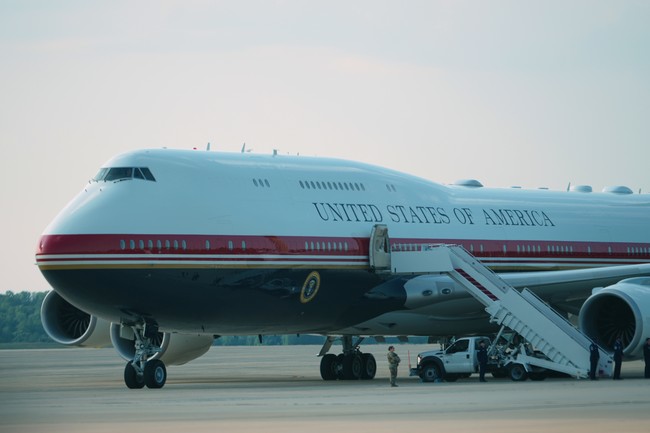
Earlier coverage described how President Trump used a different aircraft for travel, boarding a smaller C-32 rather than the familiar 747 variant that commonly serves as Air Force One. Observers noted the paint job matched but the platform differed, prompting questions about which jet was in service and why.
News accounts also described a Qatari-donated jet that recently entered service and then was pulled for additional work to “max out” its capabilities. Those reports drew attention because they suggested the new plane might have been used during major trips, including a NATO summit flight.
Embedded reporting included allegations about why the older plane was used instead of the new jet and raised concerns that enemies could now have sensitive information about the president’s aircraft. The piece quoted earlier coverage directly in a block of text that raised the stakes of the reporting.
Rumors spread quickly when President Trump departed the NATO summit in Turkey in early July aboard the old 747‑200B (VC‑25A) baby-blue-and-white Air Force One instead of the shiny new $400 million Qatari-donated jet that had recently been put in service. (After a stopover in England, he returned to the U.S. on the new plane.)
Was it because he is “number one on the kill list for Iran” and the Islamic Republic was threatening to assassinate him?
The Pentagon’s statement made the personnel action clear: Frank Kendall, who served as Air Force secretary under President Biden, had his eligibility for access to classified information and ability to hold sensitive positions revoked. The official reason cited was an “unauthorized disclosure of classified information regarding Air Force One’s capabilities to a media outlet,” placing the controversy squarely on the issue of leaks and classified handling.
Pentagon spokesperson Sean Parnell publicly announced the decision on social media, noting the department’s view that safeguarding classified information is essential. The announcement framed the revocation as immediate and non-negotiable for anyone who violates the trust placed in them when handling classified material.
Effective immediately, the Department of War has REVOKED former Secretary of the Air Force Frank Kendall’s eligibility for access to classified information and his ability to hold any sensitive position.
This action follows his unauthorized disclosure of classified information regarding Air Force One’s capabilities to a media outlet.
Safeguarding classified information is a non-negotiable duty. Those who violate that trust forfeit the privilege of access and any role requiring it.
The story is still unsettled on one key point: the identity of the leaker. Officials and outside observers have acknowledged it remains possible that the information published by a major outlet came from someone other than Kendall. That uncertainty means the revocation addresses the department’s internal standards for access rather than serving as a judicial finding about who passed material to reporters.
Commentary in conservative circles has emphasized the seriousness of any disclosure that could reveal vulnerabilities tied to presidential travel, arguing that such leaks endanger national security and those who protect it. Critics also point out the mixed messaging that follows when high-level equipment is simultaneously publicized and described as in need of upgrades or fixes.
At the time of publication, the White House had not issued a formal statement on the revocation or the underlying reporting, and investigations and internal reviews appeared likely to continue. Observers should expect further developments as the Pentagon and other agencies clarify what was disclosed, how it happened, and what steps will follow to protect classified information going forward.


Add comment