
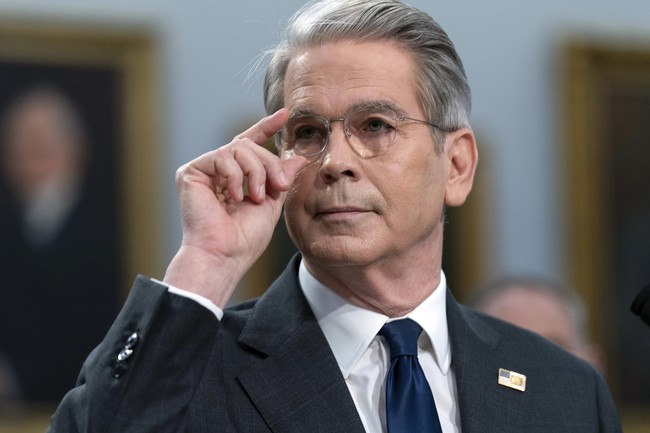
The Treasury is moving to cut off banks that enable illegal employment and other unlawful financial activity, with Secretary Scott Bessent telling bankers the administration will push banks to spot and report suspicious patterns tied to people not authorized to work in the United States.
Treasury Secretary Scott Bessent delivered a blunt message to bankers in Phoenix, announcing that the Trump administration intends to bring border enforcement into the financial realm. He warned that the administration “will not tolerate blatant abuse of our financial system, nor will it permit risks posed by the extension of financial services to illegal aliens.” That line set a firm tone: banks should expect new scrutiny tied to illegal immigration and related financial schemes.
The department is linking an executive direction on protecting the financial system to practical steps for banks to better detect illicit activity and fraud. That order instructs regulators to improve detection of unlawful conduct involving unauthorized workers, and Treasury is following through by urging banks to identify and report suspicious transactions. The approach emphasizes blocking the money that enables illegal employment and the businesses that exploit it.
Bessent was careful to say that bankers are not being asked to become immigration agents, but he also made clear that their role in spotting risk is vital. “We do not ask bankers to assume the burdens of border enforcement,” he said. “But we depend on banks to do what you do best: know your customers, identify risks as they arise, and report suspicious patterns before they metastasize into criminal schemes.” That is intended to be a partnership: federal authorities will act, but banks must use their local knowledge to flag wrongdoing.
The Treasury and federal banking regulators are elevating focus on financial activity tied to people not legally authorized to work in the country. Regulators point to schemes involving unlawful employment, payroll fraud, shell companies, identity theft, and payroll tax evasion as ways illicit actors hide behind the financial system. The aim is to deny criminal networks and unscrupulous employers the tools they use to extract unfair advantages and evade taxes.
Bessent singled out Arizona as particularly affected by past policy failures at the border and by transnational criminal organizations. “Arizona remains uniquely exposed to the aftershocks of Biden’s border crisis, including cartels and criminal organizations that seek to conceal illicit proceeds within legitimate channels,” he said. That statement frames the initiative as not only a national policy but also a regional defense against organized crime seeking to launder money through mainstream institutions.
FinCEN has rolled out an advisory designed to help banks spot employment-related schemes and deceptive payroll arrangements, while the Office of the Comptroller of the Currency has offered guidance about lending to borrowers who are not authorized to work. Regulators want banks to assess borrower repayment ability, monitor credit risk, and be alert to vendors, labor brokers, and business structures that mask unlawful employment. The regulatory push is about protecting the integrity of loans and the broader credit system.
Through these schemes, employers can gain an unfair advantage over legitimate U.S. businesses; depress wages; facilitate identity theft of people who are authorized to work in the United States, including American citizens; and steal millions of dollars in Federal and state payroll tax revenue meant for government benefit programs. Non-work authorized populations and their employers often rely on access to the U.S. financial system.
The Office of the Comptroller of the Currency has also issued guidance concerning loans to borrowers who are not legally authorized to work in the United States. The guidance calls on financial institutions to assess borrowers’ willingness and ability to repay and to identify, monitor, and control the resulting credit risks.
Bessent praised Arizona banks that have already invested in compliance programs, trained staff, filed suspicious activity reports, and shared intelligence to prevent criminal schemes. He called those steps “the type of leadership that Treasury expects” and used them as a model for other institutions to follow. The administration is signaling that good compliance will be recognized, while tolerance for willful blindness will not be.
From a Republican perspective, this is about restoring rule of law and protecting honest businesses and workers from unfair competition and wage depression caused by illegal labor. Cutting off financial access for those who exploit the system defends taxpayers by preventing theft of payroll taxes and benefits funds. The policy ties border security to economic integrity, insisting that enforcement includes the financial plumbing that enables unlawful conduct.
The message to banks is straightforward: use the tools you already have to know your customers, monitor unusual patterns, and file reports when things look wrong. Treasury will lean on regulators and guidance to make clear what is expected, and it will spotlight institutions that take the threat seriously. This effort aims to choke off the money flows that let criminal actors and bad employers profit at the expense of law-abiding Americans.

Add comment