
I’ll explain how a failed Iranian missile strike exposed Tehran’s miscalculation, how President Donald Trump pressed allies to secure the Strait of Hormuz, how more nations joined a coalition, and how Iran undercut its own leverage by letting key shippers pass through.
The recent incident near Diego Garcia was a wake-up call. Two intermediate-range ballistic missiles launched by Iran failed to achieve their intended effect; one reportedly failed in flight and the other may have been intercepted by U.S. forces. That kind of strike, or even the capability to reach that far, validates the concern many had about Tehran’s growing missile threat.
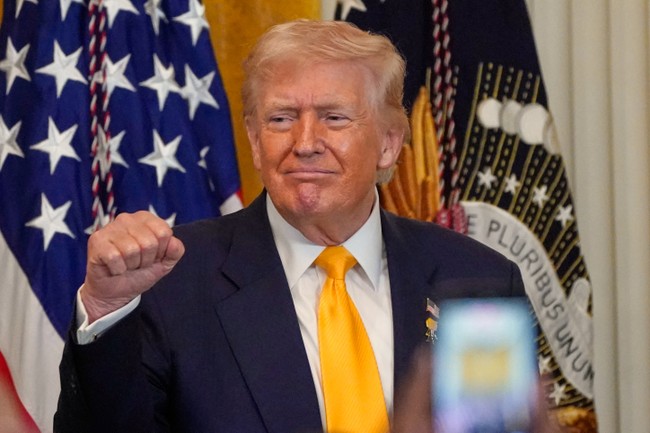
President Donald Trump had already warned about these risks, and his push to organize partners around securing sea lanes now looks prescient. Trump pressured hesitant allies to step up, making it clear that oil markets and global commerce depend on free passage through the Strait of Hormuz. His blunt messaging moved previously reluctant countries from complaint to commitment, and that shift matters.
What began as a handful of partners willing to help escort shipping has expanded significantly. Nations across NATO and beyond signed onto a joint statement committing to efforts that would help ensure safe passage through the Strait. That growing coalition is a direct result of sustained pressure and clear leadership, not wishful thinking or diplomatic niceties.
The growing list, which includes NATO members, comes after President Donald Trump ripped NATO for acting like “cowards” Friday. The president said “they complain about the high oil prices they are forced to pay, but don’t want to help open the Strait of Hormuz.”
The joint statement said, “We express our readiness to contribute to appropriate efforts to ensure safe passage through the Strait,” and, “We welcome the commitment of nations who are engaging in preparatory planning.”
The statement is attributed to the leaders of the United Kingdom, France, Germany, Italy, the Netherlands, Japan, Canada, Republic of Korea, New Zealand, Denmark, Latvia, Slovenia, Estonia, Norway, Sweden, Finland, Czechia, Romania, Bahrain, Lithuania, Australia and the United Arab Emirates.
“We condemn in the strongest terms recent attacks by Iran on unarmed commercial vessels in the Gulf, attacks on civilian infrastructure including oil and gas installations, and the de facto closure of the Strait of Hormuz by Iranian forces,” the statement also said.
That joint language is strong and specific, and it names behaviors the world will no longer tolerate. Calling out attacks on unarmed commercial vessels and civilian infrastructure draws a bright line between acceptable statecraft and blatant aggression. When multiple governments publicly condemn those acts, it narrows Iran’s diplomatic room to maneuver.
Numbers matter. What started with roughly half a dozen participants has swelled to 22 countries publicly prepared to take part in measures to keep the Strait open. That expansion matters because it demonstrates a broader international consensus that the free flow of commerce is not negotiable. It shifts the calculus for Tehran: escalation now risks widespread international action rather than isolated reactions.
At the same time, Iran has undercut its own position by selectively allowing certain vessels through the Strait. Reports indicate India’s ships were being permitted, and Tokyo just secured assurances for Japanese vessels. By letting two of the largest shippers pass, Tehran weakened the leverage it thought it held over global oil markets.
Letting commercial lifelines remain open reduces the pressure on oil prices and global supply chains, which were Tehran’s principal card. If major importers continue moving product freely, the international costs Iran hoped to inflict diminish sharply. That turn makes Iran’s aggressive posturing less effective and gives the coalition room to press on with coordinated measures.
This combination of U.S. leadership, allied commitments, and Tehran’s own contradictory actions creates a dynamic where Iran’s threats appear bluster-driven. The failed missile attempts and the decision to permit key shipping indicate a strategic misstep by Tehran. In short, the regime’s theater of coercion is losing its potency just as a sizable coalition organizes to enforce maritime security.


Add comment