
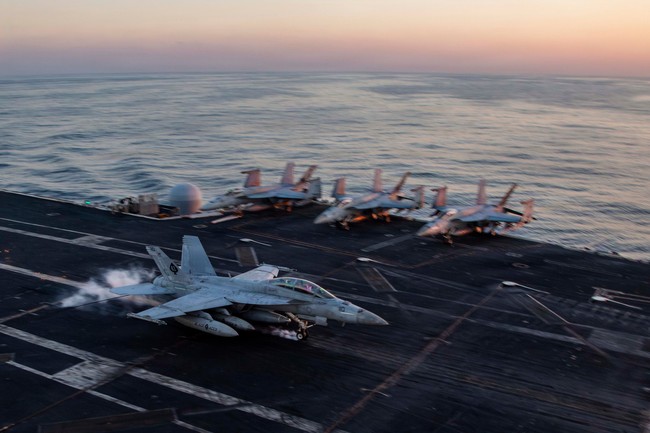
I’ll explain the core developments, report President Trump’s assessment of the campaign against Iran, describe the strategic stakes around the Strait of Hormuz, quote his strongest warnings verbatim, and note on-the-ground reactions from shipping and military sources.
President Donald Trump told CBS News that the U.S. campaign against Iran is progressing faster than his initial estimate and that the military objectives are largely achieved. He framed the strikes as decisive, saying they crippled Iran’s ability to operate as a conventional fighting force. That assessment shapes both public messaging and policy moves in the region right now.
He added that the U.S. is “very far” ahead of his initial 4-5 week estimated timeline.
The president described the results of U.S.-Israeli air operations as having eliminated key Iranian capabilities, leaving Tehran with few military options. He emphasized that naval, air, missile, and drone resources have been degraded across the board. Those statements are meant to reassure domestic audiences that the campaign has clear, achievable goals and that the U.S. is not stumbling into an open-ended conflict.
They have no navy, no communications, they’ve got no air force. Their missiles are down to a scatter. Their drones are being blown up all over the place, including their manufacturing of drones. If you look, they have nothing left. There’s nothing left in a military sense.
Trump also addressed the strategic choke point at the Strait of Hormuz, underlining that Washington will not accept Iranian interference with a waterway that channels a large share of global oil shipments. He said the strait remains open and suggested a willingness to take control of measures necessary to keep sea lanes operating. That kind of language signals firmness to allies and adversaries alike.
The president warned Tehran directly with strong, unmistakable phrasing meant to deter any escalation that would threaten international navigation or regional stability. He framed further Iranian provocation as a step that could erase the nation from the map in practical terms. Such rhetoric is intended to impose costs mentally as well as physically on Iran’s leadership.
President Trump told CBS News in an interview the U.S. “could do a lot” about the Strait of Hormuz, as shipping grinds nearly to a halt in a waterway that carries about 20% of the world’s oil.
The president asserted that the strait — which lies between Iran and the Arabian Peninsula — is open now, but said he’s “thinking about taking it over.”
He also threatens Iran if it interferes with the waterway.
“They’ve shot everything they have to shoot, and they better not try anything cute or it’s going to be the end of that country,” the president said. “If they do anything bad, that would be the end of Iran and you’d never hear the name again.”
On the economic front, Trump told reporters he has a plan to keep oil prices down despite disruptions and market jitters. That comment was intended to calm consumers and markets, suggesting contingency steps are in place to stabilize supply. Keeping energy prices steady is a top domestic priority tied directly to the administration’s political standing.
Maritime operators have already adapted to Iranian electronic attacks by taking simple, practical precautions to protect their ships. Some captains are disabling transponders when they suspect hostile electronic warfare activity, a low-tech workaround that reduces exposure to spoofing and electronic interference. These hull-level fixes show how commercial actors respond quickly to threats even as governments manage larger strategic moves.
Trump offered a compact, confident line to other audiences, saying, “I have a plan for everything, okay?” and repeating, “I have a plan for everything. You’ll be very happy.” Those words were delivered in a phone interview as the joint U.S.-Israeli campaign entered its second week. The repetition underscores a message of control and preparedness.
When asked whether he had any message for Iran’s newly announced leadership, the president responded with a short, sharp quip that conveyed contempt and menace rather than cautious diplomacy. He suggested that any communication from Tehran would be delivered in a manner that belittled their options. That tone aligns with the broader Republican posture favoring strong deterrence and decisive measures.
U.S. forces and allies remain on alert while operations continue to shape the battlefield. Public comments from the president are part reassurance, part psychological pressure on Iran and its proxies. The administration’s line is clear: the campaign is on track, naval chokepoints must remain open, and any escalation by Tehran will meet overwhelming response.

Add comment