
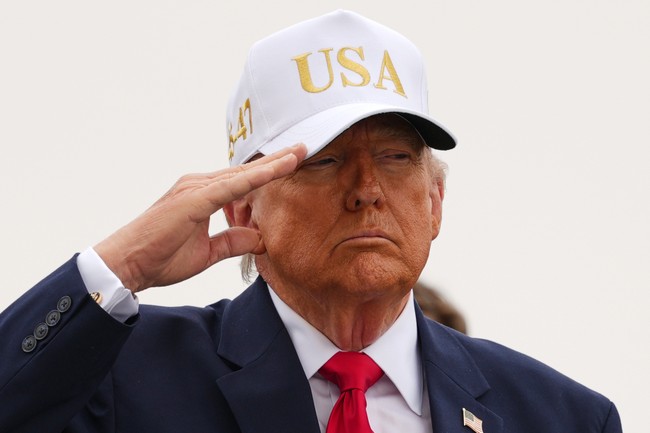
This article summarizes President Donald Trump’s recent Florida briefing on U.S. strikes against Iran, detailing his assessment of damage to Iranian naval and missile forces, the claimed scale of targets struck, and the strategic aims he described for preventing Tehran from rebuilding military capabilities that could threaten the United States or allies.
At a roughly 34-minute briefing in Florida, President Donald Trump stated that early U.S. military actions have severely degraded key Iranian capabilities. He highlighted strikes on naval forces, missile infrastructure, and drone production as central to weakening Tehran’s capacity to project force. The tone was confident and focused on results achieved in the opening phase of the campaign.
The president repeatedly returned to the condition of Iran’s naval assets, asserting that U.S. operations had inflicted catastrophic losses at sea. He claimed a significant number of ships had been incapacitated, framing the strikes as decisive blows to maritime threats. Those remarks were among the most widely circulated sound bites from the briefing.
Trump emphasized the campaign’s effects on missile production and logistics, arguing that facilities tied to weapons development were primary targets. He described sustained work to dismantle the infrastructure that enables missile and drone operations. The goal he presented was not only immediate defeat but also long-term denial of Iran’s ability to reconstitute those forces.
The president used blunt language to describe the state of Iran’s military after the strikes, asserting a sweeping collapse of conventional capability. He said the opening strikes had moved faster than many expected and left Tehran in a dramatically weakened position. That framing cast the initial phase as both strategically effective and tactically efficient.
“We’ve wiped every single force in Iran out very completely. Most of Iran’s naval power has been sunk. It’s on the bottom of the sea. It’s almost 50 ships. I was just notified it’s 51 ships.”
Beyond naval claims, Trump provided figures intended to convey the scale of the campaign, noting thousands of targets had been hit. He told reporters the United States had struck “over 5,000 targets to date,” and described missile capability as sharply diminished. Those numbers were deployed to underline the depth and breadth of the offensive.
“Their missile capability is down to about 10 percent, maybe less.”
He framed the initial phase as reducing immediate risk to U.S. forces and allies, suggesting the most dangerous moments of the confrontation were already behind the United States. Trump said the strikes had removed much of the initial threat environment, allowing options going forward. He left open the possibility of further action while stressing the success of what’s already been done.
“We could call it a tremendous success right now as we leave here. Or we could go further. But the big risk on that war has been over. We wiped them out in the first two days.”
The president connected the campaign to long-standing concerns about Iranian harassment of international shipping, saying operations aim to end attacks on commercial vessels. He mentioned steps intended to stabilize energy markets and protect maritime traffic during the campaign. Those points were tied to a broader narrative about safeguarding global trade routes and reducing oil price shocks for American families.
“In recent years, the regime and its terror proxies have launched attacks on hundreds of commercial vessels. We’re putting an end to all of this threat once and for all—and the result will be lower oil prices for American families… In the meantime, during this brief disruption, the United States is offering political risk insurance to any tankers operating in the Gulf… We are also waiving certain oil related sanctions to reduce prices… when the time comes, the U.S. Navy and its partners will escort tankers through the Strait if needed.”
The Strait of Hormuz figured prominently as a strategic concern because of its role in global oil flows, and Trump stressed the U.S. interest in keeping that waterway open. He argued the campaign’s targeting had reduced Tehran’s ability to disrupt maritime traffic or threaten allied interests. That justification tied operational choices to economic and security priorities.
Trump also framed the broader objective as denying Iran the capability to rebuild offensive weapons programs over the long term. He said the United States would judge success not just by immediate damage but by Iran’s reduced capacity for future threats. That emphasis on long-term prevention reflects a strategic aim to alter Tehran’s military trajectory.
“When I can see that they will no longer have any capacity whatsoever, for a very long period of time, of developing weaponry that could be used against the United States or any of our allies.”
During the briefing, the president criticized domestic political opponents for complicating national security efforts, linking funding and governance disputes to operational challenges. He singled out congressional Democrats in remarks about bureaucratic disruptions. Those comments were part of a broader theme that political unity is needed to sustain national security actions.
“One of the things we have to do is get the Democrats to stop the Democrat shutdown because, as you know, the apparatus that looks into that, DHS, Schumer, the Democrats have shut it down.”
The briefing centered on the argument that the opening phase of the U.S. campaign had already achieved major tactical and strategic aims, leaving Iran significantly weakened. The administration presented personnel, infrastructure, and maritime interdiction as key success areas. As the confrontation continues, the messaging focused on denying Iran future threats while protecting American interests and allies abroad.


Add comment