
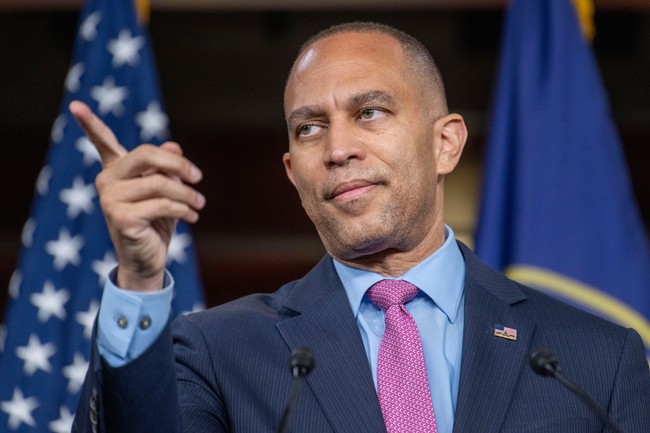
I’ll show how Democratic leaders are blocking DHS funding during rising international tensions, point out the risks this creates for security and frontline workers, highlight Hakeem Jeffries’ public comments and voting record, examine the ICE funding demand and its implications, and explain why this approach looks like putting partisan goals ahead of public safety.
We are facing serious military tensions with Iran, and that should make strengthening homeland security a top priority. The Department of Homeland Security oversees critical services like the Secret Service, TSA, Coast Guard, and CISA, all directly tied to protecting Americans at home and keeping infrastructure safe. Weakening DHS funding during a period of heightened risk makes no sense and leaves frontline personnel and the public exposed.
Right now DHS operations are hamstrung because Democrats have refused to pass funding, insisting on policy changes to immigration enforcement agencies as a condition. Those demands include sweeping limits on ICE activity, which they are tying to passing routine DHS appropriations. That strategy forces funding negotiations to center on hot-button policy rather than on keeping security agencies fully staffed and funded.
The political maneuvering is striking: congressional Democrats, who campaigned and lost on several fronts, are using shutdown leverage to press policy goals that could restrict law enforcement. From a practical perspective, this gambit risks TSA pay interruptions, longer airport lines, and eroded readiness at agencies responsible for protecting Americans. It also shifts the burden for these consequences onto the conservatives and the President who are being blamed in public statements.
When House Minority Leader Hakeem Jeffries took to X to blame President Trump for unpaid TSA workers, that claim ignored the plain record of votes and the actual cause of the funding gap. He voted against measures to fund DHS, yet his post blamed others for the very outcome his party created. That sort of public messaging, while politically useful to some, does not square with the reality of who is obstructing the funding.
The inconsistency is glaring: calling out the administration for shortages while his caucus refuses to approve funding is political theater dressed up as concern. TSA agents and other DHS employees serve on the front lines of national security and deserve reliable pay and resources regardless of political bargaining. Policymaking by shutdown puts regular Americans and civil servants in the middle of an intra-party fight.
Observers are already noting the real-world fallout: travelers facing long airport lines, understaffed checkpoints, and other disruptions tied to frozen appropriations. That kind of breakdown in everyday security and mobility is not abstract; it affects businesses, families, and emergency responses. Leaders who orchestrate or tolerate these outcomes should be held to account for the tangible harm caused.
Jeffries laid out a demand that helps explain the impasse: Democrats want a clear, nationwide prohibition on ICE entering certain locations, including polling sites. He stated their position plainly in a public remark and left no ambiguity about it. That demand is being used as leverage to delay DHS funding until it is written into law or appropriations conditions.
“We are in a DHS shutdown right now because Republicans have refused to agree to… keep ICE out of sensitive locations [like] schools, houses of worship, hospitals, and polling sites. We want an explicit prohibition that ICE can go nowhere near any polling sites in the United States of America. It’s one of our demands. We’re not going to bend on it.”
Putting an absolute ban on law enforcement entering any category of location is a risky policy decision that raises public safety concerns. If ICE is prevented from acting where illegal activity is present, those locations could become de facto safe zones for people violating immigration laws or committing other offenses. The choice to tie that policy to funding would be a tradeoff that prioritizes a partisan goal over operational flexibility for protecting citizens.
Beyond the immediate security consequences, the political optics are unflattering: voters see lawmakers who refuse routine funding while insisting on large policy concessions. That fuels frustration and erodes trust in institutions supposed to serve the public interest above partisan advantage. When elected officials use shutdown tactics to press ideological demands, ordinary Americans often suffer in the meantime.
Democrats have also encouraged protests and obstruction aimed at ICE operations, which has in turn complicated enforcement efforts and increased tensions on the ground. Whether intended or not, such tactics contribute to a climate where law enforcement faces interference, and that interference can have dangerous side effects for both officers and civilians. Accountability for those outcomes should not be deflected with selective blame.
At a time of international strain and domestic vulnerability, the sensible approach is to fund and equip homeland security agencies fully and then debate policy changes through regular legislative channels. Using essential agency funding as a bargaining chip puts ideological demands ahead of public safety, and that is a choice voters will notice when consequences appear at airports, ports, and on the streets.



Add comment