
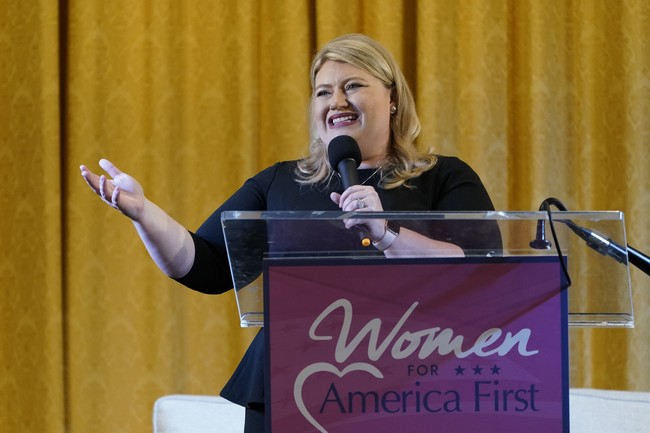
This article examines a recent interview between Republican Rep. Kat Cammack and journalist Tara Palmeri where a deeply personal medical story was released against Cammack’s request, sparking a debate about journalistic choices, political framing, and the fallout on safety for public figures and their families. It covers the interview’s context, the handling of Cammack’s ectopic pregnancy segment, responses from both women, and the social media storm that followed.
Rep. Kat Cammack sat for a long-form conversation that ranged from congressional misconduct to Title IX and protecting women’s sports, but attention zeroed in on her account of a 2024 ectopic pregnancy and the emergency care that saved her life. She has been open about that episode before, but this time the release timing and editing choices drove fresh controversy and threats against her family. The interview touched political nerves because it came just days before the Dobbs anniversary and amid ongoing debates about pro-life laws in several states.
According to Cammack, she asked Palmeri to hold the 20-minute portion of the interview that detailed her medical emergency for security reasons. Palmeri opted to tease and then publish that exact segment, saying it was “in the public’s interest,” and placed the excerpt front and center. That editorial decision, Cammack says, ignored the real safety concerns she raised and brought a wave of harassment and death threats toward her and her staff.
Palmeri framed the piece as necessary to show how policy affects people in real life, while Cammack argues the release prioritized clicks over caution. The release also came during a politically charged moment: states like Florida were enforcing heartbeat laws and other pro-life measures, which magnified how activists and media framed the episode. Emotions ran high because the segment shows Cammack in tears as she recounts the loss of her rainbow baby and the scramble to get life-saving treatment.
The politics around the case are obvious: pro-life laws, hospital administrators’ uncertainty, and the line between emergency treatment and elective termination all became talking points. Cammack insists the medical interventions she received — methotrexate or a D&C when necessary — are not elective abortions but emergency care to save a mother’s life. She warns that confusion and politicization of medical language put both patients and providers at risk.
The Wall Street Journal excerpt quoted in the original reporting lays out the scene: “Rep. Kat Cammack arrived at the emergency room in May 2024 terrified by what she had just learned: Her pregnancy could kill her at any moment.” The passage continues in detail about the methotrexate decision and hospital staff fearing legal consequences under Florida’s law. That passage remains part of the public record and shows how medical uncertainty can be weaponized in political debates.
Cammack spoke exclusively with the Wall Street Journal about her own personal ordeal with trying to obtain methotrexate for her ectopic pregnancy when the confusion sowed by the pro-choice left had medical personnel and administrators in fear.
https://x.com/tarapalmeri/status/2068714512048369986
Rep. Kat Cammack arrived at the emergency room in May 2024 terrified by what she had just learned: Her pregnancy could kill her at any moment.
It would only get worse. The Florida Republican needed a shot of methotrexate to help expel her ectopic pregnancy, in which there is no way for the embryo to survive. Her state’s six-week abortion ban had just taken effect. She said doctors and nurses who saw her said they were worried about losing their licenses or going to jail if they gave her drugs to end her pregnancy.
She began arguing her case. The staff resisted, she said, even though doctors earlier that day estimated she was just five weeks pregnant. There was no heartbeat, and her life was at risk. She pulled up the state law on her phone for hospital workers to read. She said she called the governor’s office late at night for help, but no one picked up.
Hours later, doctors finally agreed to give her the methotrexate, Cammack said.
Cammack has made clear she remains firmly pro-life and is not using her story to attack pro-life laws themselves; rather, she focuses on misinformation and the inconsistent application of rules in a crisis. Her critique is aimed at the chaos that arises when medical staff, administrators, and lawyers are unclear about how to proceed under new or changing laws. Those gaps, she says, can endanger lives unless lawmakers and institutions provide clear, medically grounded guidance.
Palmeri defended her decision, offering a public explanation that disputed Cammack’s account of their pre-release conversations and described an editorial rationale for publishing the interview when she did. Cammack responded by posting threats and messages she’d received, arguing the release of that emotional footage made an already dangerous situation worse. She maintains she did not want the story hidden, only delayed until law enforcement could address immediate threats to her family.
The exchanges that followed illustrate a wider problem in modern political media: emotional moments get amplified and then weaponized across social platforms, often with little regard for personal safety. Cammack says the selective tease of her most vulnerable moments misrepresented the fuller, measured explanation she gave about medical care and legal details. That selective portrayal, she argues, served narrative goals rather than truth or safety.
In public posts, Cammack laid out why she asked for a delay, stressing active threats and a missing suspect tied to harassment of her household. She insisted the request was about protection, not suppression. The situation became a test case in balancing transparency, news judgment, and the practical duty to protect vulnerable people who are also public figures.
The dispute left both women publicly defending their choices while conservative readers and colleagues rallied behind Cammack’s concerns about media opportunism and the safety of public servants. The controversy underscores how easily individual medical stories can be reframed into political cudgels in a polarized environment. It also highlights the need for clear legal and medical frameworks so emergencies are handled consistently, without political interference.



Add comment