
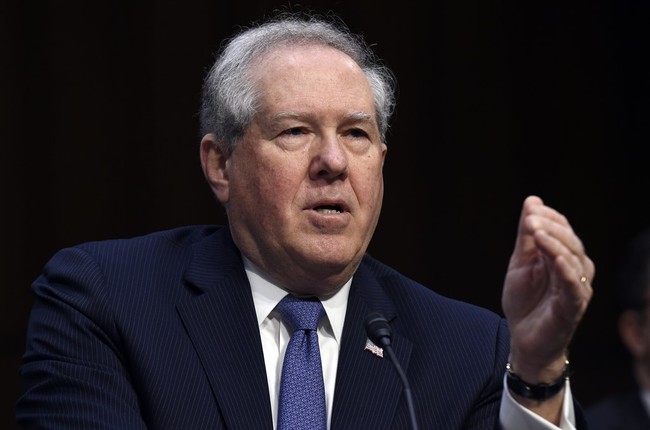
I’ll explain what happened when former Air Force Secretary Frank Kendall lost his clearance, why the Department of War acted, how Kendall responded and intends to sue, and what this means for protecting classified information and presidential security.
‘I Know Nothing’: Biden Air Force Secretary Threatens to Sue After Losing Clearance Over AF1 Leak
Frank Kendall says he plans to sue after the Trump administration revoked his security clearance, a move announced last Friday by Secretary of War Pete Hegseth. The department said Kendall disclosed classified details about the capabilities of Air Force One to a media outlet, and officials moved quickly to remove his eligibility to access sensitive material.
The removal of Kendall’s clearance is being presented as a strict enforcement of security rules that should apply equally to everyone, regardless of party or prior post. From a Republican perspective, national security must be protected without exception, and when leaks happen they deserve a firm response to deter further disclosures that could harm the president and operations.
Kendall responded in public comments and television interviews, insisting he was surprised and unaware of any classified remarks. He reportedly told reporters he was “mystified” and later told CNN host Erin Burnett he is “gonna sue” to get his clearance back, framing the situation as an unfair or mistaken punishment he will challenge in court.
Kendall subsequently the Wall Street Journal that he was “mystified” over having his security credentials taken away. He expanded on this thought during a Monday night interview on CNN, telling host Erin Burnett he’s “gonna sue” to get his clearance back.
Speaking on CNN Monday evening, Kendall said he only became aware of the administration’s decision after Parnell posted about it to social media.
“I was initially mystified, because I couldn’t think of anything I’d ever said that was classified, and I had tried very hard not to say anything classified and was quite sure I had not,” Kendall told Erin Burnett on “OutFront.”
Kendall’s security clearance was pulled after he spoke to The New York Times last month on safety concerns with the new Air Force One converted from a gifted Qatari luxury jet. Kendall warned the retrofitted plane had “a lot of shortfalls” compared with the older aircraft used as Air Force One and posed “a measure of risk.”
The department’s statement makes the standard clear: those who disclose classified information forfeit access and sensitive roles, a stance the current leadership says is non-negotiable. That approach is positioned as defensive and necessary, not vindictive, given the potential national security consequences of leaking details about presidential transport capabilities.
Officials note that former senior officials often retain clearances after leaving office so they can consult or work on national-security issues, but those privileges are conditional and can be revoked for cause. Hegseth’s action rescinded Kendall’s eligibility, signaling that continued access depends on adherence to rules meant to protect classified programs and the president’s safety.
In his CNN interview, Kendall denied detailed knowledge of the Qatari-donated jet now serving as Air Force One and argued the newer, cheaper refit could not match the capabilities of a longer, more expensive program. He said, “I don’t know anything about that airplane. I have made the observation that an airplane that you’ve spent one year on and $400 million will not be as capable as an airplane you spend five years on and $2 billion. That’s inherently obvious.”
https://x.com/SeanParnellASW/status/2085855429947703630?ref_src=twsrc%5Etfw
The broader context includes ongoing questions about who has been providing classified or sensitive details to reporters about the aircraft swap and its capabilities. From a national-security standpoint, any pattern of disclosures that could reveal vulnerabilities would be especially troubling and invite stronger countermeasures from the administration charged with protecting the president.
Legal pushback from Kendall is expected, and his threat to sue will test the boundaries between due process for former officials and the executive branch’s authority to protect classified information. Republicans framing the dispute emphasize the priority of preventing leaks that could endanger lives or reveal tactical capabilities, arguing that the system must deter insiders from speaking about sensitive matters publicly.
The episode spotlights an enduring tension: former officials can offer useful expertise post-tenure, but that access must be conditional on strict discipline about classified material. The Department of War’s swift move to revoke access aims to show that leaking such information has tangible consequences, reinforcing the message that national security rules are enforced irrespective of personal stature.
As this unfolds, expect legal filings and media back-and-forth, with Republican voices stressing the need for clear standards and rapid action to stop jeopardizing presidential security. The stakes are straightforward: protect classified information, hold violators accountable, and ensure presidential safety is not compromised by unauthorized disclosures.

Add comment