
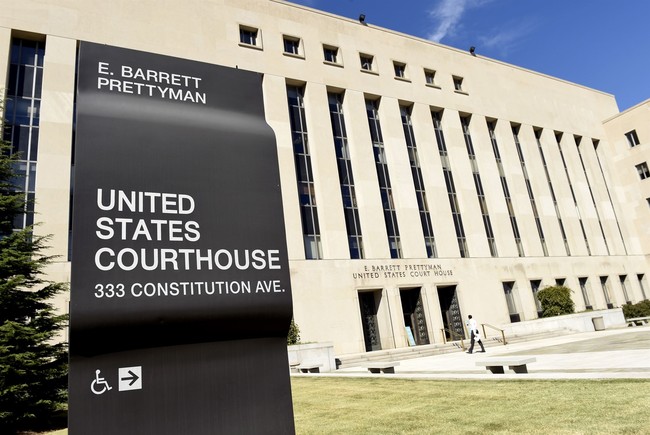
The D.C. Circuit Court of Appeals recently vacated a lower court’s stay blocking Department of Homeland Security directives on expedited removal for people admitted on parole, ruling the plaintiffs lacked standing because the challenged guidance did not change the underlying legal authority that has existed since 1997. The procedural decision lets DHS proceed with implementation while the larger legal fight continues over whether parolees can be processed for expedited removal, and it highlights the gap between agency guidance and the long-standing regulatory framework that actually controls immigration enforcement. The case makes clear that challenging a memo or an email from the agency is different from challenging the regulation that gives the agency its power. From a conservative perspective, the ruling reinforces the need to focus on law and procedure, not just politics, when litigating immigration policy.
The dispute began with two internal actions: a January 2025 memo and a February 2025 ICE email signaling that officers could consider expedited removal for arriving aliens who have active parole status. Those directives prompted litigation from immigration advocacy groups who argued the guidance increased the risk that paroled individuals would face expedited removal. Plaintiffs persuaded a district court judge to issue a stay under the Administrative Procedure Act while the merits were litigated, effectively pausing reliance on the guidance. That stay is now gone, at least for the moment, after the appeals court found the plaintiffs could not show they were likely to be helped by vacating the guidance alone.
The appellate panel was unanimous and included judges appointed by both Republican and Democratic presidents: Chief Judge Sri Srinivasan, Judge Neomi Rao, and Judge Justin Walker. They said the crux of the standing problem was redressibility — plaintiffs must show that the relief they seek would probably fix the injury they claim. Because a 1997 regulation, 8 C.F.R. § 1.2, already treats parolees as arriving aliens and permits expedited removal, the court concluded that removing the more recent guidance would not likely change plaintiffs’ exposure. In short, the guidance was not the source of the legal power allowing expedited removal; the old regulation is.
The court quoted the practical point plainly: “Plaintiffs cannot seek relief that changes nothing for them. The plaintiffs here tried to do just that. So we vacate the stay issued by the district court.” That language drove home the procedural posture: this was a jurisdictional ruling, not a judgment about whether DHS should be allowed to apply expedited removal to paroled entrants. The Appeals Court did not decide whether the agency’s policies are wise, lawful, or consistent with broader immigration statutes, just that the plaintiffs had not targeted the right legal instrument in their suit.
From the conservative view, this is a welcome enforcement of judicial limits and a reminder that courts must be careful about overreaching into policy disputes when plaintiffs fail to show a concrete, redressable injury. If the goal is to curb expedited removal for people admitted on parole, the proper legal route is to challenge the regulation that creates the authority or push for legislative change. Targeting internal memos and emails is politically dramatic but legally vulnerable when the regulation remains intact.
The decision also highlights a practical reality for immigration enforcement: agencies issue guidance to clarify how they will use preexisting regulations, but the regulations themselves often carry the real authority. That distinction matters in court. Plaintiffs argued the Huffman Memorandum and the ICE email made expedited removal more likely, but the appellate court asked whether striking those documents would have meaningfully altered the plaintiffs’ situation given the standing regulation from 1997. The court answered no, and vacated the district court stay accordingly.
For litigants and policymakers on both sides, the ruling presents a tactical lesson. If you want to change operational immigration outcomes, you must address the law that undergirds agency action. Plaintiffs can still try again by challenging 8 C.F.R. § 1.2 or urging Congress to revise the statute. Administrations that prefer more robust removal tools can continue to rely on existing regulations unless and until those rules are successfully altered in court or changed by lawmakers.
Practically, the immediate effect is straightforward: DHS can continue using its guidance while the litigation unfolds, and the underlying regulation continues to authorize treating parolees as arriving aliens for expedited removal purposes. The case is likely to prompt follow-up litigation or renewed legal strategies aimed at the regulatory source. For conservatives who favor stronger border enforcement, the ruling preserves an administration’s ability to apply existing regulations while reinforcing a legal principle that courts should not grant relief that would not change the plaintiffs’ legal position.


Add comment