
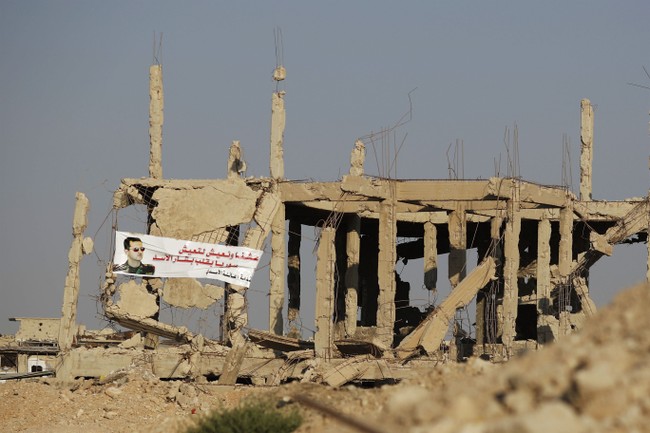
There’s Dancing in the Streets of Syria As Former Dictator Assad Is Sentenced to Death in Absentia
Crowds poured into Damascus streets to celebrate after a court sentenced Bashar al‑Assad and his brother to death in absentia, a ruling that marks a dramatic turn in Syria’s long, bloody conflict and reflects the new leadership’s push for accountability.
Civilians and onlookers gathered outside the Fourth Criminal Court as judges read charges tied to atrocities during a civil war that cost roughly half a million lives. The verdicts come after Assad was toppled in 2024 by Hayat Tahrir al‑Sham and allied groups, which now control much of the country’s governance. Assad and his brother reportedly fled to Russia as Islamist-led forces closed in on Damascus, leaving Syrians to confront a fraught moment of justice and vengeance.
Prosecutors listed a long string of allegations against Assad, accusing him of using state institutions to carry out systemic abuses against the population. The charges included premeditated murder, torture that led to deaths, arbitrary arrests, and crimes against humanity and war crimes. The court framed the former leader as the “highest decision-maker” responsible for the state apparatus that enabled those actions.
“Bashar Assad used state agencies to commit war crimes and crimes against humanity,” said Judge Fakhareddine al-Aryan during the televised session. The statement was read in open court and echoed the feelings of many Syrians who lived through years of sieges, bombardments, and detention. Public reaction outside the courthouse mixed relief, anger, and a desire for further reckoning.
https://x.com/AJEnglish/status/2087260261656998148
International observers have long accused Assad of crossing red lines, including the reported use of chemical weapons against civilians, a charge that drew global condemnation in earlier years. Those allegations were central to broader debates about intervention and the limits of diplomatic pressure. The court’s list of accusations revived those controversies while centering domestic accountability under the new rulers.
Syria’s transitional authorities and many Syrians now demand that Russia hand over the Assad brothers so sentences can be enforced, but whether Moscow will cooperate remains unclear. Russia’s previous support for the Assad government and its decision to provide refuge complicate any expectation of extradition. Analysts point to Moscow’s broader strategic calculations, suggesting Russia sees value in shielding its past ally to signal steadfastness to other partners.
Alongside Bashar al‑Assad, six additional former officials received death sentences in absentia, reflecting a sweeping legal effort to address the former regime’s actions. One figure, Assad’s cousin Atef Najib, was sentenced while in custody and appeared during the hearing in a prisoner’s uniform inside a cage. Najib’s role in prewar crackdowns made him a focal point for citizens demanding visible accountability for those who oversaw violent repression.
Even with dramatic verdicts, many practical questions remain. Assad’s removal and exile do not instantly end insurgent activity, terrorism risks, or the deep fractures that fueled the conflict. The transitional government faces the twin tasks of securing stability and proving it can deliver justice without becoming a vehicle for retribution that perpetuates cycles of violence.
The court rulings are politically potent inside Syria, where expectations run high that new leaders will act decisively against figures from the old regime. For many victims and families, these sentences represent a symbolic correction to years of impunity. At the same time, critics warn that legal victories must be accompanied by fair processes and reconstruction efforts that address the war’s root causes.
Regional and global players are watching the fallout closely, since the handling of high-profile sentences could shift alliances and influence diplomatic postures in the Middle East. Moscow’s reaction will be particularly consequential, given its role in Assad-era survival and its capacity to protect him abroad. How Russia balances strategic interests with calls for cooperation on legal matters will shape both Syria’s future and wider geopolitical calculations.
On the streets of Damascus, celebration mixed with uncertainty as people processed the verdicts and the complex path ahead. The court’s decision marks a milestone, but it neither guarantees closure nor eliminates the many challenges of rebuilding a society fractured by more than a decade of war. For now, Syrians confront the immediate aftermath of a ruling that throws a long shadow over the nation’s next steps.


Add comment