
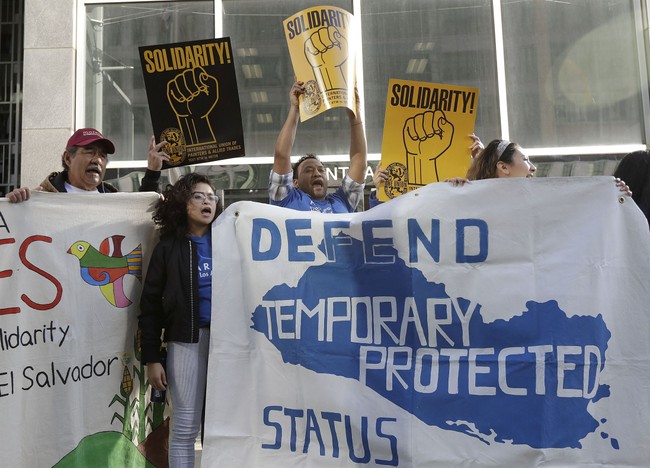
The Supreme Court’s 6-3 ruling in Mullin v. Doe narrows federal court review of most statutory challenges to Temporary Protected Status terminations and signals that a constitutional claim that Haiti’s TPS termination was motivated by racial animus “will likely fail.” The decision reverses lower court injunctions and clears a path for the administration to move forward with ending TPS for Syria and Haiti while leaving some matters to play out below. This piece explains the core holding, the split on the bench, and the practical consequences for TPS recipients and the government. It also notes the Court’s view that Congress, not judges, should police alleged misuse of TPS authority.
The case began when the administration announced its plan to terminate certain TPS designations and lower courts stepped in with blocks. The government appealed and the Supreme Court took the unusual step of granting review before final judgment because of the issue’s national scale. The consolidated cases, covering Syrians and Haitians, asked whether federal courts can hear most nonconstitutional challenges to TPS decisions under the Immigration and Nationality Act. The practical question at the heart of this fight is whether Temporary Protected Status is truly temporary or whether courts can second-guess those determinations.
In a majority opinion written by Justice Samuel Alito, the Court concluded that the Immigration and Nationality Act largely precludes judicial review of the Secretary of Homeland Security’s decisions to designate, extend, or terminate TPS. The ruling means many plaintiffs cannot pursue their Administrative Procedure Act claims in federal court. That legal bar removes a major procedural route that had been used to halt TPS terminations and sets a higher hurdle for challengers going forward.
The majority also addressed the Haitian plaintiffs’ constitutional claim alleging racial animus in the decision to end TPS for Haiti and stated that the claim “will likely fail.” Assuming without deciding that heightened scrutiny applied, the opinion found the challengers were unlikely to prevail. The Court pointed to the administration’s stated policy of terminating every TPS designation that came up for review rather than to any specific evidence of race-based decision-making as undermining the racial animus argument.
Five justices joined most or all of Alito’s opinion, with Chief Justice John Roberts and Justices Clarence Thomas, Brett Kavanaugh, Neil Gorsuch, and Amy Coney Barrett aligning with the result. Justices Elena Kagan, Sonia Sotomayor, and Ketanji Brown Jackson dissented, signaling continued disagreement over how broadly the INA bars review and how courts should treat claims alleging constitutional violations tied to immigration policy. That split highlights the ongoing balance the Court is striking between deference to executive discretion and protection of litigants’ rights to judicial review.
Practically speaking, Thursday’s decision permits the administration to proceed with ending TPS protections for nationals of Syria and Haiti while lower court proceedings continue on residual matters. Termination orders that had been blocked by injunctions can now be implemented in the near term unless another legal mechanism intervenes. For thousands of TPS holders, the ruling injects near-term legal uncertainty and may lead to rapid shifts in status, employment eligibility, and planning for relocation or departure.
The Court emphasized a separation-of-powers rationale: Congress, not federal judges, is the right check on alleged misuse of the TPS program. By framing the issue as statutory in bar and pointing to legislative remedies, the majority pushed responsibility back to lawmakers to create or constrain protections. That message is likely to reverberate in future litigation where statutory text limits judicial review, especially in immigration-adjacent contexts.
https://x.com/townhallcom/status/2070151199953703243?ref_src=twsrc%5Etfw
Legal observers should expect additional rounds of litigation as plaintiffs adapt to the narrower scope of review the Court endorsed. Challenges grounded in constitutional claims will remain possible but face steeper odds after the Court’s assessment in this decision. Administrative-law strategies that once succeeded in stopping TPS terminations will have to be rethought if courts cannot reach the merits of many statutory claims.
The decision reshapes the landscape for TPS policy and enforcement. It reduces the avenues available to block terminations via federal courts and reinforces executive discretion under the INA while signaling Congress as the forum for broader policy fixes. For affected individuals and advocacy groups, the ruling underscores the urgency of exploring legislative or alternate legal strategies to address the fate of temporary protections.


Add comment