
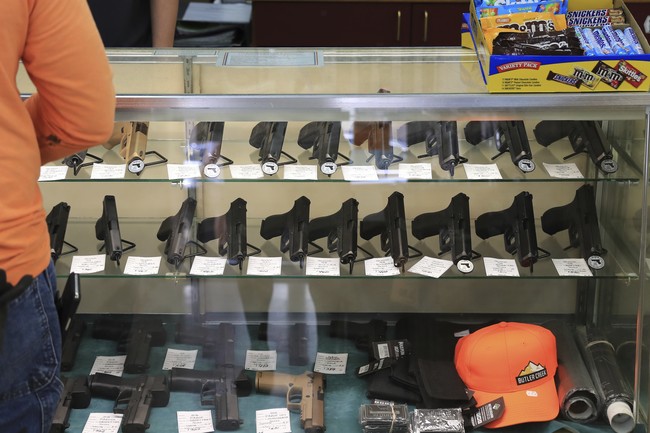
The Supreme Court’s 6–3 ruling in Wolford v. Lopez struck down Hawaii’s 2023 law that required licensed concealed-carry holders to obtain express permission before bringing firearms onto private property open to the public, finding that the restriction violated the Second and Fourteenth Amendments and setting a clear national limit on state efforts to shrink carry rights based on local custom.
The Court’s decision, announced June 25, 2026, reversed Hawaii’s attempt to flip centuries of common-law practice on its head. Where traditionally private owners needed to bar entry to prevent people from carrying on their premises, Hawaii had required express permission to carry on most publicly accessible property. Challengers had warned the law would effectively ban carry on roughly 96 percent of accessible land in the state, and the Court agreed that the practical reach of the statute was extreme.
Justice Alito wrote for the majority and described the practical consequences in stark terms, noting routine errands could turn responsible, licensed carriers into inadvertent criminals. The opinion emphasized ordinary activities—a stop at a gas station, a grocery run, a trip to the dry cleaner—could subject a law-abiding person to multiple felonies without any intent to break the law. That framing resonated with the conservative justices who joined the opinion.
https://x.com/townhallcom/status/2070147325092057389?ref_src=twsrc%5Etfw
Chief Justice Roberts and Justices Thomas, Gorsuch, Kavanaugh, and Barrett joined the majority, and Justice Barrett added a separate concurrence joined in part by Justice Thomas and Justice Gorsuch. The Court rejected Hawaii’s historical analogues as inadequate to justify the modern restriction. In particular, the opinion found colonial-era anti-poaching statutes and other narrow, context-bound laws were not relevant historical precedents for a broad ban on carrying for self-defense in ordinary commercial spaces.
The majority also forcefully rejected the idea that oppressive or discriminatory laws from Reconstruction-era state codes could be used as templates for modern gun restrictions. The opinion dismissed reliance on an 1865 Louisiana statute enacted as part of the Black Codes, noting those laws were designed to disarm newly freed slaves and had no proper role as positive historical authority upholding contemporary limits on the right to bear arms. The Court treated such statutes as cautionary examples of what modern constitutional law should not emulate.
During oral argument, Justice Alito had already signaled skepticism about using post-Reconstruction statutes as a basis for contemporary restrictions. He asked pointed questions about the irony of citing laws enacted to prevent black Americans from exercising what later became recognized as constitutional rights. The majority later echoed that skepticism in its opinion, making clear the Court would not accept historical analogues that conflicted with the right to carry for self-defense.
“This regime hobbles what the Second Amendment protects: the right of Americans to carry arms for self-defense as they go about their daily lives.”
The dissent came from Justices Kagan, Jackson, and Sotomayor, who argued the decision misapplied the Court’s prior test and failed to account for property-law traditions and local regulatory judgments. Justice Kagan emphasized founding-era property-rights principles as supportive of Hawaii’s approach, while Justice Jackson, joined by Justice Sotomayor, framed the case as primarily about property law rather than a broad Second Amendment issue. The dissent warned the ruling would complicate states’ ability to regulate conduct on private property.
From a Republican perspective, the ruling reaffirms core constitutional protections against expansive state encroachment on individual self-defense. It rejects the notion that a state’s culture or local custom can carve out exceptions that let governments strip citizens of rights recognized by the Constitution. The decision restores predictability: national rights are not to be hollowed out by local experiments that effectively ban ordinary carrying in public-facing spaces.
The implications extend beyond Hawaii. Several states that adopted similar post-Bruen default rules now face exposure to litigation and potential invalidation. The opinion signals that courts reviewing carry restrictions must look beyond strained historical analogues and consider the real-world burdens such laws impose on lawful citizens. For conservatives focused on preserving constitutional guarantees, the ruling offers a clear precedent to challenge laws that covertly restrict carrying under the guise of private-property norms.
Practically, the decision means state legislatures that wish to regulate where firearms may be carried must draft rules consistent with the Court’s historical-comparative approach and avoid blanket defaults that turn public life into a maze of criminal liabilities. Lawmakers who support durable public-safety measures while respecting constitutional rights will need to craft targeted, historically grounded regulations rather than sweeping prohibitions. The Wolford ruling thus resets the debate, demanding both fidelity to history and respect for individual rights.

Add comment