
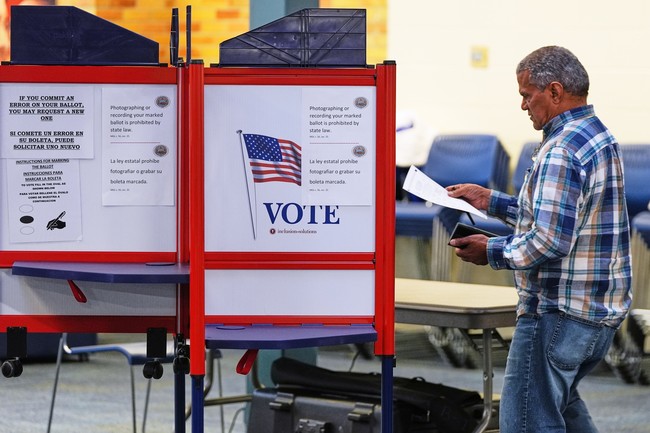
The Justice Department has sent federal monitors to polling places in Detroit, Hamtramck, Lansing, and East Lansing as Michigan voters cast ballots in today’s primary, adding federal oversight to precincts that have been focal points of election integrity concerns; this piece lays out who’s involved, the rationale officials offer, the historical context critics cite, and the spotlight race drawing national attention.
Federal teams are deployed to multiple Michigan cities for the primary, a move framed by DOJ officials as routine oversight to protect ballot security. Officials argue the effort aims to make elections more transparent and to prevent problems at the polls. Locally, the presence of federal staff is being watched closely by both parties and by voters who remember past controversies.
Assistant Attorney General Harmeet Dhillon described the operation in stark terms, saying, “Our primary monitoring efforts continue today as we seek to ensure free and fair elections nationwide.” She added, “The Department of Justice is devoting extensive resources to ensure uniform and nondiscriminatory monitoring. We appreciate the cooperation of these jurisdictions in promoting trust and transparency.” Those are the DOJ’s stated goals as teams move into precincts today.
Detroit remains the focal point for many conservatives who point to the 2020 cycle and subsequent elections as evidence that extra scrutiny is warranted. Allegations from past years include late-night ballot deliveries and restricted access for observers, accusations that left many voters and campaigns skeptical of local procedures. That history is driving much of the demand for federal presence now, and conservatives see the monitors as a necessary safeguard.
Republican leaders have emphasized the importance of visible oversight in places where irregularities were alleged, arguing that it not only deters misconduct but also restores trust among skeptics. The White House released a document asserting serious past problems, stating, “The declassified documents detail how clear evidence of fraud was deliberately buried.” It also claimed, “In one case, an investigation discovered Democrat-aligned canvassers in Michigan forged voter registrations, submitted applications for nonexistent people, and received gift cards based on the volume of fraudulent registrations they produced in the weeks leading up to the 2020 election.” Those assertions continue to shape the atmosphere around monitoring efforts.
Critics of the monitoring surge predict media outrage, but proponents stress that DOJ oversight has precedent and bipartisan roots. Past administrations, including Democratic ones, deployed federal observers in prior cycles, making civil rights division monitoring a long-standing tool. Supporters say consistent enforcement of rules is what voters should expect regardless of party control.
https://x.com/CivilRights/status/2084641081438658920
Local officials in the Wolverine State have reacted in different ways, with some welcoming the extra hands and others bristling at federal involvement on Election Day. U.S. Attorney Timothy VerHey, speaking for the Western District of Michigan, put it plainly: “Transparency promotes both trust and better behavior in election administration.” He framed his office’s role as a steadying influence, ready to act to preserve election integrity where needed.
For many Republicans the central concern is ensuring that election rules are applied the same way everywhere and that any hint of bias or irregularity is investigated. Federal monitors are intended to observe and report, not to run local elections, but the optics are powerful. In contested areas where trust is low, even small interventions can make a big difference in public confidence.
Today’s primary also features a high-profile Democratic Senate primary that has national implications, drawing attention and resources away from other races. The contest between a progressive candidate and a more moderate representative has become a proxy fight, with each side claiming the future direction of the party. That broader battle adds fuel to already heated scrutiny of how votes are handled and tallied.
Whatever the outcome at the polls, the presence of federal observers will be cited by partisans on both sides as proof of either necessary protection or partisan overreach, depending on who is speaking. Republicans pushing for continued enforcement say these steps are about restoring voter confidence and preventing repeat problems. Opponents warn about federal intrusion, but historical practice shows monitoring is not new.
As Michigan voters make their choices, the extra scrutiny will shape narratives about the legitimacy of results and about the federal government’s role in election administration. Officials who support monitoring point to transparency and uniform standards as the cure for suspicion. The debate over how to secure American elections will continue well past today’s races, driven by competing claims about past failures and the best way to prevent them.
Observers and campaigns alike are watching close procedures, chain-of-custody practices, and precinct operations to ensure every legal vote is counted and every irregularity is logged. That granular attention is the practical side of what federal teams are doing on the ground: documenting, advising, and reporting to uphold the rule of law at the polls. For Republicans focused on election integrity, today’s monitoring is a necessary test of whether reforms and oversight can restore public trust.

Add comment