
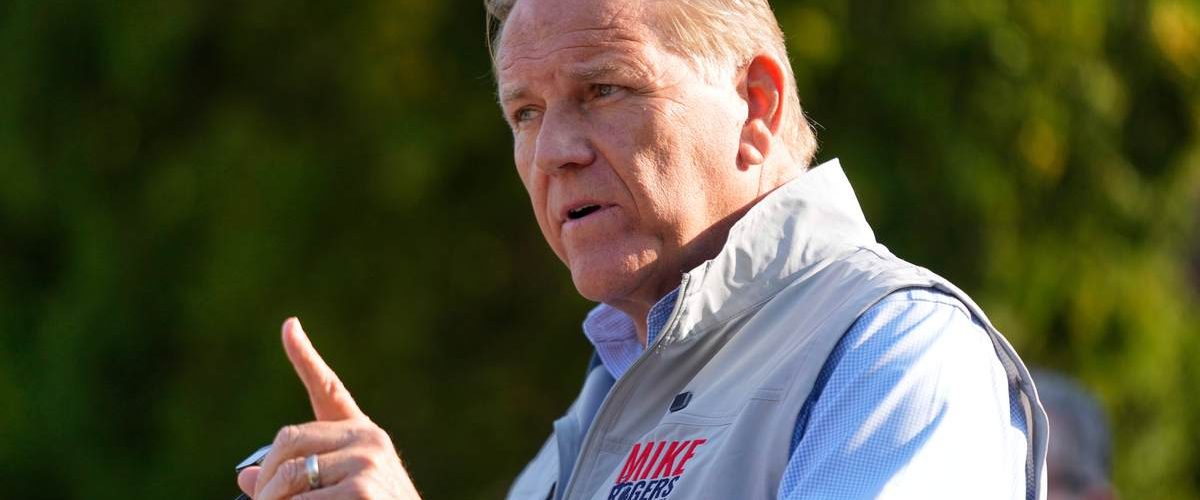
This piece looks at a recent back-and-forth between Michigan Senate hopeful Abdul El‑Sayed and Republican opponent Mike Rogers, examining El‑Sayed’s social posts, the missteps around his comments on football, Rogers’ military and law enforcement background, and Rogers’ sharp reply that landed as a decisive moment in the exchange.
Abdul El‑Sayed, the Democratic candidate for U.S. Senate from Michigan, has struggled on social media with posts that keep getting him in trouble. He has a history of controversial remarks, and his past criticisms of football didn’t play well in a state where the sport matters to a lot of voters. Those earlier attacks left him vulnerable to charges of being out of touch with everyday Michiganders who value tradition and toughness on the field. When you complain about something central to local culture, expect a political price.
Mike Rogers, the Republican challenger, responded with an ad that hit El‑Sayed on those exact weaknesses, pointing out that calling football racist or criticizing men in women’s sports is a tone-deaf stance in Michigan. The ad aimed to turn El‑Sayed’s past comments into a liability and frame Rogers as defending mainstream values. Given Rogers’ background—service in the U.S. Army and a career as an FBI special agent handling organized crime cases—he doesn’t need to posture; his resume speaks for him. That contrast gave Republicans a clear message to present to voters about competence and credibility.
El‑Sayed tried to strike back on social media, posting an attempt at a personal jab that read like a middle school taunt rather than a grown‑up political rebuttal. His post said, “Hey @MikeRogersForMI – clearly your teammates didn’t vote you captain,” then added, “If they did, you would have said it in the ad. Probably had that beta energy back then, too. I *was* captain. Football. Wrestling. Lacrosse.” The tone undercut whatever policy critiques he might have, making him look defensive and oddly fixated on high school status. Bragging about being a captain while previously denouncing the sport looks inconsistent at best.
Calling another adult a “beta” is a risky move for a 41‑year‑old candidate, and voters noticed how juvenile the attack sounded. Most people outside internet echo chambers do not trade in that kind of slang, and using it on the campaign trail makes a candidate seem out of touch. It also raises questions about judgment: is this the tone expected from someone seeking a Senate seat? The line between confident political critique and playground sparring is clear to most voters, and El‑Sayed wandered past it.
There’s an added layer of awkwardness given El‑Sayed’s prior digs at football and alleged concerns about toxic masculinity; now he was touting his own sports leadership. That flip‑flop left observers wondering whether his statements were sincere or just opportunistic. When a candidate swings between criticizing and celebrating the same cultural touchstone, it invites skepticism about authenticity. Michigan voters tend to prefer straightforwardness over mixed signals.
https://x.com/AbdulElSayed/status/2093824948347228354
Rogers’ reply was short, sharp, and to the point. He wrote, “Nothing screams ‘alpha’ quite like a 41-year-old desperately reminding everyone he was popular in high school. Looks like someone peaked in high school,” and the line landed with many who saw it as a fitting rebuttal to the social media jab. The response highlighted a contrast between grown‑up decorum and petty online sparring, reinforcing Rogers’ image as someone who doesn’t need to manufacture toughness. For Republicans watching, it was a clean demonstration of how to neutralize a cheap attack without escalating.
Beyond the zinger, the episode underscores how campaign dynamics play out today: social media gaffes can quickly define a narrative, and a well-timed, crisp response can close the loop. Rogers’ military and law enforcement background gives him credibility that social media posturing cannot compete with, and that reality mattered to voters paying attention. El‑Sayed’s instinct to try to out‑macho his opponent only amplified existing doubts about his judgment and priorities. In a tight race, these moments matter.
When political debates shift from policy to personality, the candidate who appears steady and experienced usually gains the advantage. Rogers’ years of service and public safety work frame him as someone who does things, rather than someone who tweets impulsively. El‑Sayed’s pattern of missteps on X suggested to many that he’s still learning how campaign politics works. Voters sorting through candidates will weigh temperament and consistency alongside political positions.
Ultimately this exchange was more than two lines traded on social media; it was a snapshot of contrasting styles and what each candidate wants voters to believe about them. One side leaned into a polished record of public service, the other into online bravado that read as forced. For Republican strategists and supporters, Rogers’ reaction was textbook: keep the message tight, let record speak, and let opponents’ mistakes amplify themselves. That political playbook worked in this moment, and it will likely be referenced again as the campaign moves forward.

Add comment