
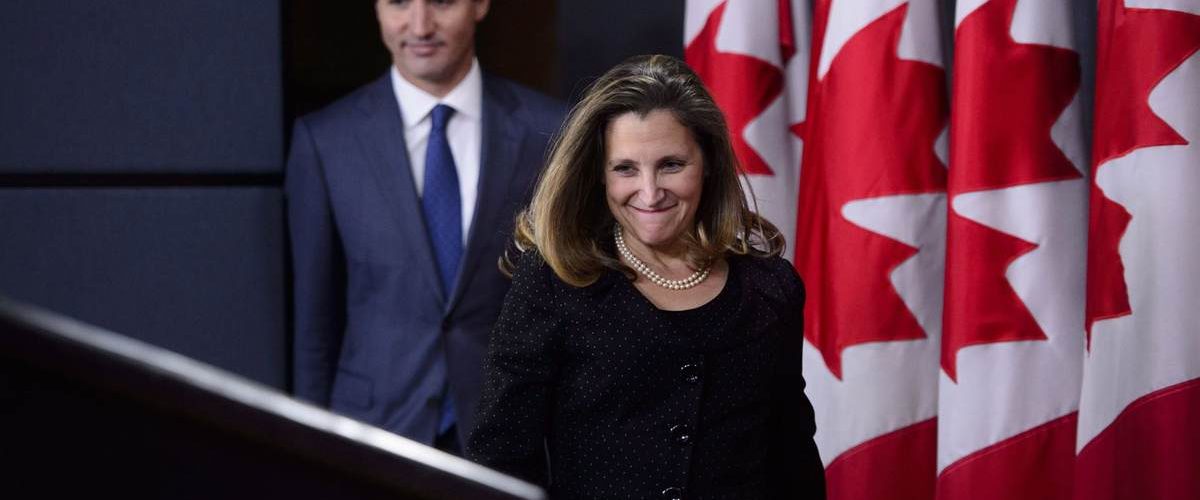
This piece examines a tense exchange on CNBC where co-host Joe Kernen confronted former Canadian deputy prime minister and finance minister Chrystia Freeland about Canada’s economic slide and its warming ties with China, arguing those choices reflect failed leadership and poor policy decisions that have left Canadians worse off.
CNBC Host’s Savage Schooling of Former Canadian Deputy PM for How Screwy Canada Has Become
We are in a trade confrontation with Canada, and it laid bare how badly their economic choices have landed them. The exchange on live television put a spotlight on policy failures rather than isolated diplomatic moves. The discussion centered on Canada’s recent economic performance and its growing willingness to court China.
On air, the conversation turned sharp when Kernen pointed to comments suggesting Canada was “winning fans in China.” He treated that line as an alarming sign, saying it signals alignment with what he called “Communists” and framed it as a dangerous departure from sound Western policy. That choice, he argued, is emblematic of a broader strategic misstep by Canada’s leadership.
Joe Kernen did not hold back when he referenced rhetoric about a “new world order” and a “badge of honor” for being friendly with Beijing. He labeled the move reckless given China’s record and said it was unbelievable to cozy up to “one of the most repressive regimes in terms of human rights in the world.” His tone made it clear he saw Canada’s approach as not just misguided but morally and strategically wrongheaded.
Kernen also attacked Canada’s economic record, describing them as “dead last” in GDP growth among OECD countries over the past decade. He noted forecasts that place Canada at the bottom again through 2030 and beyond among the 38 OECD members. That data, he insisted, is the natural consequence of poor policy and misdirected priorities.
https://x.com/globeandmail/status/2092639973690462295
When Kernen pushed Freeland for an explanation, she sidestepped direct answers and pivoted to foreign policy topics like Ukraine and Russia as well as Canada’s natural resources. Those subjects are legitimate, but they didn’t address the core question he raised about why Canada’s standard of living is slipping. The lack of a clear economic diagnosis from the former finance minister was noticed and framed as telling.
Freeland’s focus on resource wealth without a solid outline of corrective economic measures struck Kernen as insufficient. He argued that having resources means little without policies that foster growth and protect the middle class. From his perspective, leadership matters as much as assets, and Canada’s current rulers are failing to convert natural advantage into prosperity.
The exchange highlighted a common conservative critique: the problem is not external conditions but domestic policy decisions. Kernen framed the story as an outcome of liberal governance choices that prioritize symbolism and international softness over the hard work of growing an economy. He suggested that Canadians deserve better, and that their leaders should be accountable for declining economic prospects.
For viewers concerned about economic competitiveness and national security, the interview reinforced two linked warnings. First, drifting toward regimes with poor human rights records carries strategic and reputational costs. Second, lagging GDP growth signals real declines in living standards and opportunities for everyday citizens.
Watching the back-and-forth, the implication was clear: governments that trade growth for illusion end up answering uncomfortable questions on television and at the ballot box. Kernen’s blunt interrogation was meant to expose that tension and push for a different set of priorities—ones focused on economic strength, clear national interest, and toughness in global affairs.
Ultimately the broadcast served as a reminder that policy choices have consequences and that public officials must explain those choices in concrete terms. When the explanations are vague or inward-looking, critics will press harder and voters will notice. In this case, the critique was unapologetically tough and unmistakable in its conclusion about where responsibility lies.


Add comment