
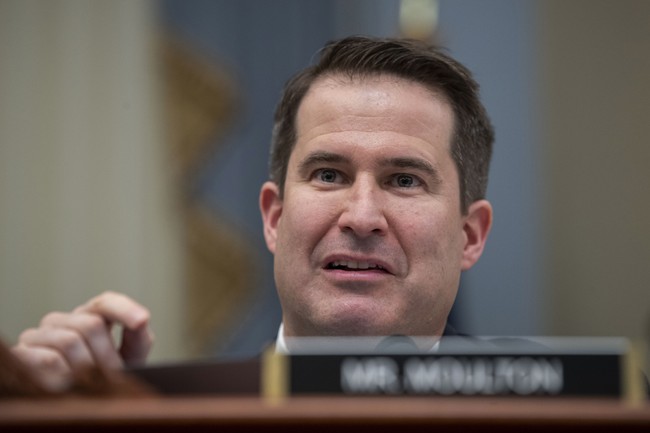
The article covers Rep. Seth Moulton’s controversial 2024 comments about women’s sports, his later apology to the transgender community during a Massachusetts primary debate, the backlash he faced within his party, and why many conservatives view this as a worrying example of Democrats prioritizing activist demands over women’s safety and parental concerns.
The 2024 election exposed cultural fault lines that Democrats ignored at their peril, especially on questions about sex-based protections in women’s sports. Rep. Seth Moulton drew national attention when he told a major paper, “I have two little girls, I don’t want them getting run over on a playing field by a male or formerly male athlete, but as a Democrat I’m supposed to be afraid to say that.” That blunt, common-sense concern resonated with many voters who felt their voices had been dismissed for too long.
After his comment generated an intense reaction from activists and the media, Moulton faced a wave of pressure to conform to party orthodoxy. Rather than defend the core concern that biological differences matter in competitive sports, he spent months trying to soothe the very activists who had attacked him. The resulting performative apologies and clarifications only reinforced suspicions among conservatives that Democrats would rather placate a vocal fringe than protect women and girls.
When Moulton faced Sen. Ed Markey in a primary debate in Massachusetts, he took his conciliatory stance even further. Onstage he offered a formal apology to transgender kids and the broader transgender community, saying, “To the trans community feeling the weight and the pain of the Trump administration policies, I deeply recognize your trauma, and I’m sorry if my comments hurt you.” That apology was delivered in the middle of a campaign where Moulton was jockeying for progressive support against an incumbent.
Many on the right see that apology as political calculation more than genuine empathy. Conservatives argue that the apology effectively sidelined the concerns of Moulton’s own constituents—especially parents and female athletes—by centering the feelings of activist groups. The debate moment underscored a pattern: when political survival is at stake, some Democrats bend to pressure from the loudest corners of their coalition rather than defend traditional constituencies.
This episode also highlights how cultural issues now shape primary contests. Candidates who try to walk a middle line often end up satisfying no one—provoking activists without convincing skeptical moderates that they actually share their priorities. For Republicans watching closely, that makes for a compelling political opening: emphasize clear commitments to women’s safety, parental rights, and fair competition while pointing out when opponents cave to ideological demands.
There’s also a broader policy dimension. The debate over access to women’s sports isn’t merely symbolic; it impacts school athletics, competitive integrity, and scholarship opportunities. When elected officials avoid direct answers or quickly retreat under pressure, it leaves schools and families without steady leadership. Conservative voices insist that lawmakers should defend sex-based protections and ensure rules protect the interests of biological females without demonizing transgender people.
Public reaction to Moulton’s exchange reveals deep mistrust of political sincerity. A significant number of voters can see when a politician pivots to chase endorsements or avoid electoral consequences. That type of flip-flop fuels cynicism and drives turnout among voters who feel their core concerns—fair play for women and the safety of young athletes—are being sacrificed for political correctness.
From a Republican viewpoint, this is more than a rhetorical battle; it’s a clear policy choice. Lawmakers who prioritize parental rights and biological distinctions in sports align with a constituency that wants common-sense, enforceable rules. Conversely, those who quickly apologize to activist groups risk alienating parents and voters who expect their representatives to defend everyday realities in schools and communities.
https://x.com/toddstarnes/status/2084469402800423232
The Moulton case will likely be cited in future races as an example of what happens when elected officials try to straddle competing factions within their own party. For conservatives, the lesson is straightforward: stand firm on protections for women and girls, call out performative apologies that erase legitimate concerns, and offer voters a consistent alternative. That stance, they argue, is more likely to earn trust than a hurried attempt to placate activists during a tight primary fight.



Add comment