
Checklist: analyze AOC’s public image and rhetorical appeal; explain why media and culture amplify her; examine risks if she runs nationally; preserve and present her quoted words unchanged; urge engagement beyond ridicule.
Alexandria Ocasio-Cortez is easy to mock, but that fits her political playbook. Conservatives often treat her as a punchline and assume that laughter will neutralize any threat she poses. That reaction underestimates how modern politics works where image, sound bites, and cultural momentum matter more to many voters than substantive policy records.
Her public persona—youthful, outspoken, and relentlessly media-friendly—connects with people who encounter politics mostly through social feeds and gossip. Those voters don’t deep-dive into voting records or legislative histories; they respond to what feels fresh and authentic. Ocasio-Cortez knows this and packages her message to travel easily through casual conversation and viral clips.
Listen to the language she uses and you’ll hear a familiar refrain: change, outsider, hope over cynicism. That rhetoric is almost identical to the one that propelled Barack Obama, and it works the same way today. For many Americans, the speaker’s vibe matters as much as the content, and AOC’s brand is optimized for that cultural environment.
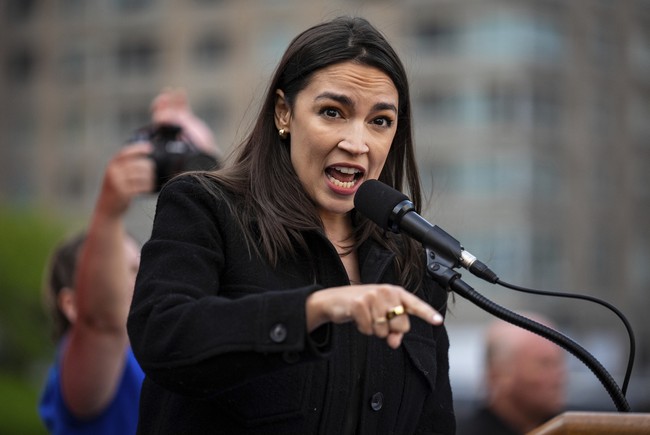
Campaigning in Michigan this weekend for progressive Senate candidate Abdul El-Sayed, Ocasio-Cortez argued for liberal policies while making a more universal case against politics-as-usual.
“Is the answer to our problems to turn to the same playbook over and over again?” she asked a crowd of Democrats here. “A playbook that says in order to win we must be defenders of the same status quo that is drowning us and tells us the aspiration to change our government and the ambition to even try is foolish? No, it is not foolish, Michigan.”
That recalled Obama in 2007, telling Democrats in Iowa that “the same old Washington textbook campaigns just won’t do in this election.… That’s why I am asking you to stop settling for what the cynics say we have to accept. In this election — in this moment — let us reach for what we know is possible.”
Words like those sound inspiring unless you pause to measure them against concrete achievements or governing experience. When parsed, the rhetoric is broad and emotionally charged rather than specific or accountable. That kind of broad appeal fuels enthusiasm but masks the trade-offs and consequences of the policies being promoted.
Critics point out an obvious tension: Ocasio-Cortez has been a member of Congress since 2019 and is part of the political system she denounces. Yet that reality barely dents the image projected to casual observers. For people who mainly consume highlights and memes, image substitutes for record; being perceived as an outsider can be more persuasive than actually being one.
Media coverage amplifies that perception, and not always in fair or neutral ways. If she runs for higher office, mainstream outlets and sympathetic platforms will give her repeated, upbeat visibility. Interviews can be managed, talking points repeated, and viral moments curated so that the narrative favors the candidate. That coordinated exposure shifts public attention toward persona and away from policy granularity.
Republicans who simply snicker at AOC are making a mistake. Mockery is satisfying but passive, and it leaves the field of persuasion to those who know how to convert cultural capital into votes. If she seeks national office, the campaign will test conservative ability to reach beyond the usual circles and engage the less politically literate with clear, accessible rebuttals.
It’s easy to point at gaffes or theatrical moments and declare them disqualifying, yet those same moments can humanize a candidate and spread her brand further. The average voter’s memory often keeps the image and forgets the context, so sensational clips can work in a politician’s favor. That dynamic is why taking her seriously matters strategically even while treating her rhetoric critically.
Conservative response should prioritize clear, persuasive communication over mockery. Explain the consequences of proposed policies in plain terms and connect them to voters’ daily concerns rather than debating abstract ideology. Targeted, understandable criticism undermines catchy slogans faster than ridicule does.
Laugh at Alexandria Ocasio-Cortez if you want; she supplies plenty of material. Just don’t let that laughter substitute for the work of persuasion and outreach. The political ground where image rules is winnable only if you leave the echo chamber and speak to the voters who still decide most elections.



Add comment